
Guide: Studying in Japan
Since there are many ways to go and study in Japan, i thought i could write about how steps.

Truly there are many ways to study in Japan but it would be pretty hard especially if you are coming or first time. In this article i will tell you more about school life as student. Let's begin with language schools.

Most Japanese schools have its precollege status and primarily admit students graduated from high school or above. Generally, there are two ways for students to take. First is short-term which offers student couple weeks up to 3 months. Long-term course offers student up to 80 week of study time. Traditional Japanese Language Schools give four semesters per year. Each semester is 10 weeks long and the long term courses start in April, July, October, and January with about two weeks break between semesters. Language school students can choose whether they are getting a job or entering university after graduation.
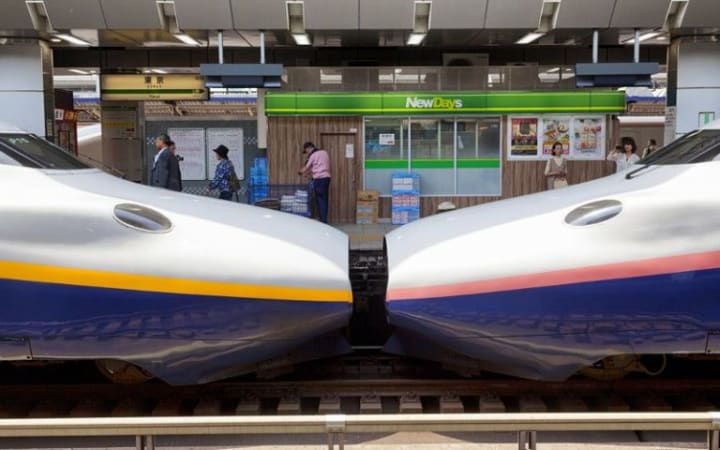
Student housing
Housing can be pretty tricky for foreign students. Average rental house costs around 95.000¥-130.000¥. But that doesn't mean its easy to rent places. Most difficult part is to find proporties and make deal. So if you choose language school that has student housing and part-time guiding, it's lucky shot.

JLPT and EJU
JLPT- Japan Language Proficiency Test, is held twice a year for non-japanese native speakers who wishes to use japanese language academically/professionally. It is estimated that to pass N3 the intermediate level one needs about 700-1000 study hours, equal to about a one year course in Japanese language school, and about 1200 - 1600 study hours, 1,5 - 2 years study for N2 level of academic and professional sufficiency. JLPT N2 is required for study in vocational schools
EJU- Japanese University Exam
Unlike JLPT, EJU is like entrance exam for foreigners, which requires skill of subjects such as math, biology, physics, english and social study. Exam is held twice a year, both in japan and abroad. The Japanese as a Foreign Language secton is administered in Japanese only, while the other subjects are available in both English and Japanese.
Q: How much does it cost to study in japan?
1. School tuiton: A one year course at a Japanese language school costs approximately 700000 Yen and admission fee about 50000 Yen in the first semester. In total approximately 750000 Yen (about $7000 USD). Public universities have unified prices: annual tuition fee of 535800 Yen, admission fee of 28200 Yen, plus other minor fees, about 850000 Yen (about $8000 USD) in total for the first year of undergraduate programs. Private universities vary on tuition fees and charge more than public universities up to twice as much, about 1600000 Yen (about $15000 USD) per year, but prices differ from school to school.
2. Living expenses: Besides school tuition, living expenses costs around 120.000-150.000¥ per month. Many people think that Japan is expensive but this is not entirely true. Shopping and food is often cheaper than in Europe, not least considering the quality that you get. Student accommodation, on the other hand, can be a bit costly in Tokyo considering the size and standard that you get.
3. Working as student: Students that have obtained a work permission are allowed to work part time in Japan. Then you can work 28 hours per week on school weeks and 40 hours per week during semester breaks. Students are not allowed to take any jobs related to night clubs or adult entertainment. This even includes being a DJ or working as a dishwasher in a night club. Most students work in shops or restaurants where you can earn around 1000 Yen per hour. However it can be hard to find a job before you speak decent Japanese. The best paid jobs for students is often to work as a teacher in your native language. Either at a school or just give private conversation lessons in a café then it is not unusual to earn up to 3000 Yen per hour. The work permit is a sticker in your passport. To obtain it you must be in Japan on a student visa. The easiest way to get the permit is to apply directly at the immigrations in the airport when you first arrive in Japan. Then you can get it immediately. Otherwise you will be stuck in the Japanese bureaucracy where you will need several visits to the Immigration Bureau and at least 3 weeks processing time before you can get your work permit.
My personal advice
Studying in Japan has great benefits, you can apply for discounted travel fares and various transportation services. Also, it would be best to get an IC(integrated circuit)card. IC Cards make traveling on public transport easy as you don’t have to handle cash payments when getting onto a bus or train. IC cards are also very much integrated into life in Japan and they can also be used in various other locations such as convenience shops and supermarkets. You can save a quite amount of money if you know which supermarket having a sale day. It would be best to explore your neighbourhood.
Insurance
If you have your foreign student card, any local hospital covers your 70% of total payment.
Thanks for reading, if you have anything to ask, here
About the Creator
Zenko Magatsu
Student of Tokyo University, Gamer, Video editor
I'll write about japan and culture related posts.
Keep reading
More stories from Zenko Magatsu and writers in Education and other communities.
Graduated… But Still Broke. Why
Graduation day feels like victory. The hall is full. Names are called one by one. Parents sit proudly in the audience, holding their phones high to record the moment. Friends clap loudly. Teachers smile with approval. For years, this was the goal. Study hard. Get good grades. Earn the degree. And when that certificate finally rests in your hands, it feels like a passport to success. But sometimes, the applause is louder than the opportunity that follows.
By Shahid Zaman4 days ago in Education
The Dark Side of AI: What Could Artificial Intelligence Become in 100 Years?
But while AI promises innovation and efficiency, an important question remains: What could AI become 100 years from now?Looking ahead to the next century, the darker possibilities of artificial intelligence deserve serious attention.
By Spondan Chowdhury5 days ago in Education


Comments
There are no comments for this story
Be the first to respond and start the conversation.