
Guardians of the Nation: The Indomitable Spirit of the Indian Army
Celebrating the Valor, Sacrifices, and Humanity of India’s Bravehearts
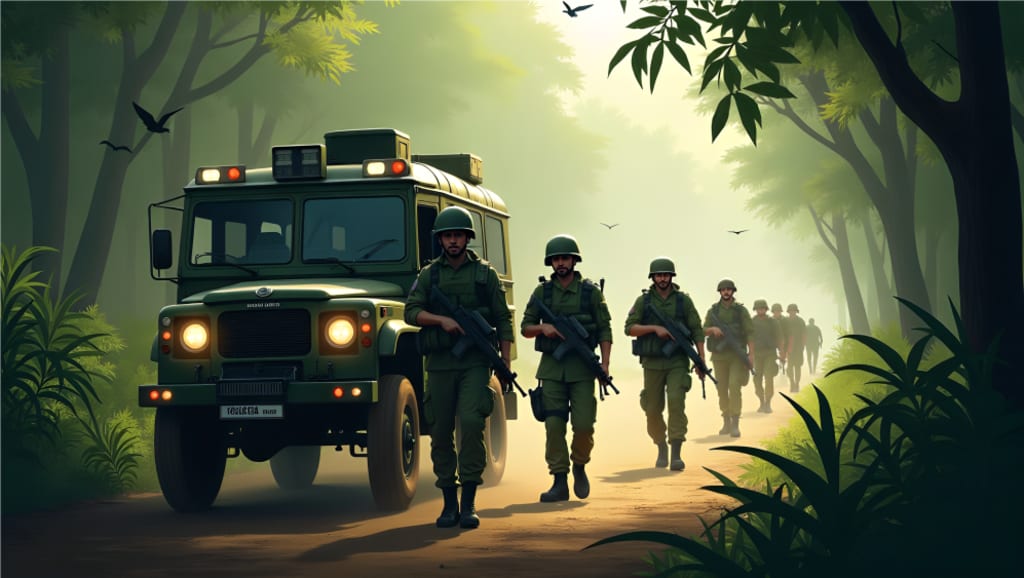
The Indian Army: A Citadel of National Security
The Indian Army is a symbol of valor, discipline, and unflinching commitment. It plays a vital role in ensuring the safety and sovereignty of the nation while upholding the spirit of patriotism and selfless service. Not only in warfare, the Indian Army has proven its mettle in humanitarian aid, disaster relief, and international peacekeeping efforts, making it an indispensable pillar of India's strength and pride.
A Glimpse into History
The Indian Army's roots go back to the days of empires such as the Mauryas, Guptas, and Cholas who maintained a structured army. The modern form of the Indian Army, however, was during the British period. The British created a professional army, which later served as the base for the Indian Army after India became independent.
Post-independence, the Indian Army was reorganized to serve the newly sovereign nation. It played a vital role in defending the country during the wars of 1947-48, 1965, and 1971 against Pakistan, the 1962 Sino-Indian war, and the Kargil conflict of 1999. Each of these conflicts tested the Army’s capabilities and highlighted its bravery and strategic expertise.
Structure of the Indian Army
The Indian Army, one of the largest standing armies in the world, reports under the President of India who serves as the Supreme Commander of it. COAS leads the Army, who are responsible for being operationally fit and strategic planning.
There are divisions, corps, and commands organized within the Army; each carries out specific functions or covers specified geography. Overall, its hierarchy encompasses:
1. Combat Arms : Infantry, Armoured Corps, Artillery, Mechanized Infantry.
2. Support Arms : Corps of Engineers, Signals and Air Defence.
3. Services : Medical Corps, Services Corps, Ordnance Corps, and Military Police.
This properly integrated structure has the Army better equipped to effectively respond to the challenge of any situation, war, disaster or peacekeeping.
Key Roles and Responsibilities
1. National Defence
The primary role of the Indian Army is to safeguard the nation's borders. It protects India’s territorial integrity against external aggression and threats.
2. Internal Security
In addition to protecting borders, the Army often supports civil authorities during internal disturbances, such as riots or insurgencies.
3. Disaster Relief and Humanitarian Aid
The Army’s involvement in disaster relief operations showcases its commitment to humanity. From rescue missions during floods and earthquakes to providing medical aid during pandemics, it is often the first responder during crises.
4. Counterterrorism
The Army has conducted numerous successful operations against terrorism in regions like Jammu & Kashmir and the North-East, ensuring the safety of citizens and neutralizing threats.
5. Peacekeeping Missions
India is a leading contributor to United Nations peacekeeping forces. The Indian Army has played a significant role in maintaining peace in conflict-prone regions across the globe.
The Life of a Soldier
The life of an Indian soldier is a testament to discipline, courage, and sacrifice. From rigorous training in extreme conditions to deployment in remote areas, their lives are defined by challenges.
Training and Routine : Soldiers undergo rigorous physical and mental training to prepare for various combat scenarios. Their daily routines involve physical fitness, strategic drills, and operational readiness.
Sacrifices : Soldiers often remain separated from their families for extended periods, serving in extreme environments like the icy heights of Siachen or the deserts of Rajasthan. Despite these challenges, their dedication to the nation remains unwavering.
Major Achievements of the Indian Army
The Indian Army’s legacy is adorned with numerous achievements that reflect its strength, strategy, and courage:
1. 1971 Indo-Pak War :
The Army’s victory in this war led to the creation of Bangladesh, marking one of the most significant moments in its history.
2. Kargil War (1999) :
Indian soldiers displayed unparalleled bravery by reclaiming strategic positions in the Kargil region from Pakistani intruders.
3. Operation Meghdoot :
This operation secured India’s control over the Siachen Glacier, the world’s highest battlefield.
4. Disaster Relief Operations:
From the Uttarakhand floods to the Gujarat earthquake, the Army’s quick response saved countless lives.
5. Global Peacekeeping:
The Indian Army has participated in several UN peacekeeping missions, contributing to global stability and humanitarian efforts.
Sacrifices of Indian Soldiers
The sacrifices of Indian soldiers are immeasurable. They endure harsh conditions, face life-threatening situations, and often make the ultimate sacrifice to protect the nation. Memorials like the Amar Jawan Jyoti and the National War Memorial in Delhi stand as a tribute to their valor and sacrifice.
It's a poignant reminder that every soldier sacrifices for freedom, and that everyone should honor them who defend freedom.
Challenges Faced by the Indian Army
Despite all strengths, the Indian Army faces various challenges:
1. Extreme Environments: The operation in challenging terrains like Himalayas and Thar Desert needs resilience and proper equipment.
2. Modernization : The process of modernization is important in keeping pace with technological advancements, but resource constraints often prevent it from happening fast.
3. Cross-Border Terrorism : Infiltration and terrorism across borders are an ongoing challenge.
4. Welfare and Resettlement : Soldiers and their families need to be taken care of well, especially after retirement, and welfare programs need to be improved continuously.
Initiatives for Soldier Welfare
Recognizing the sacrifices and dedication of soldiers, the government has implemented several welfare schemes:
Healthcare : Comprehensive medical facilities through military hospitals.
Education : Scholarships for the children of soldiers.
Skill Development : Training programs for retired personnel to ensure smooth reintegration into civilian life.
Financial Support Pensions and other benefits to support soldiers and their families.
Conclusion
The Indian Army is not just the backbone of national security but also a symbol of pride and unity for the nation. Its soldiers exemplify the highest values of courage, discipline, and selflessness, inspiring millions.
While the Army continues to defend the nation’s borders and uphold its sovereignty, it is our duty as citizens to respect, support, and honor their sacrifices. Their stories of bravery and commitment serve as a reminder of the price of freedom and the enduring spirit of those who protect it.
The Indian Army’s legacy of valor and service ensures that it remains a cornerstone of India's strength and stability for generations to come.
About the Creator
Keep reading
More stories from Prateek Malatwadkar and writers in Education and other communities.
"The Eternal Call of Faith: Devotion and Divinity at the Maha Kumbh Mela"
Maha Kumbh Mela: A Pilgrimage of Faith, Tradition, and Devotion Introduction: The Spiritual Pulse of India - A general description of the Maha Kumbh Mela as one of the largest religious congregations in the world.
By Prateek Malatwadkarabout a year ago in Education
Top 4 AI certifications to Land High-Paying Jobs in 2026
With artificial intelligence becoming a core business necessity in 2026, and organizations moving towards Agentic AI systems along with specialized infrastructure, the demand for professionals who can build, deploy, integrate, and even use these intelligent systems is growing.
By Anu shreya4 days ago in Education
UniversityGPT: In Defence of Gen-Z in the Age of Artificial Intelligence
Every generation is shaped—and judged—by the tools it adopts. From the printing press to the calculator, from the internet to smartphones, technological change has always been met with suspicion. Today, that suspicion has a new name: UniversityGPT. As AI-powered tools become increasingly common in academic spaces, Gen-Z finds itself under fire. Critics argue that students are “outsourcing thinking,” undermining academic integrity, and becoming intellectually dependent. Yet these arguments reveal more about the fear of change than about the realities of modern learning. Defending Gen-Z is not about excusing laziness—it is about recognizing evolution. Understanding Gen-Z: A Generation Born into Complexity Gen-Z, generally defined as those born between the mid-1990s and early 2010s, is the first generation to grow up in a fully digital, globally connected world. Unlike Millennials, who witnessed the rise of the internet, Gen-Z was born into it. But technology is only one part of their story. This generation came of age during: Global financial instability Climate change emergencies Political polarization A worldwide pandemic Rising tuition fees and student debt An unpredictable job market They inherited a world that is faster, harsher, and more demanding than ever before. To expect them to navigate this reality using outdated educational models is unrealistic. Gen-Z is not disengaged. They are overloaded. The Rise of UniversityGPT and Academic Anxiety UniversityGPT has become a lightning rod in debates about AI in education. For many educators and commentators, it represents everything that feels out of control: automation, speed, and the erosion of traditional authority. But history shows us a pattern. When calculators were introduced, students were accused of “forgetting math.” When Google became common, students were accused of “not researching properly.” When spell-checkers appeared, writing was said to be “dead.” None of these fears came true. Instead, expectations shifted. UniversityGPT is not the enemy of learning—it is the next phase of it. AI Does Not Replace Thinking—It Changes Where Thinking Happens One of the most persistent myths about AI tools is that they eliminate critical thinking. In reality, they reposition it. When students use UniversityGPT responsibly, they still must: Frame intelligent questions Assess the accuracy of responses Compare multiple viewpoints Edit, refine, and personalize ideas Apply concepts to real-world contexts AI generates information. Humans generate meaning. In fact, effective AI use requires higher-order thinking skills such as evaluation, synthesis, and judgment—skills that traditional rote learning rarely develops. Knowledge Is No Longer Scarce—Insight Is Previous generations learned in a world where access to information was limited. Libraries, textbooks, and lectures were gatekeepers of knowledge. Gen-Z lives in a different reality. Information is abundant. What is scarce is: Context Interpretation Ethical judgment Creativity UniversityGPT helps students move past mechanical tasks and focus on deeper understanding. This is not intellectual laziness—it is strategic efficiency. In a world driven by speed and complexity, efficiency is not a shortcut. It is survival. Outdated Education Systems Are the Real Crisis Much of the criticism aimed at Gen-Z ignores a fundamental truth: education systems have not evolved at the same pace as the world. Many universities still rely on: Memorization-based exams Rigid curricula One-size-fits-all assessments Minimal mental health support Underpaid and overworked faculty Students are expected to perform at elite levels within systems designed for a pre-digital era. Gen-Z did not create these contradictions—they exposed them. UniversityGPT gained popularity because it fills gaps left by institutional stagnation. Academic Integrity in the Age of AI The conversation around AI often centers on cheating. But cheating is not new—technology did not invent dishonesty. What AI does demand is new definitions of integrity. Instead of banning AI outright, institutions should be teaching: Ethical AI use Citation and transparency Critical evaluation of AI-generated content Responsible collaboration between human and machine Punishment-based approaches ignore reality. Education-based approaches prepare students for the future. Gen-Z understands that AI is not going away. They want guidance, not fear. Gen-Z and the Courage to Question Authority One reason Gen-Z unsettles traditional systems is simple: they ask uncomfortable questions. They question: Why education is increasingly expensive Why unpaid internships are normalized Why productivity is prioritized over wellbeing Why outdated traditions are protected without evidence UniversityGPT empowers this questioning by giving students faster access to knowledge and alternative perspectives. This is not rebellion—it is intellectual independence. Mental Health Awareness Is Not Weakness Another common criticism is that Gen-Z is “too sensitive.” In reality, they are simply more honest. They speak openly about: Anxiety Burnout Depression Emotional exhaustion Previous generations were taught to endure silently. Gen-Z chooses to address problems openly. UniversityGPT can reduce academic stress by: Helping organize thoughts Clarifying complex material Reducing time pressure Supporting non-native English speakers Using AI to manage cognitive load is not weakness—it is self-care. A healthy mind is essential for meaningful learning. Adaptation Is the Highest Form of Intelligence Human history favors those who adapt. Gen-Z is preparing for a future where: AI is embedded in every profession Jobs evolve constantly Lifelong learning is essential Collaboration with machines is normal Learning how to work with AI is not optional—it is foundational. UniversityGPT is not a threat to intelligence. It is a training ground for the future. The Real Question About AI in Education Instead of asking: “Why are students using AI tools like UniversityGPT?” We should be asking: “Why hasn’t education evolved to teach ethical, effective AI collaboration?” Blaming students for adapting faster than institutions is misplaced frustration. Gen-Z is not the problem. They are the preview. In Defence of Gen-Z Gen-Z is not lazy. They are overwhelmed—but resilient. Not entitled—but informed. Not disengaged—but redefining engagement. UniversityGPT does not weaken their minds. It reflects a world where intelligence is distributed, tools are powerful, and adaptability determines success. History is rarely kind to pioneers in the moment. But it is always shaped by them. When the future finally arrives, it will look remarkably like the world Gen-Z is already navigating—and mastering.
By Zahid Hussain2 days ago in Education




Comments
There are no comments for this story
Be the first to respond and start the conversation.