
Greek Marsh Frog - Greece
Food, Habitat and ETC.

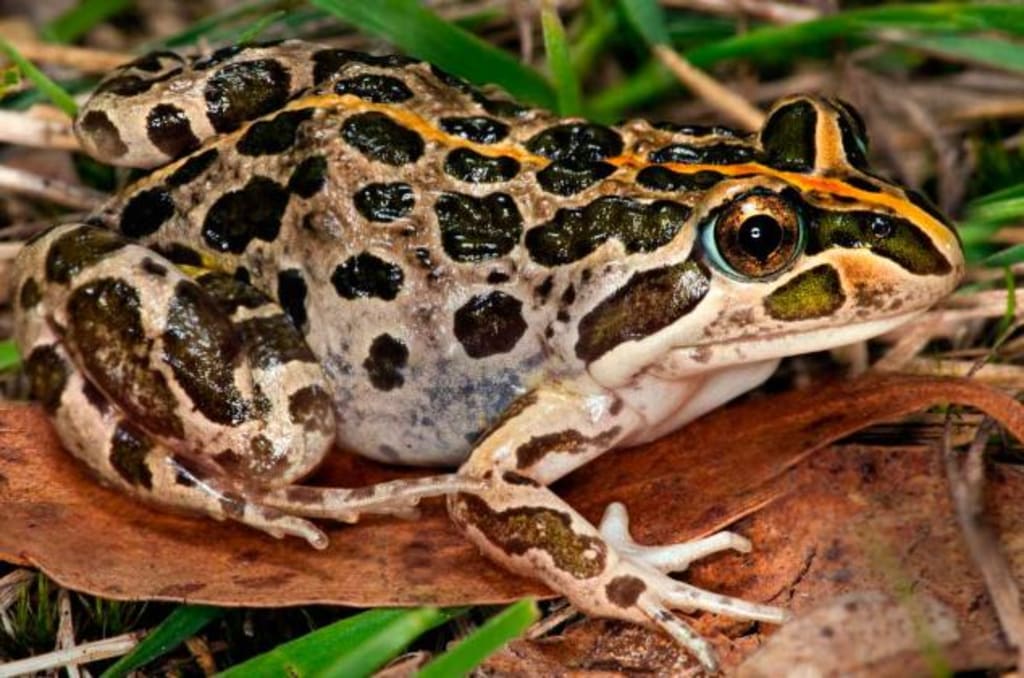
The Greek marsh frog, also known as the Balkan marsh frog or Pelophylax kurtmuelleri, is a species of frog found in southeastern Europe, including Greece, Bulgaria, Albania, and the Balkans. It belongs to the family Ranidae, which consists of true frogs.
The Greek marsh frog is a medium-sized frog with a robust body and a snout-vent length ranging from 6 to 10 centimeters. It has a green or brownish-green coloration with dark spots or stripes on its back. The skin is typically smooth, and the hind legs are long and muscular, enabling them to jump and swim well.
These frogs inhabit various freshwater habitats such as marshes, ponds, lakes, and slow-moving rivers. They are adaptable and can tolerate a wide range of environmental conditions. Their diet mainly consists of insects, spiders, small invertebrates, and occasionally small vertebrates.
During the breeding season, which typically occurs in the spring and early summer, male Greek marsh frogs produce loud calls to attract females. The females lay their eggs in shallow water, often attaching them to aquatic vegetation. After hatching, the tadpoles undergo metamorphosis and develop into juvenile frogs.
The Greek marsh frog is an important part of the wetland ecosystems in its range and plays a role in controlling insect populations. It is also of interest to researchers studying amphibian ecology and evolution.
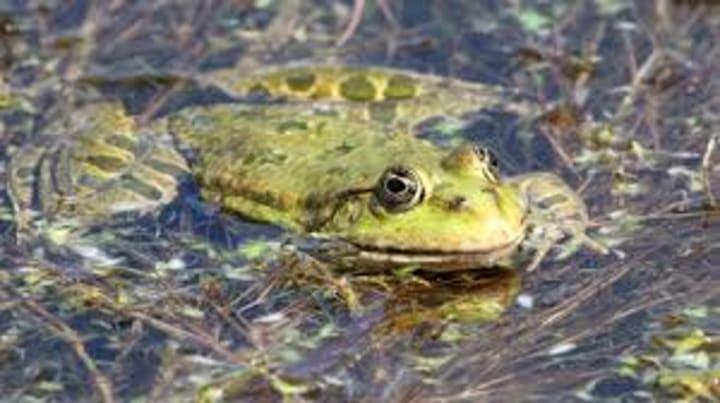
Here are some common habitats where you can find Greek marsh frogs:
Marshes and Wetlands: Greek marsh frogs are often found in marshes, wetlands, and swamps with ample vegetation. These areas provide abundant water sources and support a diverse range of aquatic plants and invertebrates.
Ponds and Lakes: They can be found in both natural and man-made ponds and lakes, including small stagnant pools, larger freshwater lakes, and even garden ponds. They prefer areas with emergent vegetation and shallow water.
Slow-Moving Rivers and Streams: Greek marsh frogs are also known to inhabit slow-moving rivers and streams, particularly those with vegetation-rich banks and areas of shallow water.
Temporary Water Bodies: During the breeding season, Greek marsh frogs may also utilize temporary water bodies such as temporary pools, flooded fields, and ditches. These areas provide suitable conditions for breeding and egg deposition.
Riparian Zones: Riparian zones, which are the areas along the banks of rivers, streams, and wetlands, are also favored habitats for Greek marsh frogs. These areas provide a mix of aquatic and terrestrial resources and offer ample hiding places and foraging opportunities.
It's worth noting that Greek marsh frogs have some adaptability to different habitats and can tolerate a range of environmental conditions. They require access to freshwater sources and suitable vegetation for shelter and foraging. These frogs play an important role in wetland ecosystems and are often considered indicators of the overall health of these habitats.

Some common food items for Greek marsh frogs include:
Insects: They feed on a wide range of insects such as beetles, flies, mosquitoes, moths, grasshoppers, and ants.
Spiders: Greek marsh frogs may also consume spiders that they encounter in their habitat.
Worms: They may feed on small earthworms or other types of worms found in the soil or water.
Crustaceans: In certain environments, Greek marsh frogs may consume small crustaceans like freshwater shrimp or crayfish.
Small Fish: Occasionally, if the opportunity arises, Greek marsh frogs may prey on small fish fry or tadpoles.
While the Greek marsh frog is generally considered to have a stable population and a wide distribution range, localized threats or habitat degradation in certain regions could potentially impact specific populations. Conservation efforts and monitoring of their populations are important to ensure their long-term survival.
About the Creator
Dan IsEnjoyingLife
Chill, Relax and Enjoy Life is my Priority.
Please Subscribe for more Chilling, Relaxing and Enjoying Article, Thank You.
Keep reading
More stories from Dan IsEnjoyingLife and writers in Education and other communities.
Philippine Eagle
The Philippine Eagle, also known as the monkey-eating eagle or Haribon, is a majestic and critically endangered bird species native to the Philippines. It is one of the largest and most powerful eagles in the world, with a wingspan of up to 7 feet (2.2 meters) and a length of about 3 feet (1 meter).
By Dan IsEnjoyingLife3 years ago in Education
Understanding Thin Film Precision Resistor Arrays in Aerospace and Avionics Systems
In my experience working with aviation electronics and embedded systems, I’ve learned that some of the most unassuming components — like resistors — are actually critical to aircraft safety and performance. Among these, thin film precision resistor arrays are especially important in aerospace applications where accuracy, reliability, and durability are non-negotiable.
By Beckett Dowhan7 days ago in Education
Can Training Farmers End Hunger?
What if one of the most powerful solutions to global hunger is not food aid, but knowledge? Around the world, millions of smallholder farmers grow the food that feeds their communities. Yet many of them struggle with low crop yields, unpredictable weather, poor soil quality, and limited market access. If farmers are at the center of food production, could empowering them with better skills be the key to ending hunger?
By Convoy of Hope7 days ago in Education
Guard Your Battery
Why are some people so attractive just by standing there? It’s not because they are "likable," but because they don’t need everyone to like them. I realized later that truly charismatic people allow themselves to be criticized, but they never criticize themselves. They never try to please the world; instead, the world stops to watch them.
By Emily Chan - Life and love sharing7 days ago in Poets



Comments
There are no comments for this story
Be the first to respond and start the conversation.