
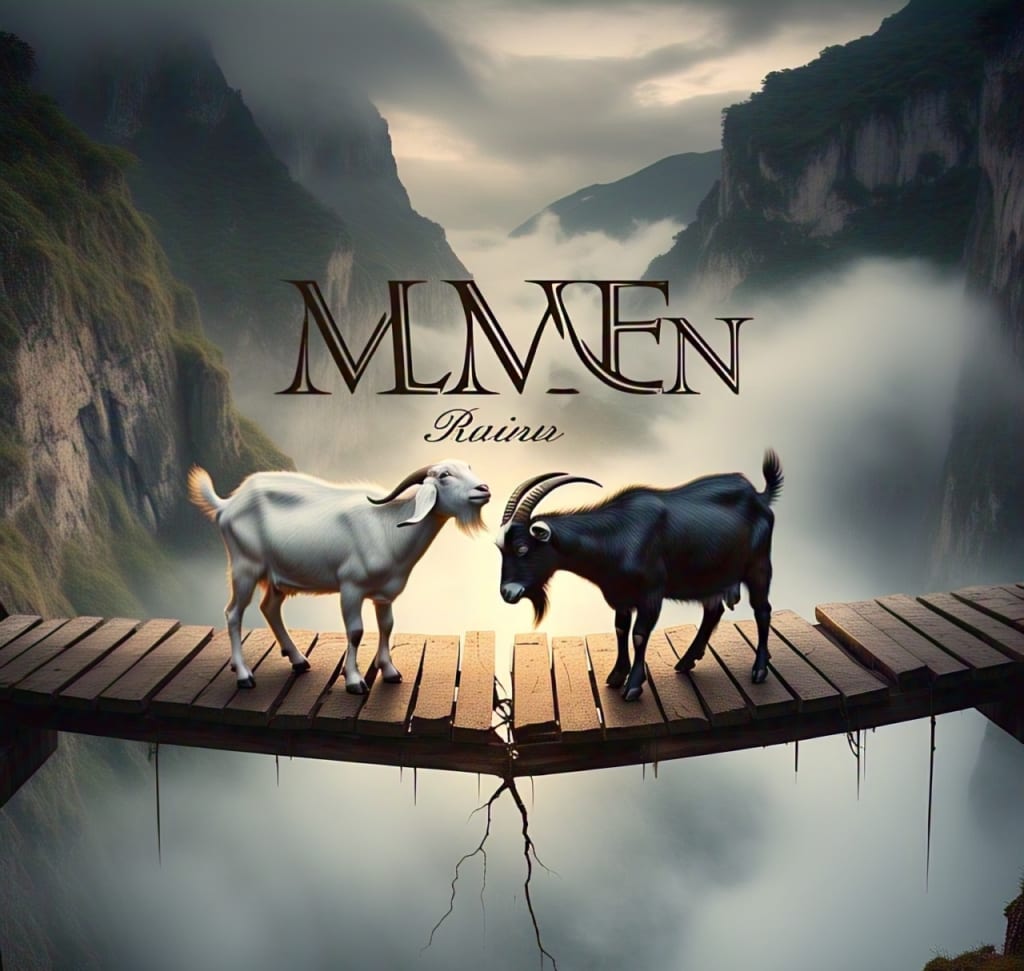
Long ago, nestled in the heart of the great green mountains, two villages sat on opposite sides of a deep valley. One village was known for its bright, snowy landscapes where the white goats grazed freely. The other, shadowed by towering trees and jagged rocks, was home to black goats known for their strength and endurance.
Between the two villages, there was only one way to cross: a narrow wooden bridge stretched over the roaring river below. The bridge was old, barely wide enough for one traveler at a time, and was feared and respected by all who used it.
Among the many animals that lived in the mountains, two goats stood out — one white as snow, proud and graceful, and the other black as coal, bold and fearless. They had never met, but both believed they were the mightiest goat in all the lands.
One crisp morning, the white goat, whose name was Zarbi, decided to cross the bridge to explore the other side. “They say the grass is different across the valley,” she muttered to herself. “Let me see it for myself — I deserve to know all lands.”
At the same time, from the other side, the black goat, Kalo, had the same thought. “Why should I limit myself to these cliffs? I’ve conquered every rock here. The other side belongs to me too.”
So, Zarbi stepped onto the bridge from the east, and Kalo from the west.
The wind howled beneath them, and the bridge creaked with every step. Birds circled high above, and even the river below seemed to quiet in anticipation. Halfway across, they saw each other — two goats, standing firm, both unwilling to turn back.
Zarbi narrowed her eyes. “Step aside,” she said in a clear, calm voice. “I started first.”
Kalo stomped his hoof. “No. I’m stronger and heavier. You should step back.”
“I am wiser,” said Zarbi.
“I am braver,” said Kalo.
A silence fell between them. The bridge creaked again, warning them. But neither moved.
“I will not turn back,” Zarbi said, lifting her chin. “It would be beneath me.”
“Nor will I,” Kalo replied. “Turning back is for the weak.”
They lowered their heads.
And with a furious clash of horns, they began to push.
The battle was fierce but slow. They locked horns and shoved, but the bridge was too narrow, too fragile. Each time one pushed forward, the other pushed harder. Bits of wood splintered beneath their hooves, and the wind picked up, shrieking through the valley like a warning cry.
Animals from the forest and cliffs began to gather at both ends of the bridge, watching in silence — birds perched in trees, rabbits poked their heads from the bushes, and even the old mountain bear watched with interest.
Still, the goats fought.
Minutes turned to what felt like hours. They were too evenly matched. Pride burned in their eyes, and neither could accept defeat. The bridge groaned beneath their weight. Then, with a terrible crack, the middle plank snapped.
For a split second, both goats froze — eyes wide — realizing their mistake.
And then, together, they fell.
Down they plunged into the cold, wild river below. The water swallowed them, and the valley echoed with the sound of crashing waves and snapping wood.
For days, the animals whispered about the fall of the two proud goats. Some said they survived and were swept away far down the river, never to return. Others believed they were taken by the mountain spirits to teach others a lesson.
Months passed, and the bridge was eventually repaired. But from that day on, a rule was made — only one traveler at a time could cross. At each end of the bridge, a simple wooden sign was hung:
“Pride builds no path. Patience does.”
And whenever young goats from either village would ask about the sign, the elders would tell the tale of the white goat and the black goat — how they met in the middle, too proud to step back, and fell together.
As time went on, the story turned into a legend. But the message remained clear:
Sometimes, stepping back is not a sign of weakness — but of wisdom. And those who refuse to bend may both be broken.
About the Creator
Keep reading
More stories from Arjumand Said and writers in Education and other communities.
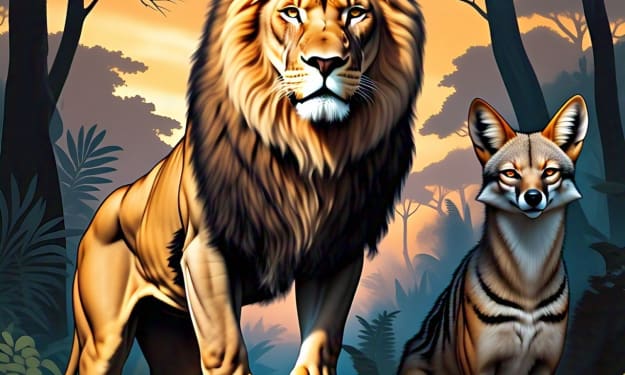
The Lion and the Cunning Jackal
Once upon a time, deep within the thick, green forests of the wild, there lived a mighty lion named Shera. He was the undisputed king of the jungle. His roar could silence the wind, and his presence could make the bravest of animals tremble. Strong, fierce, and proud, Shera ruled not just with strength, but with fear.
By Arjumand Said9 months ago in Education
From Despair to Hope: How Animal Rescue Efforts Rebuild Broken Lives
Animal rescue efforts stand as a powerful response to suffering that often goes unseen. Across towns, cities, and rural areas, animals face neglect, abandonment, injury, and fear every day. Many are left without food, shelter, or medical care. Others are harmed by abuse or natural disasters. Without help, their future is uncertain. Through patience, care, and action, animal rescue efforts transform despair into hope and give animals the chance to heal and live safely.
By Brenda McGrane6 days ago in Education



Comments
There are no comments for this story
Be the first to respond and start the conversation.