
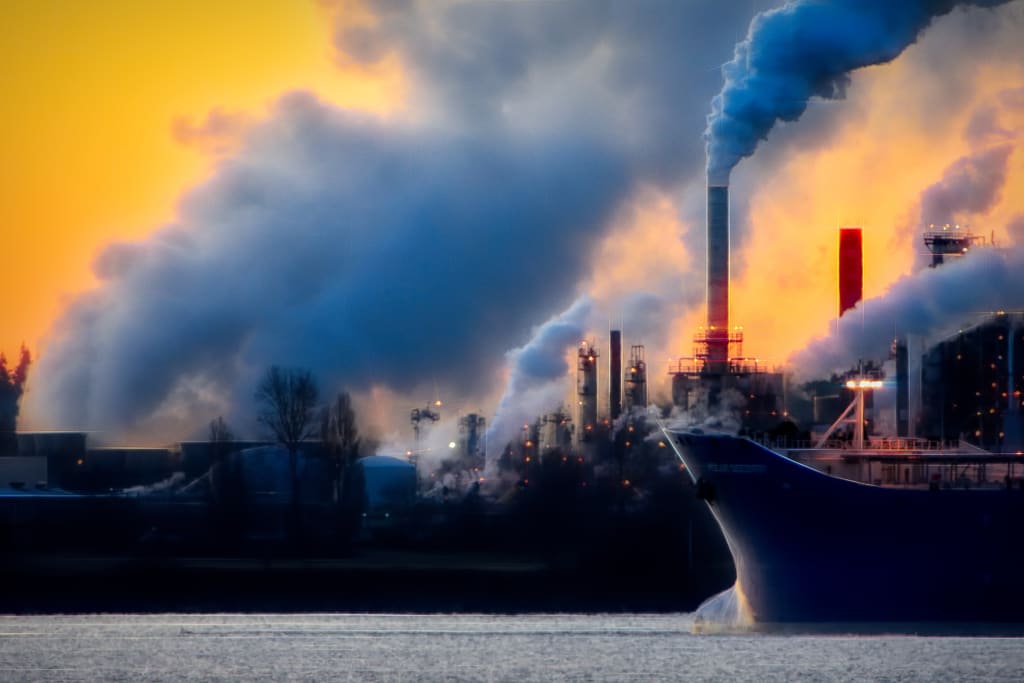
Global warming refers to the long-term increase in the average temperature of the Earth's atmosphere and oceans, primarily due to the burning of fossil fuels that release large amounts of greenhouse gases such as carbon dioxide, methane, and nitrous oxide. This increase in temperature can have severe impacts on the environment, ecosystems, and human societies.
Major effects of global warming
1. Rising sea levels: Global warming leads to the melting of glaciers and ice caps, which in turn causes a rise in sea levels. This can cause flooding of low-lying areas, leading to displacement of populations and loss of coastal habitats.
2. More frequent and severe weather events: Global warming can cause more intense and frequent heatwaves, droughts, hurricanes, and other extreme weather events, which can lead to loss of life and property damage.
3. Changes in precipitation patterns: Global warming can alter the timing and amount of rainfall, causing droughts in some areas and floods in others.
4. Ocean acidification: As the Earth's oceans absorb more carbon dioxide from the atmosphere, they become more acidic. This can harm marine ecosystems and affect fisheries and aquaculture industries.
5. Loss of biodiversity: As temperatures rise, ecosystems can change rapidly, causing some species to go extinct or move to different regions, disrupting the delicate balance of ecosystems.
6. Health impacts: Global warming can increase the spread of disease-carrying insects, cause heat-related illnesses, and exacerbate air pollution, leading to respiratory problems.
7. Economic impacts: Global warming can cause significant economic losses due to property damage, loss of productivity, and displacement of people.
Overall, global warming is a major threat to the planet's ecosystems, economies, and societies. Urgent action is needed to mitigate the effects of global warming and prevent further damage to the planet.
Scientific View
The scientific consensus is that global warming is occurring and that human activities, such as the burning of fossil fuels, deforestation, and agriculture, are the primary drivers of this phenomenon. The Intergovernmental Panel on Climate Change (IPCC), a body of the United Nations that assesses climate change science, has concluded that it is very likely that human activities have caused most of the observed global warming since the mid-20th century.
The consequences of global warming are numerous and far-reaching. One of the most visible impacts is the melting of glaciers and polar ice caps, which leads to rising sea levels that threaten coastal cities and low-lying islands. Global warming also contributes to extreme weather events, such as heat waves, droughts, and floods, which can cause billions of dollars in damage and displace millions of people.
In addition to these physical impacts, global warming also poses significant social and economic challenges. For example, it can exacerbate food and water insecurity, as changing weather patterns and more frequent and severe droughts and floods can reduce crop yields and threaten water supplies. It can also lead to increased migration and conflict, as people are forced to move to escape the effects of climate change.
Major step taken by countries to reduce green house effects
To address global warming, many countries have taken steps to reduce their greenhouse gas emissions and transition to a low-carbon economy. The Paris Agreement, a global agreement on climate change signed in 2015, aims to limit global warming to well below 2°C above pre-industrial levels and to pursue efforts to limit the temperature increase to 1.5°C. However, much more action is needed to achieve these goals and to mitigate the worst impacts of global warming.
In summary, global warming is a complex and multifaceted issue that poses significant challenges to the environment, society, and the global economy. Addressing this problem requires a concerted effort from governments, businesses, and individuals around the world to reduce greenhouse gas emissions, transition to renewable energy
About the Creator
Keep reading
More stories from Aniket Kumar and writers in Education and other communities.
Women empowerment
Women empowerment refers to the process of providing women with the resources, opportunities, and tools necessary to achieve their full potential and to participate equally in society. It is a critical component of achieving gender equality and ensuring that women are able to exercise their rights and live fulfilling lives.
By Aniket Kumar3 years ago in Education
Understanding Rework Sign Exit SCRN AFT Parts in Aerospace Maintenance
As someone deeply involved in aviation engineering and aircraft maintenance research, I’ve always been fascinated by how small parts — even those with complex technical names — play a critical role in flight safety and operational readiness. One such category is the “Rework Sign Exit SCRN AFT” part type, commonly referenced in aviation parts catalogs like the one at FulfillmentByASAP.
By Beckett Dowhan3 days ago in Education
K-12 Education Technology Spend Market to Reach USD 253.9 Billion by 2033
K-12 Education Technology Spend Market Summary The K-12 Education Technology (EdTech) Spend market covers the budgets allocated by schools and districts for digital learning software, connected classroom tools, student devices, broadband, cybersecurity, and IT support services. This spend is increasingly treated as core education infrastructure, not an optional add-on, because teaching, assessment, and school operations are now tied to digital systems. The global market size is expected to reach USD 253.9 billion by 2033, up from USD 78.2 billion in 2023, reflecting a forecast CAGR of 12.5% from 2024 to 2033.
By Roberto Crum4 days ago in Education




Comments
There are no comments for this story
Be the first to respond and start the conversation.