
Global IDV Trends in Crypto for 2025: Key Insights and Challenges
Discover the top crypto identity verification trends shaping the industry in 2025. Learn how deepfakes, traditional ID fraud, and evolving regulations impact Crypto companies and explore strategies to enhance security and compliance.

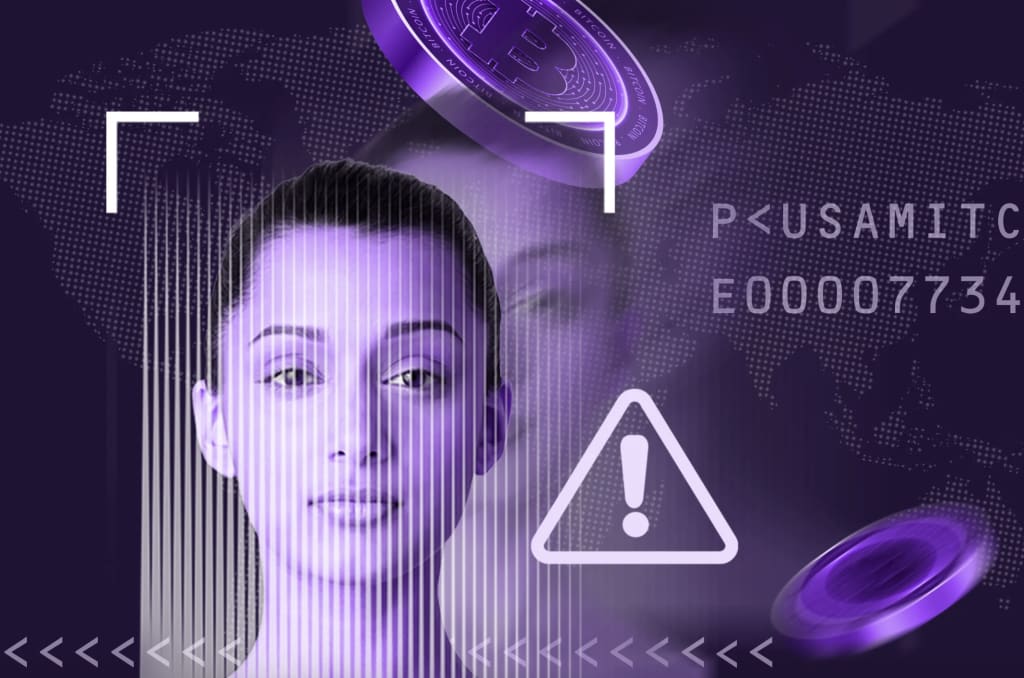
The Crypto market nearly doubled in size in 2024, with global revenue projected to hit $56.7 billion, up from $30.3 billion last year. The United States remains the leader, generating the highest revenue globally, expected to reach $9.8 billion this year.
However, 2025 may bring challenges for Crypto companies, with a potential 20% revenue decline on the horizon. Rising identity threats are also set to add pressure, making effective identity verification (IDV) more critical than ever.
This blog outlines key crypto identity verification trends that could impact financial institutions and tech companies in Crypto. Insights are drawn from Regula’s latest study, which surveyed companies in the U.S. and worldwide.
Trend #1: Deepfakes Become a Growing Threat
Deepfakes—AI-generated media imitating real people—are now a mainstream identity fraud tool. Regula's study reports a 20% rise in video and 12% increase in audio deepfakes used for fraud compared to 2022. In Crypto, 53% of companies encountered video deepfakes in 2024, up from 45% in 2022.
Fraudsters use deepfakes to bypass IDV checks during onboarding or authentication, exploiting the fully digital verification processes of most Crypto providers. This trend poses significant risks, from presentation attacks and account takeovers to phishing schemes.
Example:
A deepfake video of Singapore’s Prime Minister, Lee Hsien Loong, promoted a fraudulent cryptocurrency scheme, falsely guaranteeing investment returns. Such cases highlight the potential for deepfakes to undermine trust in the Crypto industry.
Takeaway:
Crypto companies must proactively develop robust systems to detect and counter deepfakes, ensuring continuous improvements to address this rapidly evolving threat.
Trend #2: Traditional IDV Threats Persist
While deepfakes dominate the conversation, traditional identity fraud remains a significant challenge. In 2024, 45% of Crypto companies faced fake or altered physical identity documents. Synthetic identity fraud, combining real data with AI-generated elements, affected 53% of businesses.
Many Crypto companies still rely on government-issued IDs for account verification, making them vulnerable to these attacks. Although emerging concepts like self-sovereign identity (SSI) promise secure digital ID solutions, physical ID fraud remains a pressing issue for now.
Takeaway:
While addressing new threats like deepfakes, Crypto businesses must remain vigilant against traditional ID fraud methods, which are still growing.
Trend #3: Stoicism Amid Rising Identity Fraud
Despite the increasing prevalence of identity fraud, many Crypto companies view these threats with relative calm.
Regula’s study shows:
- 49% of companies see synthetic identity fraud as a moderate threat.
- 43% view video deepfakes similarly, with only 25% considering them a serious issue.
This stoicism contrasts with other industries, like IT, where 42% consider video deepfakes a significant concern.
Takeaway:
While staying composed is admirable, Crypto companies must take more significant action to protect their businesses and customers from identity fraud threats.
Trend #4: Regulatory Scrutiny and Penalties on the Rise
The Crypto industry lost an average of $440 million to deepfake attacks last year, with legal expenses and regulatory fines among the top concerns. For example, the EU’s Markets in Crypto-Assets Regulation (MiCA) introduces stricter rules on identifying transaction participants, prompting companies to refine their IDV processes.
Interestingly, 39% of Crypto businesses advocate for a regulatory body to monitor and combat deepfakes, while 31% support stricter IDV standards and penalties.
Takeaway:
Crypto companies must stay ahead of evolving regulations by adopting robust IDV systems that exceed current requirements, safeguarding against both financial losses and compliance risks.
Trend #5: Live Video Verification Gains Popularity
Live video interviews and online document verification are emerging as the most effective IDV methods in Crypto, with 90% of companies adopting them. Multi-factor authentication (MFA) using facial recognition, fingerprint scans, and selfies further enhances security.
Platforms like Bybit and OKX now require users to submit live selfies alongside photo IDs for verification. While these layered IDV processes strengthen security, maintaining a seamless user experience is crucial.
Takeaway:
A multi-layered, liveness-centric approach to IDV is becoming standard in the Crypto industry. By integrating additional checks like device and location verification, companies can enhance security while preserving user convenience.
The Future of IDV in Crypto
Innovative IDV concepts, such as portable digital IDs and zero-knowledge proofs, are on the horizon. These technologies promise greater privacy and control but require widespread adoption and standardization. While many users remain unfamiliar with digital IDs, the Crypto industry is likely to be an early adopter of these advancements.
By balancing innovation, compliance, and security, Crypto companies can build trust and resilience in a rapidly evolving landscape.
About the Creator
Regula Forensics
Regula is a global developer of forensic devices and identity verification solutions.
Follow https://regulaforensics.com
Keep reading
More stories from Regula Forensics and writers in Education and other communities.
ID Verification in Mobility Services: Elements, Challenges, Regulations
The Mobility as a Service (MaaS) industry has seen significant advancements over the past decade, with carsharing, ridesharing, and micromobility solutions expanding their reach. However, with rapid growth comes increased responsibility, and inadequate security measures can lead to serious risks, including criminal activities and data breaches. For instance, India’s Ola Consumer rideshare service has faced criticism due to security lapses that resulted in privacy violations and even assaults.
By Regula Forensicsabout a year ago in Education
The Devastating Failure of Modern Education: Why Our Schools Are Producing Obedient Workers Instead of Critical Thinkers
The modern education system is fundamentally broken, not in the sense that it is failing to achieve its intended purpose, but rather in the more insidious sense that it is succeeding brilliantly at a purpose that no longer serves the needs of students, society, or the future we are rapidly hurtling toward, and this success in achieving outdated objectives while the world transforms around it represents one of the great institutional failures of our time, a failure with consequences that ripple through every aspect of contemporary life from economic inequality to political polarization to our collective inability to address existential challenges like climate change and technological disruption. The factory model of education that we inherited from the industrial revolution, designed explicitly to produce compliant workers who could follow instructions, tolerate boredom, and accept hierarchy without question, persists largely unchanged despite the fact that the factories it was meant to serve have either disappeared or been automated, and we continue to subject millions of children to a system that treats them as widgets to be processed through standardized procedures, measured against arbitrary benchmarks, and sorted into categories that will largely determine their economic and social outcomes for the rest of their lives.
By The Curious Writerabout 6 hours ago in Education
Generosity Without Boundaries: Advancing Equity Through Philanthropy
Philanthropy has always played a meaningful role in shaping societies and improving the lives of individuals in need. From supporting educational programs to funding healthcare initiatives, acts of giving have helped communities overcome many challenges. In today’s diverse world, however, philanthropy is taking on a deeper purpose. It is increasingly focused on equity—ensuring that resources and opportunities are distributed fairly among people from different backgrounds and circumstances.
By John Olin Killgore2 days ago in Education



Comments (1)
Fascinating trends! Great work!