

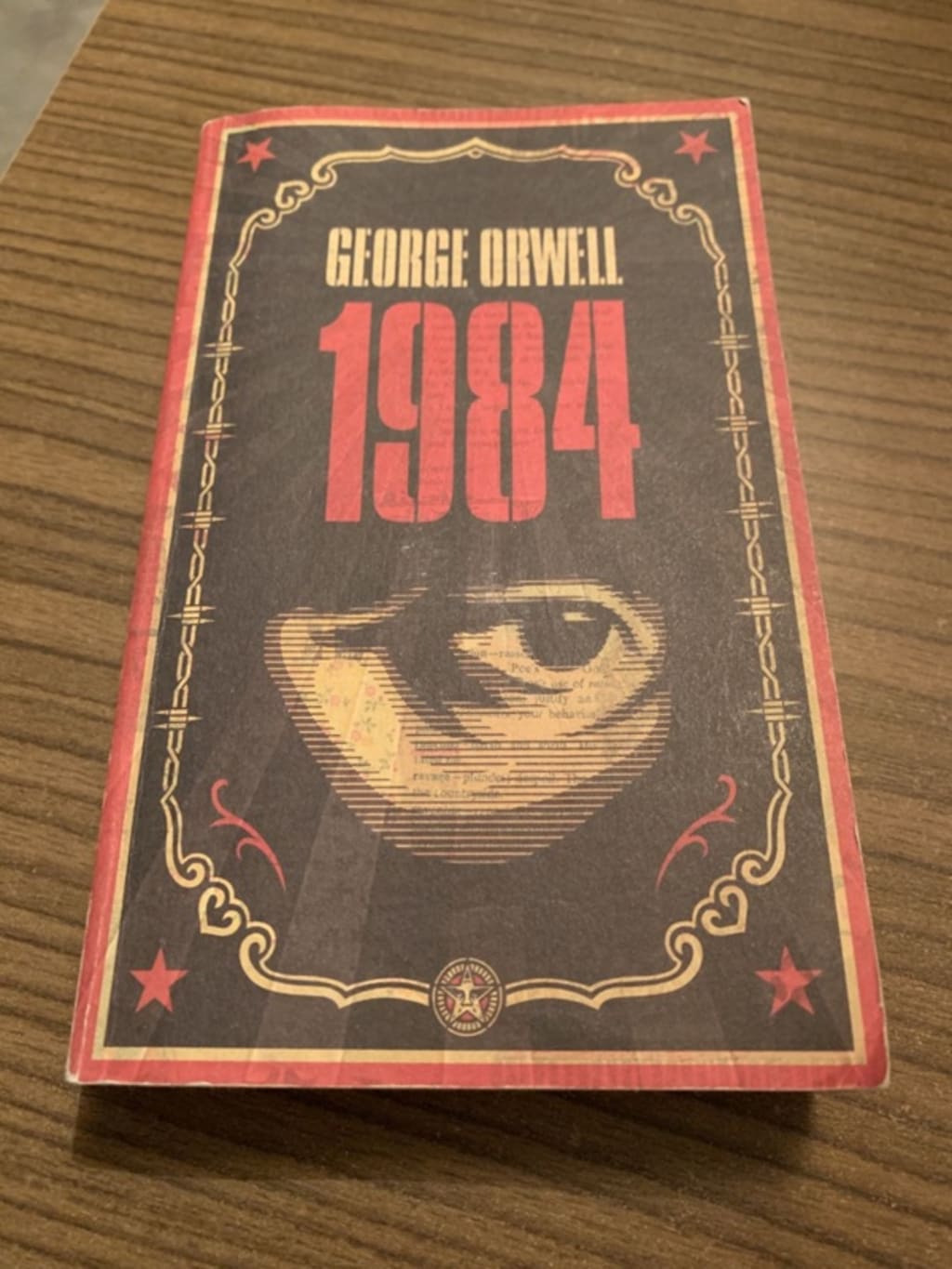
"1984" by George Orwell is a dystopian novel set in a future world where a totalitarian regime, led by a figurehead called "Big Brother," controls every aspect of citizens' lives. The story follows the life of Winston Smith, an intellectual worker for the regime, who begins to question the oppressive regime he serves and seeks to break free from its control.
The novel is divided into three parts, each of which depicts a different phase in Winston's struggle against the Party.
Part One: The World of Winston Smith
The novel opens in the city of London, now known as Airstrip One, in the year 1984. The city is constantly under surveillance, and every citizen is forced to conform to the rigid rules of the regime. Winston Smith is a middle-aged man who works in the Ministry of Truth, which is responsible for the party's propaganda. Winston is disillusioned with his job and the Party, and he begins to secretly rebel against them.
One day, Winston buys a diary and begins to write down his thoughts and feelings about the regime. He also begins to remember his past, before the regime took over, and wonders if there was ever a time when people were truly free.
Winston's rebellion against the Party becomes more pronounced when he meets Julia, a young woman who also works for the Party. Julia shares Winston's disillusionment with the regime, and they begin an illicit affair.
Part Two: The Rebellion
As Winston and Julia's relationship deepens, they become involved with a group of rebels who are working to overthrow the party. The group is led by a mysterious figure named O'Brien, who recruits Winston and Julia to his cause.
O'Brien teaches Winston and Julia the principles of rebellion, including the need to reject the party's propaganda and to embrace individualism. Winston and Julia are initially enthusiastic about the rebellion, but their enthusiasm is short-lived.
One day, Winston and Julia are caught by the Party and taken to the Ministry of Love, where they are subjected to torture and brainwashing. Winston is eventually broken down and forced to betray Julia and the rebellion.
Part Three: The Triumph of the Party
In the final part of the novel, Winston has been completely brainwashed and has come to love Big Brother. He no longer questions the regime or desires individual freedom.
The novel ends with Winston sitting in a cafe, surrounded by Party loyalists. He sees a new Party member and realises that he too will be brainwashed and forced to love Big Brother. The novel ends with the chilling phrase, "He loved Big Brother."
Themes:
The novel is a critique of totalitarianism and a warning against the dangers of government control. It explores themes of individualism, freedom, truth, and the power of language to shape reality. It also examines the nature of power and the corruption that can result from absolute power.
Characters:
Winston Smith is the protagonist of the novel, and his struggle against the Party is the central plot. Winston is a complex character who is both rebellious and vulnerable.
Julia is Winston's love interest and fellow rebel. She is initially enthusiastic about the rebellion, but her spirit is broken by the party's torture and brainwashing.
O'Brien is the enigmatic leader of the rebellion. He is initially presented as a sympathetic character, but he is later revealed to be an agent of the party.
Big Brother is the figurehead of the Party, and his image is ubiquitous in the society of the novel. He represents the all-powerful and omnipotent state.
Conclusion:
"1984" is a powerful and chilling warning against the dangers of totalitarianism. Orwell's depiction of a world where every aspect of citizens' lives is controlled by the state is a powerful critique of government power and control. The novel's themes are freedom and truth.
About the Creator
Reader insights
Good effort
You have potential. Keep practicing and don’t give up!
Top insight
Eye opening
Niche topic & fresh perspectives
Turning a History Lesson Into an Escape Room Game
History is often taught through lectures, textbooks, and timelines — methods that can feel dry and distant. But what if students could experience history instead of just reading about it? One of the most engaging ways to do this is by transforming a history lesson into an escape room game. This interactive approach combines problem-solving, teamwork, and storytelling to make history memorable and exciting.
By Games Mode On2 days ago in Education
Ai Basics Everyone Should Know for the Future
Artificial Intelligence (AI) is no longer a distant concept reserved for scientists or tech companies. It’s already shaping how we work, learn, communicate, and make decisions. From recommendation systems on streaming platforms to AI assistants that help write emails, analyze data, or generate images, AI has quietly become part of everyday life.
By Anthony Bahamondea day ago in Education


Comments
There are no comments for this story
Be the first to respond and start the conversation.