
Generation of Computers
Computers and Its Generations
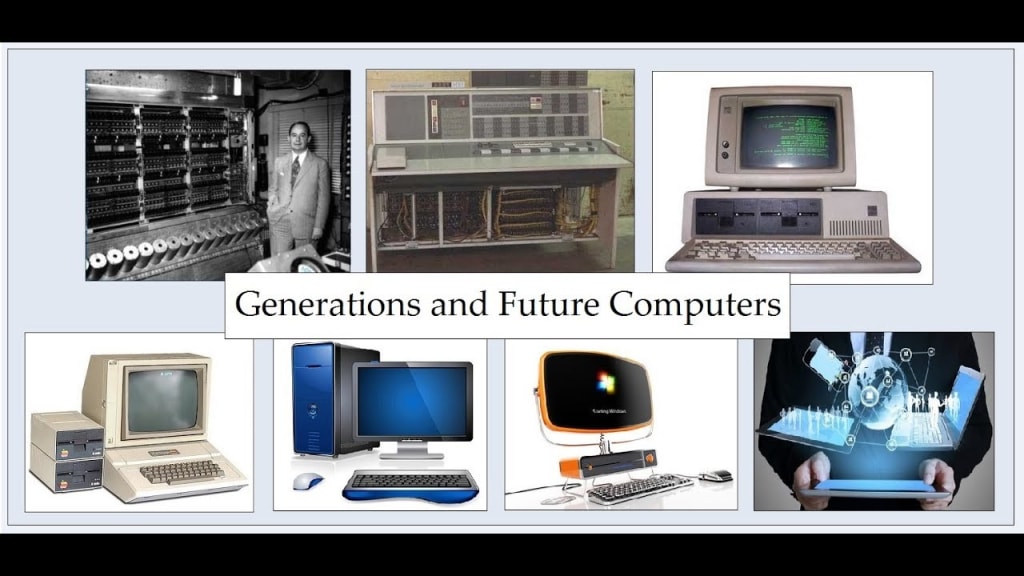
First generation computers (1940s-1950s): These computers were based on vacuum tubes, and their hardware was large, expensive, and had limited processing power. They were primarily used for military purposes and scientific calculations.
Second generation computers (1950s-1960s): These computers used transistors instead of vacuum tubes, which made them smaller, faster, and more reliable. They were also cheaper and had higher storage capacity than their predecessors.
Third generation computers (1960s-1970s): These computers used integrated circuits (ICs), which made them even smaller, faster, and more reliable than their predecessors. They also had higher processing power and could handle larger amounts of data.
Fourth generation computers (1970s-1980s): These computers used microprocessors and had high-level programming languages such as BASIC and COBOL. They were more versatile and could perform a wider range of tasks, including word processing, database management, and gaming.
Fifth generation computers (1980s-present): These computers are based on artificial intelligence (AI) technologies, such as natural language processing and robotics. They are designed to solve complex problems and perform tasks that were previously only possible for humans. They also have advanced graphical user interfaces (GUIs) and multimedia capabilities.
There are several stories about the evolution of computer generations and how they have impacted technology and society. Here are a few examples:
The Story of the First Generation Computers: The first generation of computers was developed during World War II for military purposes. One of the most famous computers of this era was the ENIAC (Electronic Numerical Integrator and Computer), which was developed by John Mauchly and J. Presper Eckert. ENIAC was massive, taking up an entire room, and used vacuum tubes to perform calculations. Despite its limitations, ENIAC paved the way for future generations of computers.
The Story of the Second Generation Computers: The second generation of computers was developed in the 1950s and 1960s and was characterized by the use of transistors. Transistors were much smaller and more reliable than vacuum tubes, which led to the development of smaller and more powerful computers. The IBM System/360, which was introduced in 1964, was one of the most popular second-generation computers.
The Story of the Third Generation Computers: The third generation of computers was developed in the 1960s and 1970s and was characterized by the use of integrated circuits (ICs). ICs allowed for even smaller and more powerful computers, which led to the development of mainframe computers and mini-computers. One of the most famous computers of this era was the DEC PDP-8, which was introduced in 1965.
The Story of the Fourth Generation Computers: The fourth generation of computers was developed in the 1970s and 1980s and was characterized by the use of microprocessors. Microprocessors allowed for even smaller and more powerful computers, which led to the development of personal computers (PCs). One of the most famous computers of this era was the Apple II, which was introduced in 1977.
The Story of the Fifth Generation Computers: The fifth generation of computers was developed in the 1980s and beyond and was characterized by the use of artificial intelligence (AI) technologies. These computers were designed to perform tasks that were previously only possible for humans, such as natural language processing and robotics. One of the most famous examples of a fifth-generation computer is IBM's Watson, which defeated two champions on the quiz show Jeopardy! in 2011.
Overall, the evolution of computer generations has had a profound impact on technology and society, and continues to shape our world today
First Generation (1946-1959): The age of vacuum tubes. Second Generation(1959-1965): The semiconductor transistor replaces vacuum tubes. Third Generation (1965-1971): Integrated Circuits (ICs). Fourth Generation (1971-1980): VLSI (very large integration).
About the Creator
K.R.Venkatesh
B.Tech Graduate with 15 years of IT Industry experience.
Keep reading
More stories from writers in Education and other communities.
The Red Renaissance Uncorking the Future of Russian Wine in 2026
For decades, the global wine map was a predictable atlas of French Chateaus, Italian vineyards, and New World giants. However, as we move through 2026, a new and unexpected frontier has firmly established its presence: Russia. The Russian wine industry is currently undergoing a "Grand Renaissance," fueled by a combination of aggressive state support, massive private investment, and a geopolitical shift that has turned the domestic market inward. What was once seen as a secondary player, primarily known for mass-produced sparkling wines, has transformed into a sophisticated producer of premium, terroir-driven still wines that are winning over a new generation of health-conscious and patriotic consumers.
By Neeraj kumarabout 10 hours ago in Education



Comments
There are no comments for this story
Be the first to respond and start the conversation.