
Gadaa system of oromo people
Gadaa system in gujii

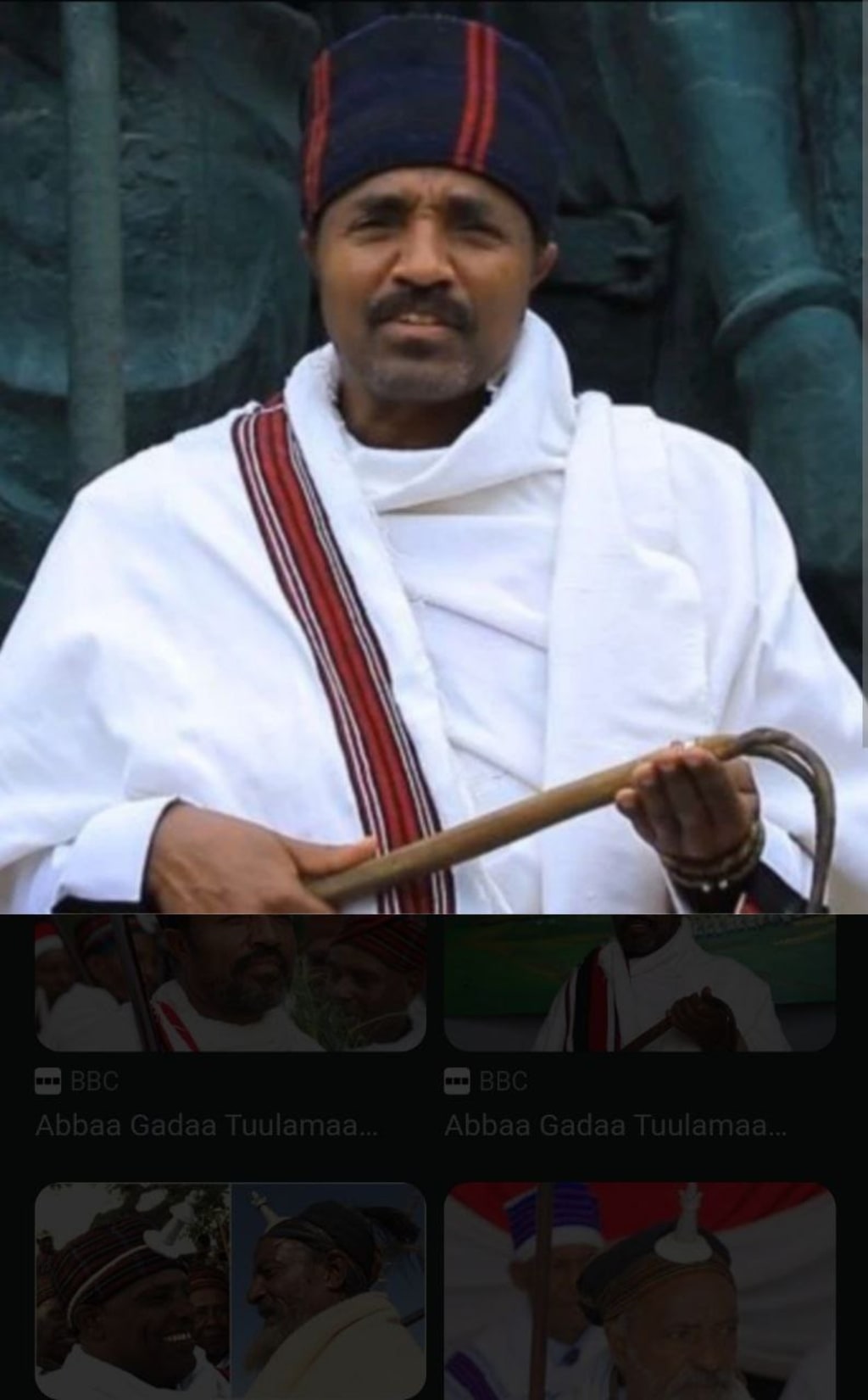
The Structure of Gujii Oromo Gadaa System
The study of human history is started to administer themselves before thousands years during ancient time.
Their early life was depending on the some arranged ways which determined their life. The Oromo nations have
developed different systems of governance in their history. Among such governments, Gadaa System is the most
comprehensive system of political, legal, religious and social system of the Oromo society. Gadaa is an
indigenous socio-political system “that regulated political stability, economic development, social activities,
cultural obligations, moral responsibility, and the philosophy of religious order of the society”. It is controversial
among scholars when and how the indigenous Oromo Gadaa system emerged [7]. Among the various
descriptions given on the origin of Gadaa, some holds that Gadaa laws are originally derived from ‘Waaqa’
(God). As different scholars described “Ga” represents Seeraa (law), “Da” represents Waaqa(God). Therefore,
this view tall as Gadaa was derived from law of God (Seeraa Waaqa). Oromo oral tradition also supports in the
early days, Gadaa was purely a religious institution that helped the society as a constitution later it came to bind
the Socio-economic, political and religious life of Oromo [8]. The political philosophy of Gadaa has “principles
of checks and balances, terms of eight years, balanced opposition between parties, and power sharing” to prevent
power from falling into the hands of dictators. Other principles of the system have included balanced
representation of all clans, lineages, regions and confederacies .
In socio- political aspect male members of Gujii Oromo are grouped into age grade “hiriyaa” (peer) system. To
simplify these there are several Gadaa grades. For Example, Dabballee (0-8), Qarreeduraa (9-16), Qarree
duubaa (17-24), Kuusa (25-28), Raaba (29-36), Doorii (37-40), Gadaa (41-48), Baatuu (49-56), Yuuba Diqqaa
(57-64), Yuuba Gudda (65-72), Jaarsa Guduruu (73-80) and Jaarsa Qululluu(81-88).In the luuba cycle
Dabballee, Qarree Duraa and Qarree Duuba are passive Gadaa stage. On the other hand Kuusa, Raaba, Doorii
and Gadaa stages areactive Political stage. However, Baatuu,Yuuba Diqqaa and Yuuba Guddaa stage are
retirement or departure Gadaa stage. Moreover, Jaarsa stage is called Extinctive stages of Gadaa system [18].
In Oromo society, knowledge and information have been mainly transmitted from generation to generation
through the institutions of family, religion, and Gadaa. Dabballees are expected to learn appropriate social
behavior from their families, communities and experts. Dabballee is a productive time to study Oromo myth,
riddles(Hibboo), stories of different types, geerersa, cultural songs. Qarree duubaa stage is the most important
stage in the Gadaa cycle when the members shoulder family responsibilities and engage in military exercise. In
other words, this period was the period of enjoyment and military training.
The Role of Oromo Women in Gadaa System
Historically, Scholars are argued as Oromo women have no powers during the period of Gadaa rule. In Gadaa
democracy women cannot be Abbaa Gadaa or hayyuu in the clan leadership structure. However, this scholar
validates this view as the wife of elected Abbaa Gadaa is equally treated like the Abbaa Gadaa himself. The
question for why women marginalized from Gadaa System is still controversial among scholars. For some
scholars, the reasons are rooted in cultural, socio-economic and biological factors[23],[24]. Other scholar also
argued as “Under Gadaa system, women do not belong to the Gadaa grade of the clan in which they were born
and to which they are married. Unmarried women are viewed as keessummaa (guest) and Alagaa (non-relative)
in the clan to which they are married’’ [25]. Though, even if, the issue is still debatable it doesn’t mean that
women didn’t have role in the Gadaa Democracy. Basically, Gadaa system is not the issue of being Abbaa
Gadaa or not being Abbaa Gadaa. Gadaa Democracy is the issue of Oromo socio-political philosophies . Therefore, for me Gadaa system and Siiqqee institution are a coin of opposite sides.
About the Creator
Keep reading
More stories from writers in Education and other communities.
How Collective Giving Shapes Stronger and More Compassionate Communities
Giving back to the community reflects a shared desire to uplift others and create meaningful change. Although many associate giving with financial donations, it can take countless forms, including volunteering, mentoring, or offering skills to local organizations. Each contribution matters because it strengthens the support networks that help communities thrive. As individuals continue to give, they build a culture where charitable involvement becomes a natural and valued part of everyday life.
By Jason Pruetabout 10 hours ago in Education
Built to Last: How Smart Leaders Design Businesses for Long-Term Sustainability
This understanding also encourages leaders to examine the relationship between profitability, responsibility, and long-term value creation. As they study emerging trends, they identify risks linked to resource depletion, regulatory changes, and shifting societal priorities. This recognition prompts them to act early and make decisions that balance economic performance with sustainable impact. As leaders adapt their vision to reflect these realities, they position their companies for steady growth in an unpredictable world.
By Alexander Schifter6 days ago in Education




Comments
There are no comments for this story
Be the first to respond and start the conversation.