
G.D. Naidu (Gopalaswamy Doraiswamy Naidu)
he was called as "Edison of India," the "Wealth Creator of Coimbatore, and "the Miracle Man,"
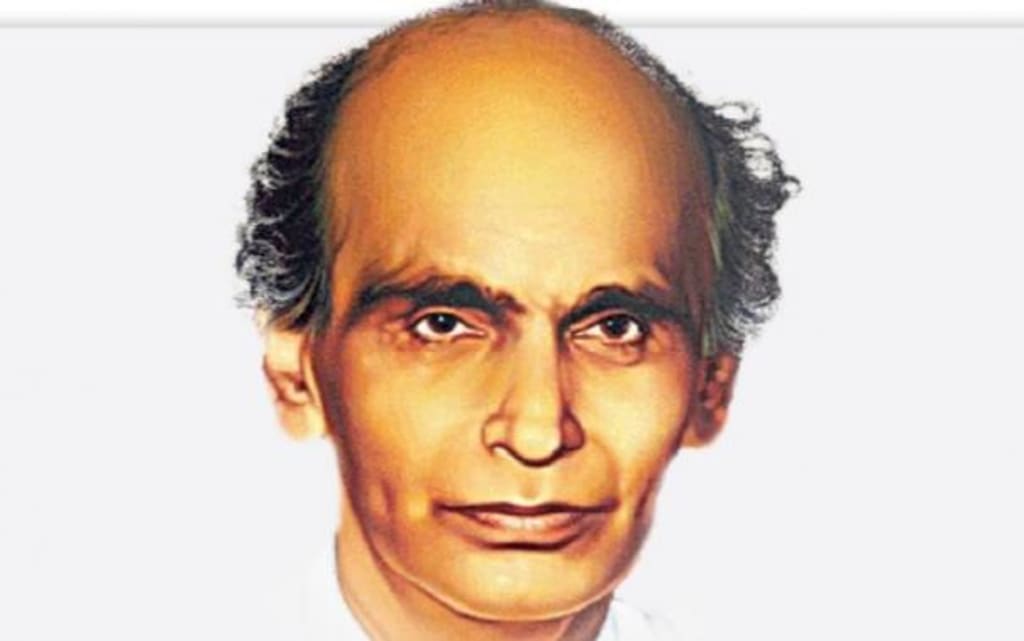
As well as being referred to as the "Edison of India," the "Wealth Creator of Coimbatore," and "Adhisaya Manidhar" or "the Miracle Man," Gopalaswamy Doraiswamy Naidu was an Indian engineer and inventor. Despite dropping out of school and not continuing his education above third grade, he succeeded as a multi-talented genius and an inventive entrepreneur.
He created India's first domestic electric motor. He independently created a four-stroke internal combustion engine as well. His contributions ranged from the industrial, including mechanical and electrical, through the automotive and agricultural. He was renowned for his charitable endeavors as well.
Short bio
G.D. Naidu was born in Tamil Nadu, India, on March 23, 1893, at Kalangal, Coimbatore. He went by the name Doraiswamy and came from a typical Telugu family. Gopalaswamy Naidu, his father, was a farmer. When Duraiswamy was just a few months old, his mother passed away.
His father wished to nurture him as an intelligent young man. As a result, he sent his kid to his cousin in the hamlet of Lakshmi Naayakanpaalayam, who took good care of him.
He performed around averagely throughout school. He didn't enjoy going to school. He was always in problems at school. He could only complete the third standard of study as a result. His tale is a typical one of a school dropout who succeeds.
Early Years
Gopalswamy always wanted to be able to stand by himself. He intended to use his own money to purchase a motorbike. So he started working as a server in a hotel in Coimbatore. He invested effort in maintenance and repair after purchasing the motorcycle. He was interested in taking the motorbike apart and putting it back together. He gained a lot of knowledge about vehicle engineering as a result and turned become a mechanic.
He spent some time working at a cotton ginning factory as well. Later, he established a cotton company. He attempted to extend the company to Bombay, but this failed.
He acquired a motor coach in 1920 and started his transportation company with the aid of Coimbatore businessman Robert Stanes. He launched his transportation business between Pollachi and Palani.
He continued to grow his company. He possessed up to 280 buses by 1933. In a short period of time, his transportation company, Universal Motor Service (UMS), grew to be one of India's biggest and most effective public transportation systems.
Then and Now: His Inventions
Naidu made multiple trips throughout the globe. He captured the King George V burial on film in 1935 when he was in London. Additionally, he had taken portraits of Subhas Chandra Bose, Jawaharlal Nehru, and Mahatma Gandhi. Before the onset of World War II, he had a face-to-face meeting with Adolf Hitler in Germany. He ran in the 1936 Provincial General Elections as well, but he was unsuccessful. At the time, he was the only Indian who owned a Rolls Royce automobile.
A dry cell-powered electric motor was used in G.D. Naidu's invention of the electric razor known as the Rasant. In addition, he produced the tiny engine for it, which was created in a factory in the German city of Heilbronn. In Leipzieg, Germany, in 1936, he won third place for the UMS Razor Company's razor blade design.
Together with a business associate named D. Balasundaram, he also established the New Electric Works (NEW) in Coimbatore in 1939 as a manufacturer of electric motors. This facility created India's first locally produced electric motor. Lakshmi Machine Works (LMW) was the business he later started.
He also created several helpful inventions at this time, including over 100 devices,
like as
Shaving Blades for the refrigerator, recorder, radio, and clock that were incredibly thin Distance Adjuster for Cameras
Fruit Juice Extractor Tamper-resistant voting recorder
fuel-powered fan
calculator, among many other useful things.
He claimed to be able to produce five-valve radio sets in India for just Rupees 70 in 1941, which was a significant discount from the price that radios were being sold for at the time.
He created a two-seater petrol automobile in 1952 that only cost Rs. 2000. He was unable to produce it for sale nonetheless because the government would not him the necessary permission.
He did not merely focus on mechanical and electrical machinery in his study and development; rather, he covered a wide range of topics. Regarding agriculture and crops, he developed new, better types of cash crops including cotton, maize, banana, papaya, coconut, etc.
He built a farm at Podhanur in 1941, and prominent scientists from the era, including Visvesvaraya and Sir C. V. Raman, among many others, came and commended his work.
From the time the foundation was laid at 6 am until it was finished at 5 pm in just 11 hours, he built a house.
He established a number of businesses in a variety of sectors, including Coimbatore Armature Winding Works, Universal Radiators Factory, UMS Radio Industry, Gopal Clock Industry, Coimbatore Diesel Products, and Coimbatore Engineering Private Limited.
He retired from active engagement in business and industry in 1944 so that he could focus on philanthropy. near honor of his father, he built a house near Coimbatore and gave it the name Gopala Bhag. He turned this into his residence and workplace, residing there until his passing.
He founded the Industrial Labor Welfare Association (ILWA) in 1946; it is currently known as G.D. Naidu Charities. He established a number of welfare programs for both his workers and the less fortunate members of society. Additionally, he gave research funding to academics.
The G.D. Naidu Industrial Exhibition was founded in 1967. His businesses generated jobs in manufacturing and engineering during the 1950s and 1960s.
The Arthur Hope Polytechnic, which bears the name of the former governor of Madras Arthur Hope, was the first polytechnic college established in India. The Government Polytechnic of Coimbatore was afterwards given the name. Additionally, he founded the Government College of Technology (GCT), formerly known as the Arthur Hope College of Engineering. The college's inaugural principal was G.D. Naidu. He gave the government both of these organizations.
the obituaries and death
The date of Naidu's death is January 4, 1974. He received lavish tributes from important figures in India. He left behind his son G.D. Gopal, as well as G.D. Rajkumar and Shantini, his grandkids.
He founded the G.D. Matriculation Higher Secondary School in Coimbatore, which is run by his in-law's wife, Mrs. Chandra Gopal. Mr. G.D. Rajkumar, his grandson, currently oversees Geedee Industries. In his honor, a permanent industrial exhibition and museum have been established in Coimbatore.
He continues to be a highly regarded manufacturer and innovator in the eyes of the people despite the fact that his efforts and services did not receive the proper acknowledgment from the government. Through the creation of jobs, he positively impacted the lives of millions of people. He has influenced multiple generations of Indian businesspeople.
About the Creator
Keep reading
More stories from B.PRASANTH and writers in Education and other communities.
The Overlooked Consequences of Weak Healthcare Program Planning
Healthcare programs are created to expand access to care, improve patient outcomes, and strengthen public health systems. Governments, hospitals, nonprofits, and health organizations invest significant resources into developing programs that address disease prevention, treatment, and community wellness. When these initiatives are carefully planned and strategically executed, they can transform healthcare delivery and improve the quality of life for entire populations.
By Evyatar Nitzany3 days ago in Education
Strategy Before Software: Why Content Strategy Matters More Than Platform Technology
A strong content strategy matters more than platform technology because strategy shapes every choice a team makes. It guides tone, purpose, structure, and audience focus. Technology can help with speed and reach, but it cannot replace direction. A tool only works well when someone uses it with a clear plan. Without a strategy, even the best systems fail to connect with real people.
By James Kaminsky3 days ago in Education


Comments
There are no comments for this story
Be the first to respond and start the conversation.