
Functional Fitness: How to Train for Real-Life Strength and Agility
The concept of functional fitness and a series of exercises that mimic everyday movements to improve practical strength and agility.
Introduction
In a world where everyday activities demand a range of movements, from lifting groceries to climbing stairs, functional fitness has gained widespread recognition as an essential training approach. Unlike traditional gym workouts that often focus on isolated muscle groups, functional fitness aims to enhance the body's ability to perform real-life activities efficiently and safely. In this comprehensive article, we will delve into the concept of functional fitness, its principles, and explore various exercises and training methods to help you build real-life strength and agility.
Understanding Functional Fitness
Functional fitness is a training philosophy that emphasizes exercises and movements that mirror the actions and challenges of daily life. The core principle is to enhance the body's ability to perform tasks with ease, reduce the risk of injuries, and improve overall physical function. This holistic approach to exercise involves engaging multiple muscle groups simultaneously, promoting better coordination, balance, and flexibility.
The Importance of Real-Life Strength and Agility
Modern lifestyles often involve sedentary activities and repetitive movements, leading to muscle imbalances and reduced functional strength. Functional fitness aims to counteract these issues by promoting the use of compound movements that recruit multiple muscles and joints. By incorporating functional exercises into your workout routine, you can experience the following benefits:
- Injury Prevention: Functional fitness strengthens the body's stabilizing muscles, reducing the risk of injuries during daily activities or sports.
- Improved Balance and Stability: By practicing movements that challenge balance, functional fitness helps improve overall stability and coordination.
- Enhanced Flexibility: Functional exercises involve dynamic movements that promote flexibility and mobility throughout the body.
- Increased Real-Life Performance: Whether it's carrying groceries, playing sports, or tackling household chores, functional fitness enhances your ability to perform these tasks efficiently.
- Core Strength: Many functional exercises engage the core muscles, leading to improved core strength and stability.
Functional Fitness Exercises
- Squats: Squats are a fundamental functional exercise that mimics movements like sitting down and standing up. They work the quadriceps, hamstrings, glutes, and core.
- Deadlifts: Deadlifts strengthen the muscles in the lower back, glutes, hamstrings, and calves, making them ideal for lifting and bending movements.
- Lunges: Lunges improve lower body strength, balance, and stability, closely replicating movements used in walking and climbing stairs.
- Push-ups: Push-ups engage the chest, shoulders, triceps, and core, simulating movements required for pushing objects.
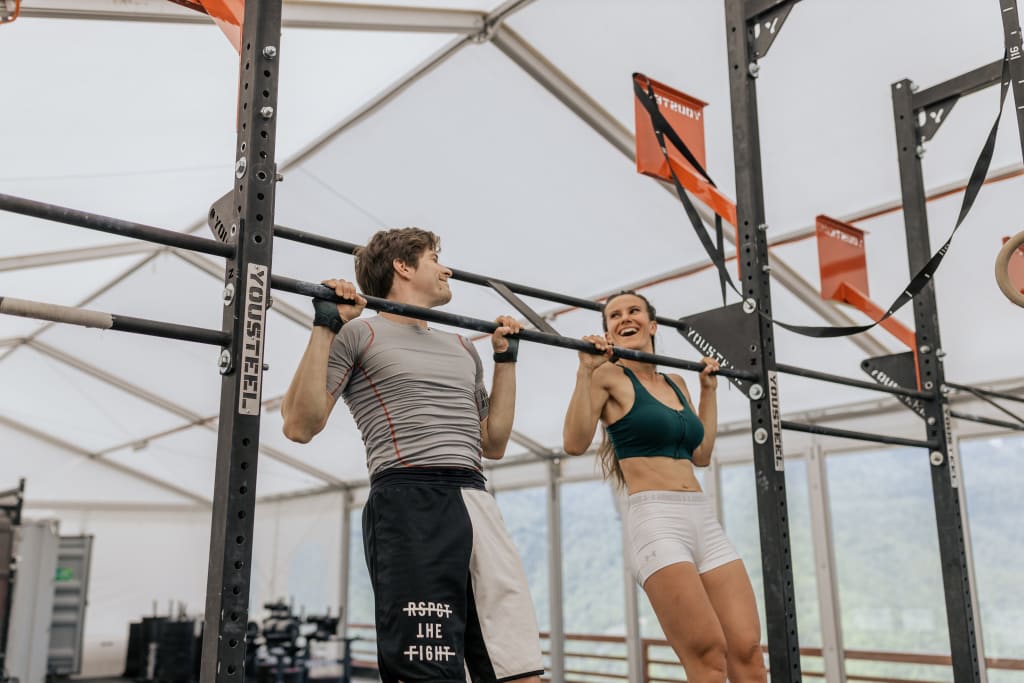
- Pull-ups: Pull-ups target the upper body, including the back, biceps, and shoulders, helping to develop pulling and lifting abilities.
- Farmer's Carry: This exercise involves walking while carrying heavy weights (dumbbells, kettlebells, or sandbags), challenging grip strength, core stability, and overall functional strength.
- Plank Variations: Planks and their variations engage the core muscles and improve stability, crucial for maintaining proper posture and preventing lower back pain.
- Medicine Ball Throws: Medicine ball throws mimic movements used in sports and daily activities, helping to improve power and rotational strength.
Functional Training Methods
- Circuit Training: Create a circuit of functional exercises, performing each for a set time or number of repetitions before moving on to the next. This method enhances cardiovascular endurance and total body strength.
- HIIT (High-Intensity Interval Training): Combine functional movements in short bursts of high-intensity effort followed by brief rest periods. HIIT improves cardiovascular fitness, burns calories, and builds functional strength.
- CrossFit: CrossFit workouts often incorporate functional exercises and constantly varied movements, providing a comprehensive approach to functional fitness.
- TRX Suspension Training: TRX uses bodyweight and gravity to challenge stability and strength in various functional movements.
Conclusion
Functional fitness is not just about looking good; it's about preparing your body for the demands of real-life activities. By incorporating functional exercises into your workout routine, you can build strength, agility, and endurance that will translate into improved performance in everyday tasks and recreational activities.
Remember, functional fitness is adaptable to all fitness levels and can be customized to suit individual needs. However, it's essential to prioritize proper form and technique to avoid injuries. Consult with a certified fitness professional or physical therapist to design a personalized functional fitness program that aligns with your goals and ensures safe progression.
Embrace functional fitness as a way to enhance your overall quality of life, making everyday movements smoother and more enjoyable. With dedication and consistency, you can achieve a level of strength and agility that empowers you to take on any real-life challenge with confidence and ease.
About the Creator
ISO 9001 in Abu Dhabi: What Auditors Check Most Often (Simple Checklist)
If your business is based in Abu Dhabi, an ISO 9001 audit can feel stressful for one simple reason, it’s not only about “having a system.” It’s about proving that your system is working in real daily operations.
By Umar Quality Jounal3 days ago in Education
Historical Background of Panasonic Avionics Corporation
From my research, Panasonic Avionics Corporation was originally founded in 1979 under the name Matsushita Avionics Systems Corporation. Over the decades, the company evolved alongside commercial aviation, aligning its products with aircraft cabin modernization and passenger comfort.
By Beckett Dowhan6 days ago in Education



Comments
There are no comments for this story
Be the first to respond and start the conversation.