
Function and types of sentences
Declarative, Interrogative, Exclamatory, Imperative
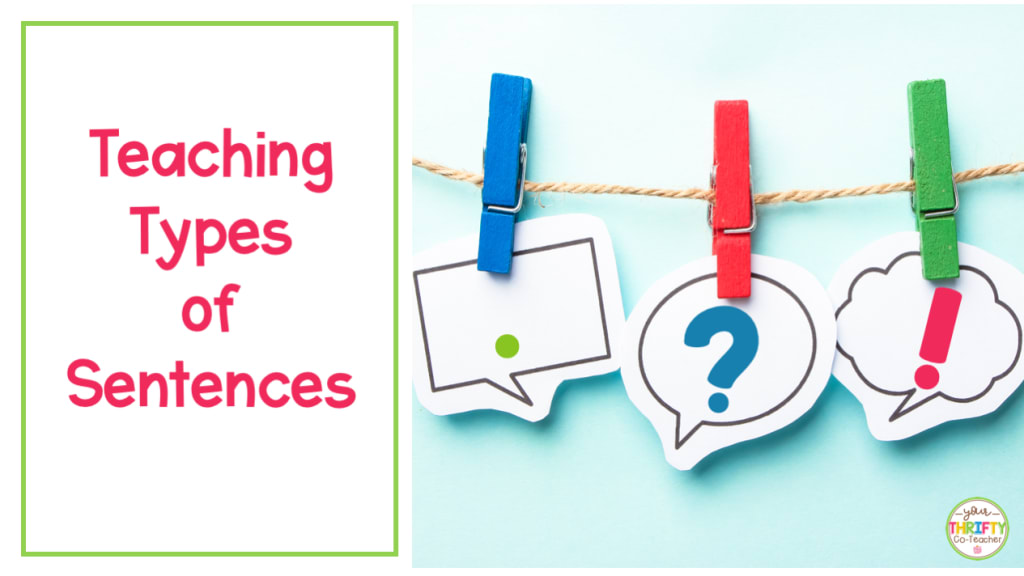
FUNCTION AND TYPES OF SENTENCES
The four different kinds of sentences in English — declarative, interrogative, imperative, and exclamatory — allow me to express ourselves clearly. Using a variety of sentences in your writing will add interest and help you get your ideas across effectively. Keep reading for explanations of each type of sentence with examples so you can get your point across.
Declarative Sentences
A declarative sentence is the most basic type of sentence. Its purpose is to relay information, and it is punctuated with a period. Simple declarative sentences can make basic statements, such as:
• The boy walked home.
• I love honey.
• My mother is a nurse.
Declarative sentences can also be compound sentences, such as in these examples:
• He wants to eat cookies, but he doesn't know how to make them.
• We plan to visit Florida, and we're spending a day at Disneyworld.
• Jason doesn't know how to ski, so he's taking lessons.
Interrogative Sentences
Interrogative sentences ask questions (or interrogate). These are direct questions, and they are punctuated with a question mark. For example:
• Why does the sun shine?
• Whose dog is that?
• Will Sherri get to keep all her lottery winnings?
Compound sentences can be interrogative:
• Who are you and why are you here?
• How much does it cost and why do you need it?
• I don't know his home phone number, so can you call his cell phone?
Many interrogative sentences start with question words like "how" or "why," but others are yes/no questions that begin with the verb instead of the noun. It is important to remember that interrogative sentences still require a noun and a verb to be complete.
Exclamatory Sentences
Exclamatory sentences express strong emotions. They are similar to declarative sentences in that they provide information, but they end in an exclamation point instead of a period.
• I said I wanted tacos!
• How well he sings!
• Wow, he just won a gold medal!
You can make exclamatory sentences with compound sentences as well:
• Lauren didn't think she'd get into Stanford, but she was just accepted!
• My new job is a wonderful opportunity and it offers great benefits!
• We knew you wanted to visit Paris, so we bought you a ticket!
Exclamatory sentences are often used in casual conversation and in written dialogue to show emotion, but they are not typically useful in academic or expository writing. In these more serious works, it's better to make your point with well-written declarative sentences instead.
Imperative Sentences
Imperative sentences tell someone to do something. These can be in the form of friendly advice, basic instructions or more forceful commands. Many imperative sentences end in periods, but some of the more forceful demands may end in an exclamation point to highlight the emotion. For example:
• Please shut the door to keep out the bugs.
• Turn left at the bridge.
• Stop bothering me!
You'll find compound imperative sentences like this:
• Put your phone away and listen to me!
• There was an accident, but don't worry.
• Please order me a soda or pick up a can for me.
You can identify an imperative sentence because it appears to be missing a subject. However, the command of each imperative is directed at you, making these sentences second-person. The subject of the sentence may be omitted, but it's called "you understood" because the reader is aware that each sentence could be written as "you do this" or "you do that."
Choosing the Right Type of Sentence
Using the right type of sentence in your writing depends on your intention. Decide what you want to say with the following guide:
• To relay information or to answer a question, use a ________________.
• To ask a direct question, choose an _________________.
• To tell someone what to do, use an __________________.
• To show extra emotion, use an __________________ (but use these sparingly).
About the Creator
Keep reading
More stories from writers in Education and other communities.
The Digital Vault: Inside Switzerland’s USD 901.39 Million Data Revolution (2026–2034)
In early 2026, Switzerland is successfully rebranding itself. Long known as the world’s safest vault for physical gold and private wealth, the Alpine nation has spent the last decade laying the groundwork to become the premier "Digital Vault" of the 21st century. The Switzerland data center market, valued at USD 435.12 Million in 2025, is projected to soar to USD 901.39 Million by 2034. With a robust CAGR of 8.43%, this sector is outperforming many of its European neighbors, driven by a unique trifecta of political neutrality, renewable energy, and the insatiable demand for Generative AI.
By Neeraj kumar4 days ago in Education
I've Just Realized
The President doesn't understand music. There. It felt very good to write that; it's some thing I just realized today. Oh , yes; he plays it. He TRUMPets it in rallies and meetings, pumps it across the airwaves when he gathers up our minutes waiting for his late arrival.
By Judey Kalchik 6 days ago in Beat



Comments
There are no comments for this story
Be the first to respond and start the conversation.