
From Zero to Hero: The Complete Guide to Becoming a Pilot
Becoming a Pilot

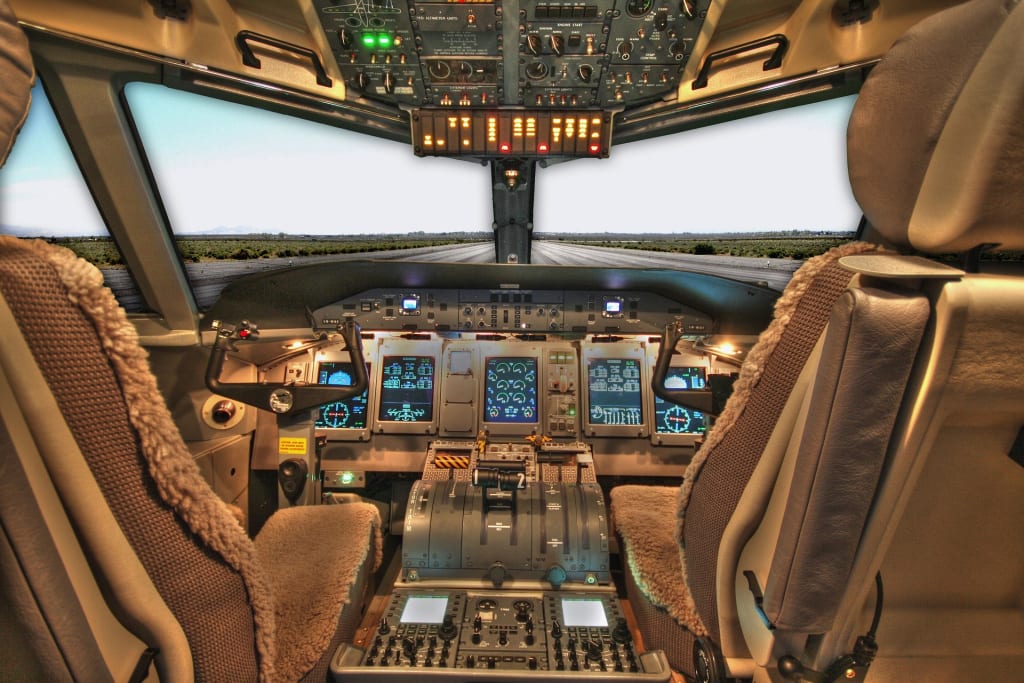
Flying an airplane is one of the most thrilling and exciting experiences one can have. The freedom of being in the air, controlling a massive machine, and soaring through the clouds is something that many people dream of, but few ever achieve. Becoming a pilot is not an easy feat, but it is definitely achievable with the right guidance. In this post, we'll be discussing everything you need to know about becoming a pilot, from choosing a flight school to obtaining your private pilot's license, and eventually advancing to a commercial pilot's license. We'll also be exploring the different types of aircraft and the various job opportunities that are available to pilots. So, if you're ready to take your love of flying to the next level and become a pilot, read on for our complete guide!
1. Introduction to becoming a pilot
Becoming a pilot is a dream for many people, and it's not hard to see why. The thrill of soaring through the sky, the breathtaking views, and the sense of accomplishment that comes with mastering a complex machine are just a few of the many reasons why people aspire to become pilots.
However, the road to becoming a pilot can be long and challenging, and it requires a lot of hard work and dedication. There are many different paths to becoming a pilot, and each one has its own set of requirements and challenges.
In this guide, we will provide you with a comprehensive overview of what it takes to become a pilot, including the different types of pilot licenses, the training and education requirements, and the skills and qualities that are essential for success in this exciting and rewarding career. So, whether you're a young person just starting out on your journey or an adult who's always dreamed of flying, this guide will give you the information you need to get started on the path to becoming a pilot.
2. Types of pilots and aircraft
When it comes to becoming a pilot, there are various types of pilots and aircraft to consider. Knowing about these different types can help you decide which path to take towards achieving your pilot's license.
The most common types of pilots are commercial pilots, private pilots, and military pilots. Commercial pilots work for airlines, cargo companies, or other organizations that require air transportation services. Private pilots, on the other hand, fly smaller aircraft for personal or business use. Military pilots, as the name suggests, fly aircraft for military operations.
Another important factor to consider is the type of aircraft you want to fly. There are many types of aircraft, each with unique features and purposes. Some of the most common aircraft include single-engine, multi-engine, helicopters, and jets. Your choice of aircraft will depend on your personal preferences, as well as the type of pilot career you want to pursue.
It's important to research and understand the different types of pilots and aircraft before embarking on your journey towards becoming a pilot. This will help you make informed decisions, set achievable goals, and ultimately succeed in your pilot career.
3. Basic requirements for becoming a pilot
Becoming a pilot is a dream come true for many people. It's a highly respected and rewarding career, but it requires a lot of hard work and dedication. To become a pilot, there are some basic requirements that you need to meet.
Firstly, you need to be at least 17 years old to obtain a private pilot's license. However, you need to be at least 18 years old to become a commercial pilot. Along with age, you must also have a high school diploma or equivalent qualification.
Another important requirement is having good physical and mental health. You need to have a clean bill of health from a certified aviation medical examiner. This is to ensure that you are fit to fly and have no medical conditions that could pose a risk during flight.
In terms of education, it is recommended to have a degree in aviation or a related field. However, it is not mandatory. You can still become a pilot without a degree, but having one will give you a competitive edge in the job market.
Lastly, you need to have a certain number of flying hours to become a pilot. The number of hours required varies depending on the type of pilot license you want to obtain. For example, to become a private pilot, you need a minimum of 40 flight hours, while to become a commercial pilot, you need at least 250 flight hours.
In summary, becoming a pilot requires meeting certain basic requirements such as age, education, physical and mental health, and a certain number of flying hours. If you meet these requirements and have a passion for flying, then you're on your way to becoming a successful pilot.
4. Selecting a flight school
Selecting a flight school is a critical step in becoming a pilot. It's important to choose a school that aligns with your aviation goals, budget, and location. There are many factors to consider when selecting a flight school, such as the type of aircraft they use, the qualifications of their instructors, and their reputation in the aviation community.
It's also important to consider the level of support and resources the flight school offers to its students. This can include things like career services, additional training opportunities, and access to simulators and other training equipment.
Before selecting a flight school, it's a good idea to do some research and compare different options. You can read reviews and testimonials from past students, visit the school and meet with instructors, and ask questions about the school's curriculum, policies, and safety record.
Finally, it's important to keep in mind that the cost of flight training can vary greatly depending on the school and location. It's important to set a budget and do your research to find a flight school that offers affordable tuition without sacrificing quality of instruction. With the right flight school and dedication to training, you can be on your way to becoming a successful pilot.
5. Private pilot license requirements
Obtaining a private pilot license (PPL) is a critical step towards achieving your dream of becoming a pilot. However, before you start the training process, there are several requirements that you must meet. The first requirement is age; you must be at least 17 years old to apply for a PPL.
Secondly, you must have a valid medical certificate issued by an authorized aviation medical examiner. This certificate certifies that you are physically and mentally fit to fly. There are three types of medical certificates: first class, second class, and third class. The type of certificate you need depends on the type of flying you plan to do.
Next, you must have a minimum of 40 hours of flight time, including 20 hours of flight with an instructor and 10 hours of solo flight. During this time, you will learn the basics of flight, such as taking off, flying straight and level, and landing. You will also learn how to navigate, communicate with air traffic control, and handle emergency situations.
In addition to flight time, you will need to pass a written exam and a practical flight test. The written exam covers topics such as air law, meteorology, navigation, and aircraft technical knowledge. The practical flight test assesses your ability to fly the aircraft safely, handle emergency situations, and navigate using charts and instruments.
Finally, you must have a good command of the English language, as it is the universal language of aviation. You will need to demonstrate your proficiency in English by passing a language proficiency test.
Meeting these requirements may seem daunting, but with dedication, hard work, and a passion for aviation, you can obtain your PPL and start your journey towards becoming a pilot.
6. Instrument rating requirements
Instrument rating is an advanced qualification that allows pilots to fly in conditions where visibility is low or non-existent. It is an essential rating that every pilot must acquire to become a professional pilot. To obtain an instrument rating, you must meet certain requirements.
Firstly, you must have a private pilot certificate or a commercial pilot certificate. Secondly, you must have a minimum of 50 hours of cross-country flight time as pilot in command, of which 10 hours must be in an airplane. You must also have 40 hours of actual or simulated instrument time of which 15 hours must be with an authorized instructor and 3 hours must be within 60 days prior to the test.
Additionally, you must pass a written exam that tests your knowledge of instrument flying procedures, air traffic control procedures, and weather interpretation. You must also pass a practical exam that tests your ability to fly in instrument conditions and respond to emergency situations.
Overall, obtaining an instrument rating is a challenging but rewarding experience. It enables pilots to fly in all weather conditions, which is essential for any professional pilot.
7. Commercial pilot license requirements
Becoming a commercial pilot is a dream for many. However, it's important to understand the requirements and qualifications needed before you can even think about applying for a commercial pilot license.
Firstly, you must be at least 18 years old and hold a private pilot license. You must also have a minimum of 250 hours flight time, of which at least 100 must be pilot-in-command time and 50 hours must be cross-country flight time.
In addition to these minimum requirements, you must also pass a medical examination and hold a Class 1 medical certificate. This is a rigorous medical examination that assesses your physical and mental fitness to fly an aircraft.
Furthermore, you must complete ground school training and pass the FAA written exam, which covers topics such as aerodynamics, aviation regulations, navigation, and weather.
Once you have completed the required flight hours and passed the FAA written exam, you need to complete a minimum of 10 hours of flight training in a complex aircraft. This will prepare you for the final hurdle, the flight test with an FAA examiner.
It's important to note that these requirements are just the minimum. Airlines are looking for pilots with a range of skills and experiences, so it's important to continue to build your flight hours and gain experience in different types of aircraft to make yourself a more attractive candidate for commercial pilot roles.
8. Flight instructor's license requirements
Becoming a flight instructor is one of the most rewarding career paths in aviation. The flight instructor's license is necessary for those who want to teach others to fly and is typically considered to be a stepping stone to a career as a commercial pilot. However, before you can become a flight instructor, you must meet certain requirements.
To obtain a flight instructor's license, you must hold a commercial pilot's license and have logged at least 250 hours of flight time, including 100 hours of pilot-in-command time. You must also pass the FAA's Fundamentals of Instructing (FOI) written exam and the Flight Instructor Airplane (FIA) written exam. In addition, you must pass a flight test with an FAA examiner.
You must also hold a second-class medical certificate and be at least 18 years old. Additionally, you must have a clean criminal record and be able to communicate fluently in English.
Once you have met these requirements, you can begin working as a flight instructor. As a flight instructor, you will have the opportunity to share your passion for flying with others and help them achieve their dreams of becoming a pilot.
9. Multi-engine rating requirements
If you’re looking to become a commercial pilot, you’ll need to obtain a multi-engine rating. A multi-engine rating allows you to fly aircraft with more than one engine and is essential for most commercial pilot jobs.
To obtain a multi-engine rating, you’ll need to meet certain requirements. Firstly, you’ll need to hold a private pilot’s license or a commercial pilot’s license with a single-engine rating. You’ll also need to have accumulated a minimum of 50 hours of cross-country pilot-in-command time as pilot-in-command, and at least 10 hours of instrument flight time.
Once you meet these requirements, you can begin your training for the multi-engine rating. This training involves learning the differences between flying a single-engine aircraft and a multi-engine aircraft, as well as how to handle engine failure. You’ll need to complete a minimum of 6 hours of flight time in a multi-engine aircraft, with at least 3 hours of flight training with an instructor and at least 3 hours of solo flight time.
After completing your flight training, you’ll need to pass a multi-engine check ride with a Federal Aviation Administration (FAA) examiner. During this check ride, you’ll demonstrate your ability to handle the aircraft in various situations and show that you’re capable of safely flying a multi-engine aircraft.
Obtaining a multi-engine rating is an important step in your journey to becoming a commercial pilot. It allows you to expand your flying capabilities and opens up more job opportunities in the aviation industry.
10. Airline transport pilot license requirements
The airline transport pilot (ATP) license is the highest level of certification a pilot can achieve. To fly for an airline, you must obtain an ATP license. This certification requires a significant amount of training and experience.
To qualify for an ATP license, you must first hold a commercial pilot license and have logged at least 1,500 hours of flight time. You must also be at least 23 years old, hold a first-class medical certificate, and pass the ATP written exam.
In addition to meeting these requirements, you must complete a rigorous training program that includes both classroom instruction and flight training. This training includes instruction on topics such as advanced aerodynamics, weather analysis, and crew resource management.
Once you have completed the training program, you must pass a practical exam that includes both oral and flight components. This exam is designed to test your knowledge and skills in real-world scenarios.
Obtaining an ATP license is a significant accomplishment and opens up many opportunities for pilots. With this license, you can fly for airlines, corporate flight departments, and other organizations that require pilots with advanced skills and experience.
11. Tips for passing the FAA written and practical exams
Passing the FAA written and practical exams can be a challenging task for aspiring pilots. However, with proper preparation and guidance, you can successfully clear these exams and move ahead in your journey to becoming a pilot.
Here are some tips to help you prepare for and pass the FAA written and practical exams:
1. Start early: Begin your preparation well in advance to avoid last-minute stress. Give yourself enough time to study and practice and ensure that you cover all the topics thoroughly.
2. Study regularly: Consistency is key when it comes to studying for the FAA exams. Make a study schedule and stick to it. Make sure you allocate enough time to each topic, and revise regularly.
3. Practice mock tests: Attempting mock tests will help you get a feel for the actual exam format and the types of questions that may appear on the exam. You can find several mock tests online or through aviation schools.
4. Focus on weaker areas: Identify your weaker areas and focus on them. Make sure you understand the concepts and seek help if needed.
5. Stay updated: Keep yourself up to date with the latest regulations and changes in the aviation industry. This will help you in the practical exam and also in your career as a pilot.
6. Stay calm and confident: On the day of the exam, stay calm and confident. Take deep breaths and read the questions carefully. Don't panic if you don't know the answer to a particular question, move on and come back to it later.
Remember, passing your FAA exams is just the beginning of your journey to becoming a pilot. Keep learning, stay focused, and never give up on your dream.
12. Career opportunities for pilots
Becoming a pilot can lead to various career opportunities in the aviation industry. The most common career path is becoming a commercial airline pilot. This involves flying for a commercial airline, transporting passengers and cargo to various destinations around the world. Some pilots may choose to specialize in a particular type of aircraft, such as jets or helicopters.
Another career opportunity for pilots is in the field of private aviation. This includes flying for wealthy individuals, corporations, or even government officials. Private aviation pilots may fly smaller aircraft or even luxury jets, and their duties may include transporting VIPs, conducting sightseeing tours, or providing emergency medical transport.
Pilots may also choose to work for the military, flying for the Air Force, Navy, or other branches of the armed forces. Military pilots may fly fighter jets, transport aircraft, or even helicopters, and their duties may include combat missions, reconnaissance, or transporting troops and supplies.
Finally, pilots may also choose to work in the field of aviation safety and regulation. This includes working for organizations such as the Federal Aviation Administration (FAA) or National Transportation Safety Board (NTSB), where they can help ensure the safety of the aviation industry by conducting inspections, investigating accidents, and developing safety regulations.
Overall, becoming a pilot can open up a wide range of career opportunities in the aviation industry, and the skills and experience gained as a pilot can be applied to many different roles within the field.
13. The cost of becoming a pilot
Becoming a pilot is an exciting and rewarding career, but it does come with a significant cost. The cost of becoming a pilot can vary depending on the type of pilot you want to become, the country you are in, and the training program you choose. The cost of training to become a private pilot can range from $10,000 to $15,000, while the cost of becoming a commercial pilot can range from $50,000 to $100,000 or more.
It's important to keep in mind that the cost of becoming a pilot is not just limited to the cost of training. You will also need to factor in the cost of obtaining a medical certificate, purchasing pilot supplies such as headsets and flight bags, and the cost of renting or owning an aircraft. Additionally, most airlines require their pilots to have a college degree, which can add to the overall cost of becoming a pilot.
There are ways to reduce the overall cost of becoming a pilot. Some flight schools offer financing options or scholarships, and some airlines have programs that help cover the cost of training in exchange for a commitment to work for the airline. It's important to research all of your options and determine the best path for you based on your personal financial situation and career goals.
While the cost of becoming a pilot can be daunting, it's important to remember that it is an investment in your future career. With dedication, hard work, and careful financial planning, you can achieve your dream of becoming a pilot.
14. Frequently asked questions about becoming a pilot
As with any career, there are always questions that come up about the path to becoming a pilot. Here are some of the most frequently asked questions that aspiring pilots have:
1. How long does it take to become a pilot?
The length of time it takes to become a pilot can vary depending on the type of pilot you want to become. A private pilot's license can take as little as six months to complete, while a commercial pilot's license can take up to two years.
2. How much does it cost to become a pilot?
The cost of becoming a pilot can also vary depending on the type of pilot you want to become. A private pilot's license can cost anywhere from $5,000 to $15,000, while a commercial pilot's license can cost upwards of $100,000.
3. What are the requirements to become a pilot?
The requirements to become a pilot include being at least 17 years old, having a high school diploma or equivalent, and passing a medical exam. You will also need to complete a certain number of flight hours and pass both a written and practical exam.
4. What is the job outlook for pilots?
According to the Bureau of Labor Statistics, the job outlook for pilots is expected to grow by 5% over the next ten years. However, competition for jobs is expected to be strong.
5. What is the salary for pilots?
The salary for pilots can vary depending on the type of pilot and the company they work for. According to the Bureau of Labor Statistics, the median annual wage for airline pilots, copilots, and flight engineers was $147,220 in May 2019.
These are just a few of the most frequently asked questions about becoming a pilot. If you're interested in pursuing a career as a pilot, be sure to do your research and talk to professionals in the field to get a better understanding of what it takes to succeed.
15. Conclusion: Becoming a pilot is within reach
In conclusion, becoming a pilot is definitely within reach. It may seem daunting at first, with the high costs and the many hours of training required, but it's a career that can be incredibly rewarding both personally and financially.
With determination and hard work, anyone can achieve their dream of becoming a pilot. It's important to go into it with a positive attitude and a willingness to learn.
Remember, the aviation industry is constantly evolving, and there are always new opportunities and challenges arising. As a pilot, you'll have the opportunity to travel the world, meet interesting people, and experience once-in-a-lifetime moments.
Whether you're just starting out or looking to make a career change, there's never been a better time to become a pilot. So, take the leap and start your journey towards the skies today!
About the Creator
Derrick Juma
I am a Professional Freelance Writer and Software Engineer. I started content writing five years ago and have since written hundreds of thousands of words across many different types of writing: website content, blog posts e.t.c.
Keep reading
More stories from Derrick Juma and writers in Education and other communities.
Netflix
Netflix is one of the most popular streaming services in the world, with millions of users worldwide. With its vast library of movies, TV shows, and documentaries, it is no surprise that many people are looking for ways to get a free subscription. Unfortunately, there is no legal or ethical way to get a free Netflix subscription. Many websites and individuals claim to offer free accounts or discounted rates, but they are often scams or illegal. In this post, we will discuss why it is unethical and illegal to obtain a free Netflix subscription and provide some alternative options for enjoying your favorite movies and shows without breaking the law. So, sorry, we cannot provide you with a way to get a free Netflix subscription, but we will provide you with the knowledge you need to make the best, most ethical choices when it comes to streaming services.
By Derrick Juma3 years ago in Education
The Day Gravity Failed for 9 Seconds
At 11:42:17 a.m., the world loosened its grip. There was no warning siren. No emergency broadcast. No flicker in the sky or tremor in the ground. One moment, the Earth was doing what it has always done — holding oceans in their basins, keeping feet on sidewalks, anchoring coffee in cups — and the next moment, it wasn’t.
By Abubakar2204 days ago in Education
How the Sun Generates Energy: The Complete Guide to Solar Power Production
What Is the Source of the Sun’s Energy? The Sun generates energy through a process called nuclear fusion. Unlike Earth-based power plants that burn fossil fuels, the Sun does not rely on chemical reactions. Instead, it uses nuclear reactions that occur deep inside its core.
By shahkar jalala day ago in Education
Who is your "Person"?
It's important to recognize that you cannot go through life as easily on your own. My name is Elizabeth and I'm a survivor of child abuse and horrific trauma. Healing from trauma is not a quick fix and recognizing that it will take time, is part of the struggle.
By Elizabeth Woods3 days ago in Psyche


Comments
There are no comments for this story
Be the first to respond and start the conversation.