
From Zero to Hero: A Step-by-Step Guide to Web Development
"A Beginner's Guide to Mastering the Art of Web Development"


Web development is the process of creating and maintaining websites. It involves various skills such as coding, design, and project management. If you're interested in becoming a web developer, but don't know where to start, this guide will provide you with a step-by-step roadmap to help you go from zero to hero.
Step 1: Learn the basics of HTML, CSS, and JavaScript
HTML (Hypertext Markup Language) is the foundation of any website. It is used to structure the content on a website, such as text, images, and links. CSS (Cascading Style Sheets) is used to control the layout and presentation of the content on a website. JavaScript is used to add interactivity and dynamic behavior to a website, such as a form validation and animations.
To learn these technologies, you can start by going through online tutorials or taking a course on a website like Codecademy or Udemy.
Step 2: Practice building simple websites
Once you've learned the basics of HTML, CSS, and JavaScript, it's time to start putting your skills to use by building simple websites. One way to do this is to find a beginner-friendly project on websites like GitHub and attempt to replicate it on your own.
Step 3: Learn a web development framework
Web development frameworks are collections of pre-written code that can help you build websites more efficiently. Some popular frameworks include Angular, React, and Vue.js for JavaScript, and Ruby on Rails, Django, and Flask for Ruby and Python.
Learning a web development framework can be a great way to quickly build more complex websites and applications. Online resources such as tutorials and documentation can be a helpful way to get started with learning a framework.
Step 4: Practice building more complex websites
after learning a web development framework, you can start building more complex websites. This could be a personal project, or a small project for a client. Use this as an opportunity to apply the knowledge you've learned and also to learn more about other technologies and tools that are used in web development.
Step 5: Learn about web development best practices and design principles
Web development is not just about writing code, it's also about creating a good user experience. To create a good user experience, you need to understand web development best practices and design principles. This includes understanding the importance of accessibility, performance, and search engine optimization (SEO).
Step 6: Start building your professional portfolio
Building a professional portfolio is a great way to showcase your skills to potential employers. Your portfolio should include a variety of projects that demonstrate your abilities as a web developer, including both simple and more complex projects. It should also include information about your experience and education.
Step 7: Network and look for job opportunities
Once you've built a portfolio, you can start networking and looking for job opportunities. Networking can involve attending meetups, attending conferences, and connecting with other web developers on social media.
Web development is a constantly evolving field, and there is always something new to learn. By following this roadmap and continuing to learn and grow as a web developer, you'll be well on your way to becoming a web development hero.
In conclusion, becoming a web developer requires effort, patience and a constant strive for improvement, but with the right mindset and the willingness to learn, you can make it to your end goal. With the help of online resources, tutorials, and community support, anyone can become a web developer.
About the Creator
"Navigating the Challenges: The Dark Side of Freelancing"
As a freelancer, you have the freedom to work on your own schedule, choose the projects you want to take on, and be your own boss. However, freelancing also comes with its own set of challenges, and it's important to be aware of them in order to be successful. In this blog post, we'll explore the dark side of freelancing, including loneliness, working under strict clients, poor communication skills, lack of job benefits, and more.
By Keshav3 years ago in Photography
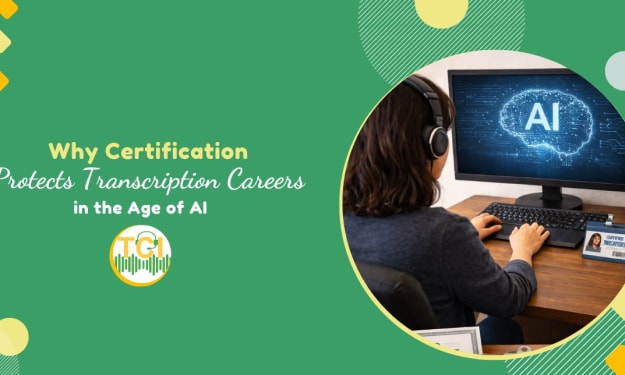
Why Certification Protects Transcription Careers in the Age of AI
Artificial Intelligence has rapidly transformed the transcription industry. Speech-to-text tools now promise instant results, lower costs, and effortless productivity. For businesses focused purely on speed, AI often appears to be the perfect solution. However, beneath this promise lies a critical reality: speed without accuracy creates risk.
By Mahesh Kumar3 days ago in Education
How Japan saved its biggest city from collapse
400 years ago, modern-day Tokyo was known as Edo, and it was already one of the biggest cities in the world, with a population approaching 1 million. However, it was on the verge of ecological collapse. Years of intense logging had led to massive deforestation. The city now faced timber shortages and the impacts of severe erosion and frequent flooding that threatened food supplies. But over just a few decades, Edo will transform and become one of the most sustainable and efficient cities in history.
By Munesh Yadavabout 21 hours ago in Education



Comments
There are no comments for this story
Be the first to respond and start the conversation.