
From Kindergarten to University
A complete Guide to Austrian Educational System


Moving to a new country comes with many challenges, and one of the most important for families is navigating the education system. Austria offers a high-quality public school system that is free for all children, including those of immigrant families, from primary school through university. However, understanding how the system works can be quite complex, especially for those unfamiliar with its structure. In this guide, we’ll break down key things you need to know to help you make informed decisions about your child’s education in Austria, from preschool to university.
Before school
Before primary school, children in Austria can attend various early education facilities depending on their age and needs. For children under three, Krippen (crèches) offer full-day care, mainly for working parents, and are more common in cities like Vienna. From the age of three until school entry, children can attend a Kindergarten, where the focus is on their physical, emotional, and intellectual development through play-based learning in a group setting. This widely accepted pre-school education helps prepare children for school life.
In addition to kindergartens, Kindergruppen are smaller, parent-involved groups with more personalized care. Childminders (Tagesmütter or Tagesväter) are another option, providing care in a home environment, often alongside their own children. Austria also offers inclusive educational opportunities, allowing children with special needs to attend integrated or specialized kindergartens, promoting social learning and inclusion from an early age.
Primary and Secondary Schools in Austria
In Austria, school attendance is mandatory for all children from the September following their sixth birthday, and this compulsory education lasts for nine years. Education begins with Volksschule (primary school), which covers the first four years of formal schooling. Enrollment takes place in the spring before the school year starts, and parents must provide relevant documents from kindergarten, such as language assessments and developmental reports. During the enrollment process, the school assesses whether the child is ready for primary education. If a child is not yet deemed ready, they may be placed in a preparatory class (Vorschulstufe), which helps ensure a smoother transition into formal schooling.
After Volksschule, students move into secondary education, which is divided into two main paths. Most children attend Mittelschule, a general secondary school for students aged 10 to 14, which focuses on broad education and prepares them for vocational training or further schooling. Alternatively, students with strong academic performance may attend an Allgemeinbildende Höhere Schule (AHS), a more academically rigorous option that also spans eight years. The AHS is divided into a lower level (grades 5 to 8) and an upper level (grades 9 to 12), where students work towards the Matura, a diploma that grants access to higher education, including universities and technical colleges.
The choice between Mittelschule and AHS is made after consultations with teachers and parents, who take into account the child’s academic strengths and interests. Austria also offers various types of AHS, including Gymnasium, which emphasizes languages and humanities, and Realgymnasium, with a focus on science and mathematics. These schools help tailor the educational experience to the student’s future aspirations, providing flexibility and specialized learning paths.
Higher Education
Austria offers diverse higher education opportunities through universities, universities of applied sciences (Fachhochschulen), and university colleges of teacher education (Pädagogische Hochschulen). These institutions provide programs ranging from Bachelor's and Master's degrees to continuing education courses designed for working professionals. Continuing education programs, offered by all three types of institutions, focus on providing additional professional qualifications. These programs range from short-term certificates to more extensive courses leading to degrees, with admission requirements typically including professional experience and academic qualifications.
Fachhochschulen provide career-oriented education, with a strong emphasis on practical experience, including mandatory internships. These institutions offer Bachelor’s and Master’s degrees across fields such as technology, health sciences, and economics. The programs aim to provide students with the professional skills necessary to enter their chosen fields, while Master's programs offer advanced specialization or a pathway to doctoral studies.
Universities in Austria cover a wide range of academic disciplines, from the humanities and sciences to medicine and the arts. Bachelor’s and Master’s degrees are the standard academic paths, with some longer programs still offering Diploma degrees. For those interested in research or academia, doctoral studies build on Master’s programs, focusing on independent, original research. Graduates from any of these institutions have the option to continue their education through additional qualifications or enter the workforce directly in their field.
Best Ranked Universities in Austria
Choosing a university can be a challenging task. Here is a list of top 5 Austrian universities according to the Times Higher Education World University Ranking 2024 to help you select the right one:
University of Vienna (Universität Wien)
- Austria’s best-ranked university, placing within the top 119 globally in the Times Ranking 2024.
- It excels in humanities, social sciences, and natural sciences, maintaining a reputation for strong academic and research programs.
Medical University of Vienna
- Ranked within the 201-250 range, it is Austria's leading medical institution, recognized for its cutting-edge research in medical sciences.
- The university is renowned for producing highly skilled healthcare professionals and pioneering medical research.
Medical University of Innsbruck
- Positioned in the 251-300 range, this university is one of the largest educational facilities for doctors and medical researchers in western Austria.
- Its speciality research areas are in oncology, neurosciences, infectiology, immunology and transplant and as an interface with genetics, epigenetics and genomics.
Vienna University of Technology (TU Wien)
- Also ranked within the 351-300 range, TU Wien is a leader in engineering and technology, contributing significantly to advancements in applied sciences.
- It has a strong reputation for its innovation in the fields of computer science, architecture, and mechanical engineering.
University of Innsbruck
- Positioned in the 301-350 range, it is a major research university known for its strength in physical sciences, especially in the fields of physics and engineering.
- It maintains a high international profile with strong ties to European research networks.
For a comprehensive overview of the Austrian education system, we recommend you visit this website.
About the Creator
Igor Strehl
Hi there. I am an experienced professional with a strong background in real estate and asset management. This blog is where I explore various aspects of living, working, and investing in Austria. Visit dunaj-consulting.com for more.
Keep reading
More stories from Igor Strehl and writers in Education and other communities.
Wien & Wein: Top Hidden Wine Destinations Near Vienna
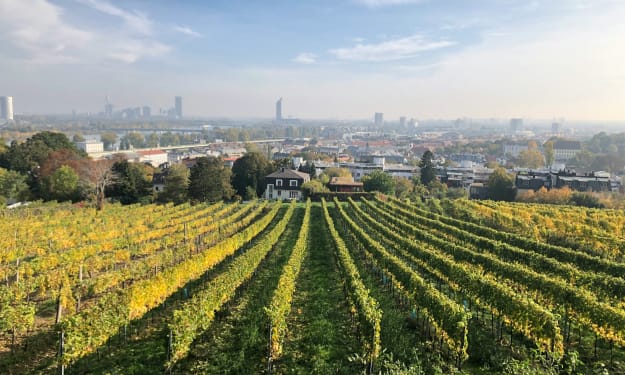
As the Oktoberfest frenzy approaches, there’s a good argument to skip the beer and give Austrian wine a chance instead. If you’re in Vienna, the pairing of “Wien & Wein” (Vienna & wine) isn’t just a coincidence. Vienna boasts a rich wine culture that dates back centuries and can be experienced in the local wine taverns, called Buschenschanks or Heurigers.
By Igor Strehlabout a year ago in Earth
Navigating Economic Uncertainty with Strategic Property Investment
Economic uncertainty has become a constant presence in today’s financial landscape. From inflation and rising interest rates to global conflicts and supply chain disruptions, investors are increasingly concerned about protecting their assets and ensuring long-term financial security. Amid this volatility, real estate remains one of the most dependable investment vehicles. Its tangible nature, consistent income potential, and historical resilience make it a powerful tool for weathering financial storms.
By Accrue Real Estateabout 6 hours ago in Education
Scaling a Business by Doing Less, Not More
Many business owners believe growth comes from adding more. More services, more markets, more tools, and more staff. While this sounds logical, it often leads to confusion and burnout. Scaling a business becomes easier and more sustainable when leaders choose to do less, but do it better.
By Darrell Hulsey7 days ago in Education
Wild Card Weekend Recap: What Happens Now?
I think I figured out why I love Wild Card Weekend so much. It's because it's the first playoff anything of the calendar year. The NFL season starts in the fall, and once upon a time, the champion was crowned either on or slightly before New Year's. The evolution of the NFL schedule has resulted in the playoffs starting just into the New Year, and currently, the final week of the season falls on the first weekend of the New Year, with Wild Card Weekend coming a week after that. So yes, chronologically, the NFL's Wild Card Weekend serves as the first playoff anything of the calendar year.
By Clyde E. Dawkins6 days ago in Unbalanced



Comments
There are no comments for this story
Be the first to respond and start the conversation.