
From Cricket Legend to Political Powerhouse
The Journey of Pakistan’s Most Charismatic Leader and His Impact on a Nation in Transition

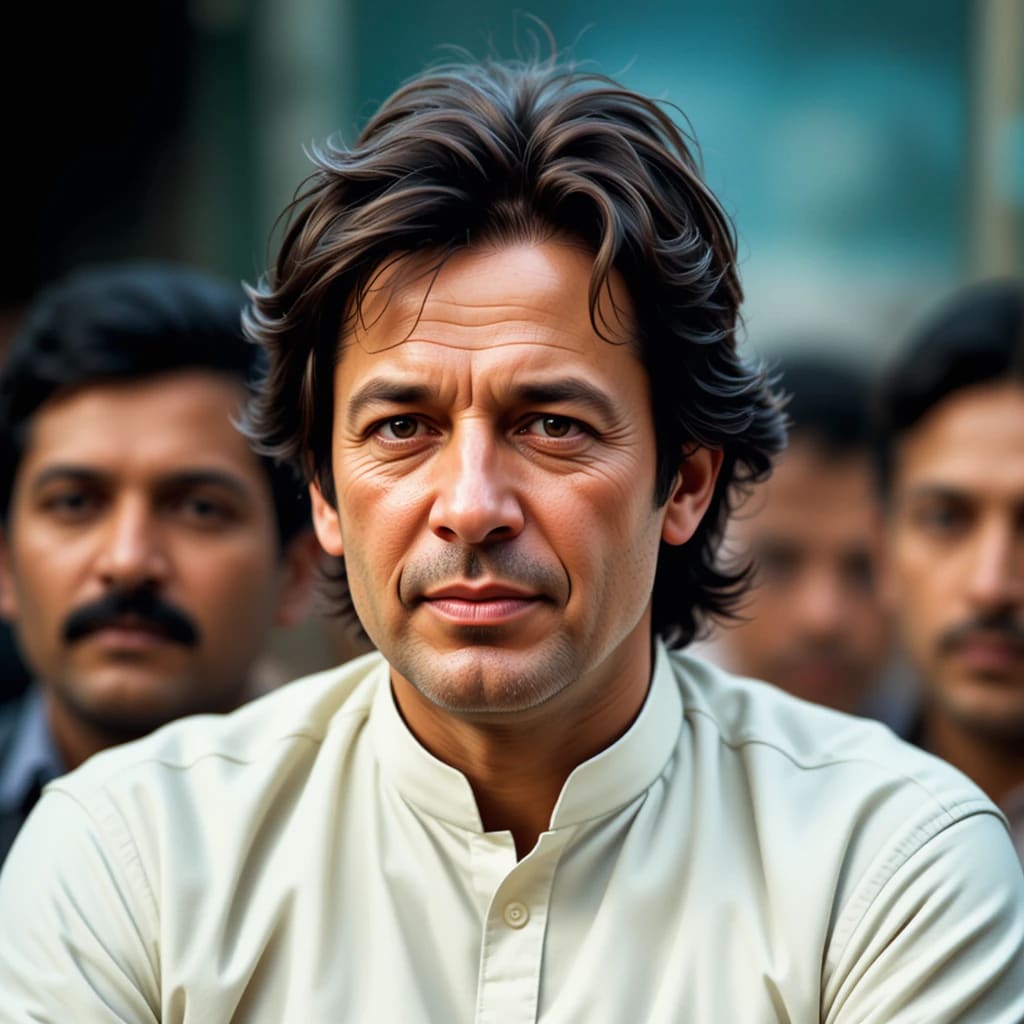
Imran Khan: The Rise, Fall, and Resilience of Pakistan’s Most Compelling Leader
Few names stir such strong emotions in Pakistan — admiration, criticism, loyalty, and defiance — as Imran Khan. Once hailed as the golden boy of Pakistani cricket, Khan reinvented himself as a philanthropist, a political disruptor, and eventually the 22nd Prime Minister of Pakistan. His story is one of ambition, resilience, and controversy — a reflection of Pakistan itself: bold, complex, and constantly evolving.
Born in 1952 in Lahore, Imran Khan belonged to a well-off Pashtun family. He was educated at Aitchison College in Pakistan and later at Oxford University in the UK, where he honed both his academic and cricketing skills. It was during the 1970s and 1980s that he truly rose to international fame as a fast bowler and all-rounder for the Pakistan national cricket team. His leadership, confidence, and tenacity on the pitch made him a household name.
Khan’s crowning achievement came in 1992 when he led Pakistan to its first and only Cricket World Cup victory. More than just a sporting win, it was a national moment — uniting Pakistanis across class and regional lines. Overnight, Imran Khan became a symbol of excellence, determination, and patriotic pride. But instead of settling into retirement or celebrity life, he took a different path — one that would redefine his legacy.
After his mother’s death from cancer in the mid-1980s, Khan embarked on an ambitious and deeply personal project: building Shaukat Khanum Memorial Cancer Hospital. It was Pakistan’s first modern facility of its kind, created entirely through donations and public support. Later, he would also establish Namal University in his hometown of Mianwali, offering affordable education to rural youth. These ventures significantly bolstered his reputation as a man of the people and a social reformer, not just a sports hero.
But Imran Khan wanted more than philanthropy. In 1996, he founded Pakistan Tehreek-e-Insaf (PTI) — a political party built on the principles of justice (insaaf), anti-corruption, and self-reliance. His early foray into politics was rough. For over a decade, PTI failed to secure a significant presence in parliament. Critics dismissed him as naive and idealistic, arguing that charisma alone was no substitute for political experience. He was often alone in parliament and the media, seen more as a celebrity-turned-politician rather than a real contender for leadership.
However, Imran Khan’s perseverance would eventually pay off. As Pakistan’s traditional political parties — primarily the Pakistan Muslim League-Nawaz (PML-N) and Pakistan Peoples Party (PPP) — became increasingly entangled in corruption scandals, Khan’s consistent message began to resonate. By the 2013 elections, PTI had grown into the country’s second-largest political force, especially among the youth and urban middle class.
In 2018, after more than two decades in politics, Imran Khan led PTI to a historic victory and became Prime Minister. His supporters saw it as the beginning of a new era — the long-promised "Naya Pakistan." His government launched initiatives focused on social welfare, like the Ehsaas Program, which aimed to reduce poverty through financial aid and health services. His Naya Pakistan Housing Scheme intended to provide affordable housing for low-income citizens. Meanwhile, his emphasis on digital governance and tax reform signaled an attempt to modernize Pakistan’s institutions.
On the international stage, Khan sought to reshape Pakistan’s image. His speech at the United Nations General Assembly in 2019 earned praise for highlighting key issues like Islamophobia, Kashmir’s plight, and climate change. He built stronger ties with Turkey, China, and Gulf states, while also attempting a balancing act in Pakistan’s sensitive relationship with the United States and India.
But his time in office was riddled with challenges. Inflation soared, the economy struggled, and his government was often accused of relying too heavily on the military establishment. Media freedom declined, opposition leaders were jailed or intimidated, and critics began to question whether Khan’s promises had been overblown.
In April 2022, Khan was ousted from power through a no-confidence motion, becoming the first prime minister in Pakistan’s history to be removed in such a manner. He immediately alleged that his removal was the result of a foreign conspiracy, with U.S. involvement — a claim that was widely debated. Whether true or not, the narrative energized his base, and Khan launched a series of massive public rallies across the country. His message shifted from governance to resistance, positioning himself as a lone warrior fighting corrupt elites and external forces trying to dominate Pakistan’s sovereignty.
Despite facing dozens of legal cases, censorship, and even surviving an assassination attempt, Khan has maintained his grip on public imagination. His use of digital media platforms like Twitter, YouTube, and TikTok allowed him to bypass traditional media and speak directly to the people, especially Pakistan’s large and politically active youth population. His online addresses routinely rack up millions of views, and his supporters have become adept at spreading his message far and wide.
Perhaps most remarkably, even in the face of incarceration and legal challenges in 2023–2025, Khan remained relevant and influential. His followers view him not merely as a politician, but as a movement — one representing dignity, defiance, and hope for a better Pakistan. Critics, however, argue that his populist rhetoric undermines institutions and creates divisions in an already fragile democracy.
Regardless of one’s political stance, one cannot deny that Imran Khan has redefined political engagement in Pakistan. He broke the two-party dominance that ruled for decades, inspired a generation to believe in change, and introduced a level of charisma and ideological clarity rarely seen in South Asian politics.
Conclusion
Imran Khan’s story is far from over. Whether he returns to power or remains in opposition, his legacy will shape Pakistan’s political landscape for years to come. For many, he is still the cricketer who made them proud, the philanthropist who gave them hope, and the leader who made them believe that change was possible.
As Pakistan continues to grapple with economic, political, and social challenges, voices like Khan’s — bold, uncompromising, and deeply nationalistic — will remain central to the national conversation. Love him or loathe him, Imran Khan is more than just a politician — he is a phenomenon. And Pakistan, for better or worse, is forever changed because of him.
About the Creator
GoldenTone
GoldenTone is a creative vocal media platform where storytelling and vocal education come together. We explore the power of the human voice — from singing and speaking to expression and technique.
Keep reading
More stories from GoldenTone and writers in Education and other communities.



Comments
There are no comments for this story
Be the first to respond and start the conversation.