
Foundation in Flux The Crisis and Transformation of Russia’s Cement Industry in 2026
How Sanctions, Demand, and Modernization Are Reshaping Cement
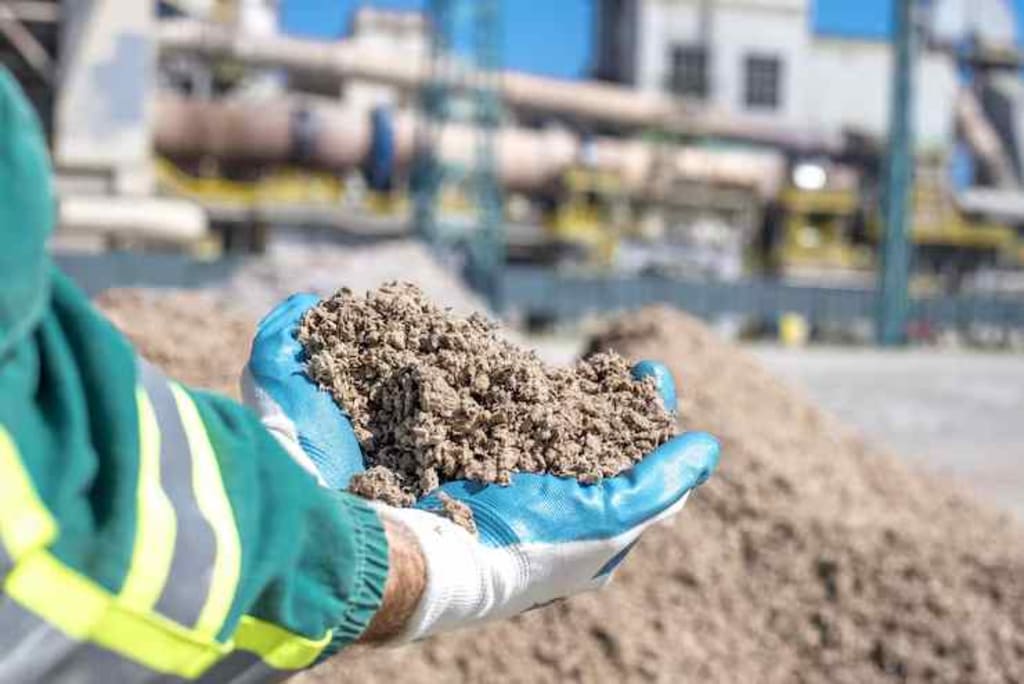
For decades, the cement industry has been the literal foundation of Russia's urban expansion and industrial might. However, as we move through early 2026, this "Concrete Giant" is facing its most severe stress test in modern history. The landscape is no longer defined by the rapid construction of high-rise apartments in Moscow or massive infrastructure projects in the Urals. Instead, the narrative of 2026 is one of consolidation, survival, and a radical shift in demand. With the housing market under immense pressure and interest rates reaching record highs, the Russian cement sector is undergoing a painful but necessary metamorphosis, shifting from a focus on "Growth at all Costs" to "Efficiency for Survival."
The 2026 Demand Collapse: A Housing Market in Retreat
The primary driver of the current crisis is the sudden cooling of Russia's once-boiling residential construction market. By January 2026, the industry has felt the full weight of the Central Bank’s high key interest rates, which have made mortgages unaffordable for the average citizen and developer loans prohibitively expensive. In regions like Ulyanovsk and Belgorod, cement demand has not just dropped; it has practically vanished. Market reports from early 2026 indicate that demand in some southern and central regions has plummeted by as much as 15% in a single year. This is a historic slump that has forced even the largest players to make desperate operational decisions.
Cemros, Russia’s largest cement producer which controls roughly one-third of the market, has become the face of this retreat. In late 2025 and early 2026, the company was forced to "freeze" two of its major factories in the Belgorod and Ulyanovsk oblasts and reduce a third plant in Lipetsk to skeleton operations. This isn't just a temporary pause; it is a strategic withdrawal in the face of a housing market that has effectively collapsed in certain provinces. The "Virtually Nonexistent" demand in these areas proves that the cement industry is the ultimate "canary in the coal mine" for the broader Russian economy when the concrete stops pouring, the economic engine is stalling.
The Import Paradox: Pressure from Belarus and Beyond
While domestic production is being cut, the Russian market is facing a secondary threat: an influx of cheaper imports. In 2026, the "Import Paradox" has become a central theme in the industry’s struggle. Despite the drop in domestic consumption, cement imports into Russia have actually seen a rise. According to Soyuzcement (the Russian Union of Cement Producers), import volumes from neighboring countries like Belarus have surged, often entering the market at prices that domestic factories, burdened by rising energy and labor costs, simply cannot match.
This pressure is particularly acute in Western Russia, where Belarusian cement produced with subsidized energy is flooding the market. In the Far East, manufacturers from China and Vietnam are exporting up to 100,000 tons per year, further squeezing local Russian producers. This has created a situation where Russian plants are closing down while foreign cement continues to find its way onto construction sites. For the Russian government, this presents a difficult regulatory challenge: how to protect the domestic industry without violating trade agreements with close allies like Belarus or further inflating construction costs for remaining projects.
Technological Survival: Modernization and Green Cement
In the face of these challenges, the players who remain are doubling down on Modernization and Efficiency. In 2026, the Russian cement industry is no longer competing on volume; it is competing on "Production Cost per Ton." The largest remaining companies Eurocement Group, Siberian Cement, and Novoroscement are investing heavily in processing equipment that is both more energy-efficient and environmentally friendly. This is partly driven by the need to lower operating costs and partly by new government mandates for industrial "Green Standards" aimed at reducing the carbon footprint of heavy manufacturing.
The shift from the traditional "wet process" to the "dry process" of cement manufacturing has accelerated in 2026. Dry-process kilns consume significantly less thermal energy, which is a critical advantage as energy prices continue to rise. Furthermore, the industry is seeing the introduction of Robotic Process Automation (RPA) to handle data entry and logistics, allowing companies to cut overhead costs. This "High-Tech Pivot" is a survival mechanism; by automating low-level tasks and optimizing energy consumption, Russian producers hope to withstand the period of low demand and emerge as leaner, more competitive entities when the interest rates eventually begin their downward trend.
Infrastructure: The Last Bastion of Demand
While the residential sector is in retreat, the Russia cement industry has found its "Last Bastion" in massive State-Funded Infrastructure Projects. In 2026, the government’s focus has shifted toward mega-projects like Economic Railway Corridors, the redevelopment of Arctic ports, and the massive expansion of the rail network toward the East. These projects require specialized, high-strength cement that offers higher margins than standard residential-grade concrete. The "Port Connectivity" and "Energy & Mineral" corridor programs are currently the only segments of the market showing any sign of life.
The 2026 Economic Survey highlights that while housing is down, public works spending is being maintained to prevent a total industrial collapse. These infrastructure projects serve as a strategic "floor" for cement consumption, ensuring that the critical core of the industry remains intact. For companies like Siberian Cement, which serves the vast development projects in the East, this state demand is the only thing keeping the kilns burning. However, the reliance on the state budget makes the industry highly vulnerable to any changes in government spending priorities, especially as the national budget remains under pressure from other sectors.
Conclusion: A Leaner Future for the Russian Kiln
As we look at the state of Russia’s cement industry in 2026, it is clear that the "Golden Era" of easy growth is over. The industry is currently in a state of "Creative Destruction"—where weak plants are being shuttered and only the most efficient, tech-savvy producers are surviving. The collapse of the housing market in provincial Russia has exposed the vulnerabilities of a sector that was perhaps too reliant on subsidized mortgages and easy credit.
However, the foundation is not completely gone. Through modernization, the adoption of "Green" technologies, and a strategic pivot toward state infrastructure, the Russian cement industry is attempting to rebuild itself for a new economic reality. The future of the Russian kiln will be one that is smaller, more automated, and intensely focused on the regions and projects that the government deems most critical to national sovereignty. For the global observer, Russia’s cement story in 2026 is a stark reminder: even the strongest foundations must be reinforced when the economic ground begins to shift.
About the Creator
Keep reading
More stories from Neeraj kumar and writers in Education and other communities.
The Healing Frontier Russia Medical Tourism Hub in 2026
For decades, medical tourism was a map dominated by the sterile clinics of Switzerland, the bustling hospital hubs of Thailand, and the dental centers of Hungary. However, as we move through 2026, a new titan has emerged in the East. Russia, once seen primarily as a destination for history and culture, has successfully pivoted into a world-class destination for high-quality, cost-effective, and technologically advanced medical care. Driven by massive state investment in the "Healthcare Export" national project and a favorable exchange rate, Russia is drawing millions of patients from across Central Asia, the Middle East, and increasingly, Western Europe. In 2026, the story of Russian medical tourism is one of a "Red Renaissance"—where Soviet-era medical traditions meet 21st-century robotic surgery and luxury wellness.
By Neeraj kumarabout 4 hours ago in Education
Empathy as a Guiding Force in the Future of Digital Financial Services
The role of empathy in the future of digital financial services is becoming more important as technology continues to expand. While digital tools offer speed and convenience, customers still want to feel understood and supported. They want financial experiences that respect their emotions, simplify their decisions, and guide them through moments of uncertainty. Empathy allows financial institutions to design digital services that respond to real human needs rather than relying solely on automated functions. This shift toward empathy-driven design strengthens trust and creates meaningful connections between customers and their financial providers.
By Jason Barakatabout 5 hours ago in Education
Smart College Planning Tips Every Family Should Know Before Applying to College
College planning can feel overwhelming for students and parents. There are many decisions to make, and each one can affect the future. With the right approach, the process becomes clearer and more manageable. Smart college planning tips help families stay prepared, avoid common mistakes, and move forward with confidence. This article shares simple and practical guidance to support students and parents through every stage of college planning.
By Michael Petruskaa day ago in Education



Comments
There are no comments for this story
Be the first to respond and start the conversation.