
Foundation Engineering: Key Topics for Viva Preparation
For a Foundation Engineering viva, a deep understanding of both theoretical concepts and practical applications is essential.

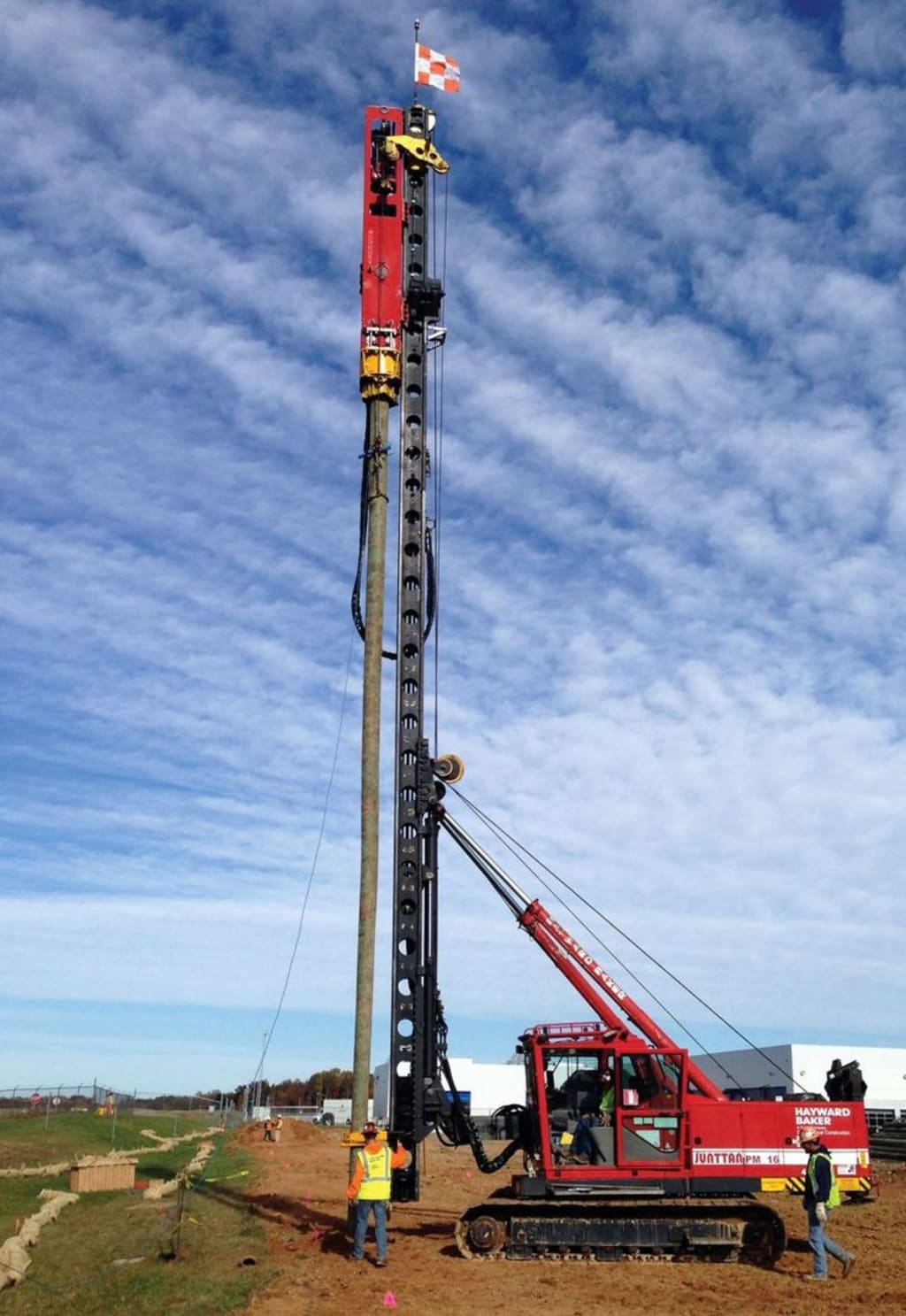
For a Foundation Engineering viva, a deep understanding of both theoretical concepts and practical applications is essential. Here's a detailed list of topics you should focus on:
1. Soil Mechanics Basics
- Types of Soils: Classification (cohesive vs. non-cohesive), properties of clay, sand, silt, and gravel.
- Soil Properties: Unit weight, density, porosity, permeability, consistency, plasticity, and compaction.
- Soil Shear Strength: Mohr-Coulomb failure criterion, effective stress concept, and drained vs. undrained conditions.
- Soil Consolidation: Primary and secondary consolidation, settlement analysis, and time-rate of consolidation.
2. Soil Exploration and Investigation
- Importance of Site Investigation: Objectives and need for soil investigation before foundation design.
- Methods of Soil Exploration: Test pits, boreholes, and trial pits.
- In-situ Testing: Standard Penetration Test (SPT), Cone Penetration Test (CPT), Plate Load Test, and Vane Shear Test.
- Laboratory Testing: Grain size analysis, Atterberg limits, Proctor compaction, and triaxial shear tests.
- Borehole Logs: Interpretation and use in foundation design.
3. Bearing Capacity of Soil
- Definition and Concepts: Ultimate bearing capacity, safe bearing capacity, and allowable bearing pressure.
- Terzaghi’s Bearing Capacity Theory: Understanding the equation for strip, square, and circular footings.
- Factors Influencing Bearing Capacity: Water table, soil type, foundation size and depth, load conditions.
- Methods for Improving Bearing Capacity: Soil stabilization techniques, use of deep foundations.
4. Types of Foundations
- Shallow Foundations:
- Types: Isolated footings, strip footings, combined footings, raft (mat) foundations.
- Design Criteria: Based on load-bearing capacity, settlement control, and soil conditions.
- Construction Process: Excavation, reinforcement, formwork, concreting, curing.
- Deep Foundations:
- Types: Pile foundations (friction, end-bearing), drilled shafts (caissons), well foundations.
- Selection Criteria: When and why deep foundations are used over shallow foundations.
- Load Transfer Mechanism: Understanding of how load is transferred through piles.
5. Settlement of Foundations
- Types of Settlement: Immediate settlement, primary consolidation, and secondary consolidation.
- Differential Settlement: Causes and effects on structures, ways to minimize.
- Settlement in Clay vs. Sand: Understanding settlement characteristics for different soil types.
- Calculation Methods: Methods for determining settlement based on soil type and loading conditions.
6. Foundation Design
- Footing Design:
- Isolated footings (pad footings), strip footings, combined footings, raft foundations.
- Design based on bearing capacity and settlement considerations.
- Mat (Raft) Foundations: When to use, types of rafts, and load distribution analysis.
- Pile Design: Determining pile capacity, group action of piles, and settlement of pile groups.
- Structural Reinforcement: Basics of reinforcement used in foundations to resist bending, shear, and punching shear.
7. Pile Foundations
- Types of Piles:
- Based on material: Concrete, steel, timber.
- Based on function: End-bearing, friction, tension piles.
- Pile Driving Methods: Hammer-driven piles, bored piles, vibratory methods.
- Pile Capacity: Calculation of load-bearing capacity of piles using empirical methods (Meyerhof, Vesic).
- Pile Load Tests: Static load test, dynamic load test, integrity testing.
- Group Effects in Piles: Pile group efficiency, load distribution, settlement analysis.
8. Retaining Walls
- Types of Retaining Walls: Gravity walls, cantilever walls, counterfort walls, anchored walls.
- Lateral Earth Pressure:
- Rankine’s theory, Coulomb’s theory.
- Active, passive, and at-rest earth pressures.
- Stability Analysis: Sliding, overturning, bearing capacity failure.
- Drainage behind Retaining Walls: Importance of weep holes, geotextiles, and backfill material.
9. Earth Pressure Theories
- Rankine’s Theory: Assumptions, formulas for active and passive pressures, influence of wall friction.
- Coulomb’s Theory: Differences from Rankine, effect of wall inclination, surcharge, and slope.
- Types of Earth Pressure: At-rest, active, and passive earth pressures and their applications.
10. Seismic Considerations in Foundation Design
- Earthquake Effects on Foundations: Understanding of how seismic waves affect soil and structures.
- Liquefaction of Soils: Definition, conditions under which liquefaction occurs, and its impact on foundations.
- Seismic Design of Foundations: Guidelines for designing foundations in earthquake-prone areas.
- Base Isolation Techniques: Methods to improve foundation performance during seismic events.
11. Soil Stabilization Techniques
- Mechanical Stabilization: Compaction, soil reinforcement (geosynthetics, geogrids).
- Chemical Stabilization: Lime, cement, fly ash, bitumen stabilization.
- Ground Improvement Methods: Vibro-compaction, grouting, deep soil mixing, stone columns.
12. Foundation Failures and Remedial Measures
- Common Causes of Foundation Failure: Inadequate design, soil movement, settlement, poor construction practices.
- Types of Failures: Bearing capacity failure, settlement failure, sliding and overturning.
- Remedial Measures: Underpinning techniques, grouting, increasing foundation size, drainage improvements.
- Case Studies of Foundation Failures: Learning from past foundation failures and understanding corrective actions.
13. Underpinning and Strengthening Techniques
- Definition of Underpinning: Why underpinning is required, methods used in strengthening foundations.
- Types of Underpinning: Pit method, pile method, needle beam method, jet grouting.
- Strengthening Existing Foundations: Reinforcing techniques for existing structures under heavy loads or due to settlement.
14. Raft (Mat) Foundations
- Types of Raft Foundations: Solid slab, beam-slab raft, cellular raft.
- Load Distribution: How loads are distributed in raft foundations, influence of soil-structure interaction.
- Design Considerations: Factors affecting raft foundation design (soil conditions, load intensity, settlement).
- Advantages and Limitations: Situations where raft foundations are preferable over isolated footings or pile foundations.
15. Well Foundations
- Definition and Application: Used in bridges, piers, and other heavy structures.
- Construction Process: Sinking methods, handling of tilt and shift during construction.
- Stability Considerations: Issues of scouring and how they are mitigated in well foundations.
General Knowledge and Practical Considerations:
- Foundation Construction Practices: Excavation, dewatering, shoring and formwork, concreting, and curing techniques.
- Codes and Standards: Understanding of relevant standards such as IS Codes (India), Eurocode, or ASTM standards in foundation engineering.
- Project Case Studies: Real-world examples of foundation engineering projects, problems faced, and how they were solved.
- Software Tools: Awareness of software like STAAD Pro, SAFE, PLAXIS for foundation analysis and design.
By covering these detailed topics, you'll have a strong foundation for performing well in your viva, ensuring you're prepared to answer both theoretical questions and practical problems encountered in foundation engineering.
About the Creator
snowycloud
Hi!!
Keep reading
More stories from snowycloud and writers in Education and other communities.
Top 10 Trending Seminar Topics for Civil Engineering in 2024
1. Sustainable Building Materials In an era where sustainability is paramount, civil engineers are focusing on sustainable building materials to reduce environmental impact. Materials like bamboo, recycled steel, and bio-concrete are emerging as eco-friendly alternatives to traditional materials like cement and wood. This seminar could explore how these materials can be integrated into modern construction while minimizing the carbon footprint. It would also discuss the life cycle assessment of these materials and their long-term benefits for the environment.
By snowycloudabout a year ago in Education
From Job to Prison: Revenge, Sacrifice, and Ending
The story begins by showing a bald and strong man named Bradley, who is a car mechanic by profession. As usual, Bradley reaches the garage with a broken car, but after arriving there, he sees that the garage owner is anxiously waiting only for him, which makes him a little surprised. Then the garage owner calls him into his office. Hearing this, Bradley understands that he is about to be fired from his job, and exactly that happens. The owner tells him that these days the garage is going through a financial crisis, and that is why he is being forced to fire some workers. But this is only an excuse, because Bradley is a hard-tempered man, and the owner wants to remove him and hire someone who flatters him. Now since Bradley is a tough man, he does not argue with the owner. He goes to the locker room, takes out his belongings, takes his car, and silently leaves for home. And yes, friends, this is where the downfall of Bradley’s life begins, which continues straight until the end of the story and ends there. Anyway, Bradley stops his car in front of his house, and at the same time he sees that his wife Lauren is sitting in her car, talking to someone on the phone. Bradley becomes suspicious of her. To know the truth, he keeps watching her carefully for some time. When he becomes sure, he immediately goes to Lauren and tells her to open the car door. His wife says, “You came back from work very early today.” At the same moment, Bradley notices marks of someone else’s lips on her neck and says to Lauren, “Give me your phone.” But Lauren refuses to give the phone, because of which Bradley forcefully snatches the phone from her, and his suspicion turns out to be correct. She is talking on the phone with another man. In anger, Bradley tells Lauren to go inside the house. Lauren says, “At least listen to me.” Bradley says, “I said go inside the house.” Then Lauren silently goes inside the house. Now, he had already been fired from his job a little while ago, and now his wife’s affair, because of which he had become even more disturbed, so he starts taking out all his anger on Lauren’s car. How? You can see that yourself. Yes, he is so angry that he does not even realize that his hands have been badly injured. After that, he calms himself down and goes inside the house and questions Lauren about how many days she has been with the other man. Lauren tells him everything, that for the past three months she had been having an affair with someone else. Actually, Bradley’s wife had an abortion a few days earlier, because of which she used to remain sad, and Bradley often stayed busy with his work. Because of this, Lauren felt lonely and very depressed at home, and to fill this emptiness, she had to take support from another man. Hearing these things, Bradley realizes that he should have given time to Lauren. He apologizes to Lauren for this and says that from today, from right now, they will both start a new life. Lauren agrees. After that, Bradley tells Lauren that he has been fired from his job and now he will work for a man named Gil, who is a drug lord. As soon as she hears Gil’s name, Lauren clearly refuses and says, “You yourself said that you would never work with Gil.” Bradley says, “Yes, but in such circumstances, we cannot live like a prosperous family. To run a family, money is needed, and at this time I have no other option.” He also assures Lauren that he will do this work very carefully.
By Filmon Ke Raaz | Movie Mysteries Explained2 days ago in Education
Beyond Speed: How High-Performance Computing Is Shaping Tomorrow’s Discoveries
High-Performance Computing is changing how people explore ideas, test theories, and solve complex problems. It allows machines to work together at great speed. These systems can handle tasks that are far too large for standard computers. As a result, High-Performance Computing and the future of discovery are closely linked.
By Jason Pruet3 days ago in Education
Smart phones, Humans and Aliens.
WARNING. I will be tapping into one of your favorite creative tensions: The absurdity of humans worshipping their glowing rectangles as if they were tiny oracles. There’s something deliciously poetic about that contradiction, and it lends itself beautifully to an instructive proviso.
By Novel Allen5 days ago in Poets



Comments
There are no comments for this story
Be the first to respond and start the conversation.