
Forex Trading Tips
Important Risk Management steps to Follow in Forex Trading

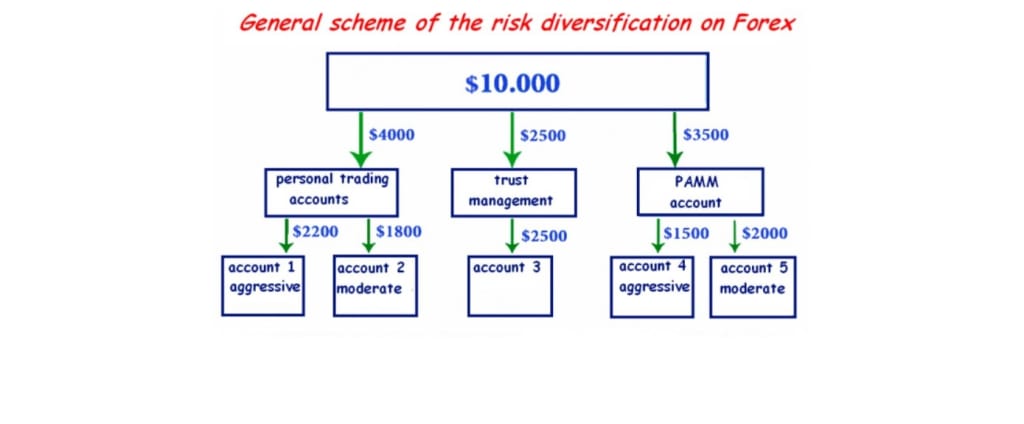
Risk management in Forex trading is crucial to ensure long-term success and to minimize potential losses. The following are some strategies that traders can use to manage risk in Forex trading:
1. Diversification: One of the most effective ways to manage risk is to diversify your investments. This means spreading your investment across multiple currency pairs and not putting all your eggs in one basket.
2. Set stop-loss orders: A stop-loss order is an order that you place with your broker to automatically close your trade if the price moves against you by a certain amount. This helps to limit your losses and protect your capital.
3. Use margin wisely: Forex trading is usually conducted on margin, which means you can trade large amounts of money with a relatively small deposit. This is a double-edged sword, as it can lead to significant profits, but it also increases the potential for losses. To manage this risk, it's essential to use margin wisely and not trade beyond your means.
4. Keep an eye on economic events: The Forex market is heavily influenced by economic events, such as interest rate decisions, monetary policy statements, and economic data releases. Keeping an eye on these events can help traders to make informed decisions and minimize the risks associated with sudden market movements.
5. Stay disciplined: Finally, it's important to stay disciplined and stick to your trading plan. This includes having a clear understanding of your investment goals, risk tolerance, and strategy, and not deviating from these when the market is volatile.
6. Use Position Sizing: Position sizing is the process of determining the size of your trades based on your capital, risk tolerance, and trading strategy. By using position sizing, you can control your potential losses and avoid over-leveraging your account.
7. Have a well-defined trading plan: A trading plan should outline your investment goals, risk tolerance, entry and exit strategies, and risk management techniques. Having a well-defined plan in place can help you stay focused and make informed decisions, even in the face of market volatility.
8. Monitor your trades: Regularly monitoring your trades can help you identify and respond to potential risks. This includes keeping a record of your trades, analyzing your performance, and making adjustments to your strategy as needed.
9. Avoid overtrading : Overtrading is a common mistake that many traders make. It involves taking on too many trades and exposing your account to excessive risk. To avoid overtrading, it's important to stick to your trading plan, limit the number of trades you take, and be patient in waiting for the right trading opportunities.
10. Seek professional advice: Finally, it's always a good idea to seek professional advice from a qualified Forex trader or financial advisor. They can provide you with additional insights and strategies to help you manage risk and achieve your investment goals.
11. Educate yourself: Keeping yourself educated and up-to-date with the latest market developments is crucial to success in Forex trading. This can involve reading market analysis, attending webinars, and engaging in ongoing education. By gaining a deeper understanding of the Forex market and its dynamics, you can make more informed trading decisions and minimize your risks.
12. Manage your emotions: Emotions such as greed, fear, and anxiety can have a significant impact on your Forex trading decisions. To manage these emotions, it's important to have a clear understanding of your investment goals and a well-defined trading plan in place. This can help you stay focused and make rational decisions, even in the face of market volatility.
13.Use technical analysis: Technical analysis involves using charts and other tools to analyze market trends and make trading decisions. By incorporating technical analysis into your trading strategy, you can gain a deeper understanding of the market and make more informed decisions.
14. Stay up-to-date with the latest market news: The Forex market is influenced by a wide range of factors, including geopolitical events, economic data release sand central bank decisions. Staying up-to-date with the latest market news and events can help you make informed trading decisions and respond to potential risks. This can involve reading news websites, subscribing to trading newsletters, or following relevant social media accounts.
15. Consider automated trading systems: Automated trading systems use algorithms to execute trades based on pre-defined rules. These systems can help to reduce the impact of emotions on your trading decisions and increase efficiency. However, it's important to carefully research and choose a reputable automated trading system, as not all systems are created equal.
16. Consider using hedging strategies: Hedging is a strategy used to reduce the risk of a trade by taking an offsetting position in another market. For example, a trader may hedge a long position in one currency pair by taking a short position in another currency pair. This can help to minimize the impact of market volatility on your trades and reduce your overall risk.
17. Stay patient: Finally, it's important to stay patient and avoid impulsive decisions when trading in the Forex market. This can help you avoid overreacting to market volatility and making unwise decisions that can lead to significant losses. By staying patient and sticking to your trading plan, you can minimize your risks and increase your chances of success.
18. Use a risk/reward ratio: A risk/reward ratio is a simple yet effective way to manage risk in Forex trading. This ratio measures the potential return of a trade relative to the potential risk. For example, if a trade has a risk/reward ratio of 2:1, this means that for every $1 of risk, there is the potential for a $2 return. By considering the risk/reward ratio of each trade, you can make informed decisions and manage your overall risk.
19. Keep a trading journal: Keeping a trading journal is another effective strategy for managing risk in Forex trading. This involves documenting your trades, including the reasons for entering and exiting each trade, and tracking your overall performance. By keeping a trading journal, you can identify trends in your trading behavior and make adjustments to reduce risk.
In conclusion, managing risk in Forex trading is a complex and ongoing process that requires discipline, patience, and a well-defined strategy. By following these tips and strategies, traders can minimize their potential losses, increase their chances of success, and achieve their investment goals.
About the Creator
Keep reading
More stories from Vianney anto and writers in Education and other communities.
Forex Strategy
The Trendline Forex Scalping Strategy utilizes an excellent idea to trade the forex market trend in a highly effective and straightforward way. It has been designed with two powerful forex trading indicators: Advanced Trendlines and Exponential Moving averages. These forex indicators work together to give accurate signals.
By Vianney anto3 years ago in Education
How Global Experiences Shape Smarter, More Creative Leaders
Leadership today demands more than experience and technical skill. It requires imagination, empathy, and the ability to see problems from new angles. One of the most potent ways leaders develop these qualities is through travel. When leaders step outside familiar routines, they gain insight that books and meetings cannot offer. Exposure to new cultures, environments, and ways of thinking shows clearly how creative leadership through travel can unlock ideas that change how leaders think, decide, and inspire others.
By Nathalie Kyriakou7 days ago in Education
A brief history of chess
The attacking infantry advances steadily, their elephants already having broken the defensive line. The king tries to retreat, but enemy cavalry flanks him from the rear. Escape is impossible. But this isn’t a real war– nor is it just a game. Over the roughly one-and-a-half millennia of its existence, chess has been known as a tool of military strategy, a metaphor for human affairs, and a benchmark of genius. While our earliest records of chess are in the 7th century, legend tells that the game’s origins lie a century earlier.
By Munesh Yadav4 days ago in Education




Comments
There are no comments for this story
Be the first to respond and start the conversation.