
"For the First Time Ever, Humans Perceive the New Color 'Olo'"
In a stunning breakthrough at the intersection of vision science and advanced optics, researchers at the University of California, Berkeley, have developed a technology that allows humans to perceive a completely new color—“olo”—for the very first time
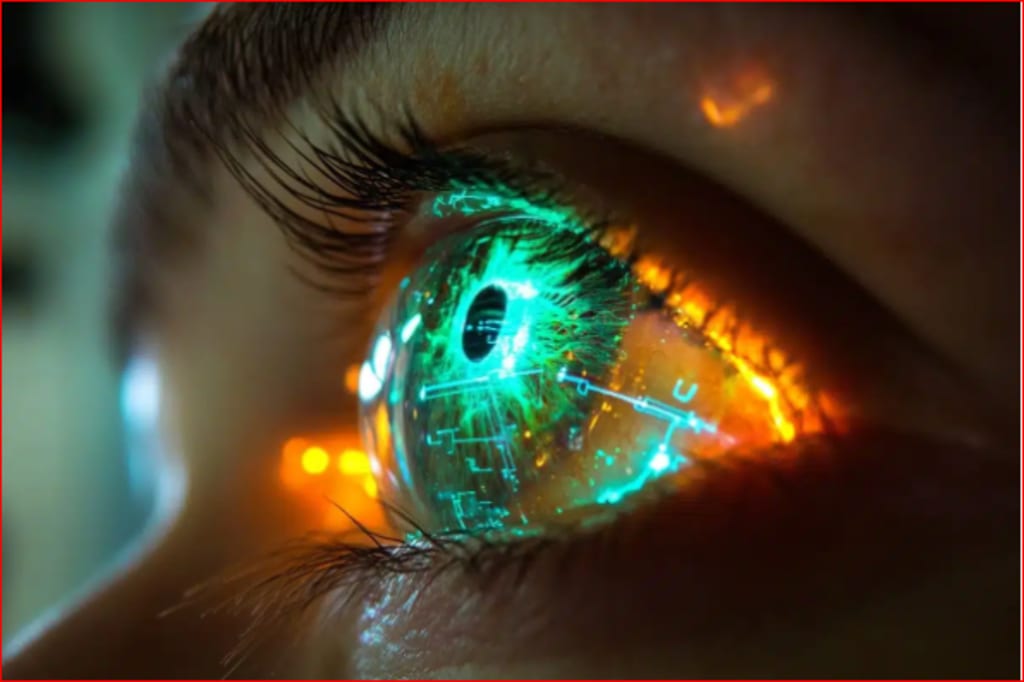
Scientists Invent ‘Oz’ Technology to Reveal a New, Hyper-Saturated Color Called Olo
In a groundbreaking advancement that bridges neuroscience, optics, and the very perception of reality, scientists at the University of California, Berkeley, have unveiled a revolutionary visual technology named Oz. This system allows people to perceive a color that does not exist in nature — a hyper-saturated blue-green hue that researchers have named “olo.” Unlike any color previously experienced by the human eye, olo represents a feat of both scientific ingenuity and philosophical inquiry into how we understand color and perception.
A Color Beyond Nature
Color, as most people understand it, is not a fixed property of light but a perceptual experience created by the brain. Our eyes interpret wavelengths of light through three types of cone cells — S (short), M (medium), and L (long) — each sensitive to different parts of the spectrum. The S cones respond most strongly to blue light, the M cones to green, and the L cones to red. However, due to biological overlap, there's no wavelength in the natural world that stimulates only the M cones without also activating the L cones.
This natural limitation is precisely what the Oz technology circumvents.
By using micro-targeted laser light pulses to activate thousands of individual photoreceptors in the retina, Oz effectively sidesteps the natural overlap between cone responses. In doing so, it can isolate the stimulation of just the M cones, producing a unique perceptual response that manifests as a color humans have never seen before.
The result? Olo — a deeply vivid, surreal teal that doesn’t correspond to any natural or artificial color previously experienced. The moment this targeted stimulation is disrupted, such as through slight misalignment, the perception of olo disappears instantly, reverting to the standard color of the laser light. This on-and-off switchability not only underscores the precision of the Oz system but also demonstrates how fragile and contextual our perception of color truly is.
Mapping the Human Retina
To produce olo, the Oz system first needs a cone map of the individual’s retina — essentially a detailed blueprint of the distribution of S, M, and L cones unique to every person. This is accomplished using cutting-edge optical imaging developed in collaboration with researchers at the University of Washington.
Armed with this map, the Oz laser can deliver precise pulses to activate selected cone cells. Although the laser emits only a single hue — akin to a green laser pointer — it can be modulated in both time and space to trick the visual system into perceiving a wide range of colors. In this way, even complex moving images, such as a baby’s face or a fish swimming, can be projected directly into the retina.
However, the focus of recent experiments has been the recreation of the color olo. While the image area is tiny — roughly the size of a fingernail held at arm’s length — the visual experience is described as “profoundly immersive.”
Human Reactions to Olo
In experimental trials led by doctoral student Hannah Doyle, five human subjects, including the creators of Oz themselves, experienced olo for the first time. Participants described the color as something akin to peacock green or ultra-saturated teal, but emphasized that no existing words or analogies could quite capture its intensity.
Even when compared with monochromatic light — the most saturated light humans can normally perceive — olo appeared more vivid and arresting. When the Oz laser was intentionally “jittered” to hit cone cells at random, participants immediately stopped perceiving olo and instead saw the typical green of the laser. Some even reported that, by comparison, the green appeared almost yellowish, underscoring how intense and unique the experience of olo truly is.
According to Austin Roorda, professor of optometry and co-creator of Oz, “When I pinned olo up against other monochromatic light, I really had that ‘wow’ experience.”
The Broader Significance of Oz
While the discovery of olo is visually stunning, the implications of Oz extend far beyond the creation of new colors.
The ability to stimulate the retina at such a precise level allows scientists to probe the neural foundations of vision, including how the brain interprets and constructs visual experiences. Instead of casting external images onto the eye, Oz lets researchers stimulate the underlying cellular machinery directly, effectively turning the retina into a programmable display.
This opens up potential applications in medical research, especially in the study of retinal diseases, color blindness, and vision loss. One ongoing project is using Oz to simulate cone cell loss, which could help scientists better understand degenerative eye conditions like macular degeneration or retinitis pigments.
There's also a tantalizing possibility that the technology could one day expand the human color palette — enabling people to perceive shades they normally can't. For example, some women are born with four types of cone cells, a condition known as tetra chiromancy, which theoretically allows them to see a broader spectrum of color. Oz may offer a way to simulate such vision in people with typical trichromatic sight.
Philosophical and Scientific Questions
The creation of a new color raises deep questions about the nature of perception. Are the limits of our sensory world hardwired into our biology, or can they be extended through technology? Can the brain adapt to entirely new types of sensory input? And what does it mean to “see” something that cannot exist under natural conditions?
“These are fundamental, philosophical questions,” said James Carl Fong, a doctoral student in electrical engineering and co-lead on the project. “With Oz, we’re not just studying the eye; we’re studying how the brain makes sense of the world.”
Oz has been referred to as “a microscope for looking at the retina,” but it might just as well be called a telescope into the unexplored regions of the human mind. It provides a unique interface between biology and computation — between light and experience.
A Nod to the Wizard of Oz
The project’s name, Oz, is more than just a clever acronym — it’s a tribute to the fictional Emerald City from The Wonderful Wizard of Oz by L. Frank Baum. In the book, the city appears dazzlingly green only because its inhabitants are forced to wear green-tinted glasses. Similarly, the Oz device alters perception — but instead of deception, it offers revelation.
Rather than filtering reality, Oz creates new sensory data entirely, pushing the boundaries of what it means to “see.”
What Comes Next?
The UC Berkeley team is continuing to refine the Oz system, with plans to scale up its capabilities and test its applications in clinical and commercial settings. Potential uses range from enhanced diagnostics for ophthalmologists to new forms of immersive visual media. While there are still technological and ethical hurdles to overcome, the future of personalized vision augmentation is clearly in sight.
The findings were recently published in Science Advances, and the work was funded by the National Institutes of Health (NIH), Air Force Office of Scientific Research, and multiple academic fellowships and grants.
As researchers continue their journey into the visual unknown, the story of Oz — and the discovery of olo — serves as a vivid reminder that even in a world saturated with color, there is still so much we’ve never seen. ..More Read
About the Creator
Keep reading
More stories from Md. Ashraful Azad and writers in Education and other communities.
Eight Things You Should Eat
Eight Things You Should Eat to Stay Healthy Adding more nutritious options to your daily routine is just as important as avoiding junk food when it comes to healthy eating. A healthy, well-balanced diet rich in whole foods can help you avoid chronic conditions like diabetes, heart disease, and some cancers, as well as give you more energy and boost your immune system.
By Md. Ashraful Azad11 months ago in Education
Bridging Technical Expertise and Business Strategy in Manufacturing
Manufacturing has always been driven by technical knowledge. Engineers, technicians, and production specialists design processes, maintain equipment, and ensure products meet strict quality standards. At the same time, successful manufacturing companies must also focus on business strategy. Market demand, cost management, supply chain coordination, and competitive positioning all influence long-term success. Bridging technical expertise and business strategy in manufacturing allows organizations to combine operational excellence with strategic growth.
By Ian Schenkel Haliburton3 days ago in Education
Leveraging Prediction Markets to Enhance Strategic Planning
In today’s competitive business environment, making informed strategic decisions is crucial for long-term success. Prediction markets have emerged as a valuable tool for improving strategic planning by aggregating insights from diverse participants. These markets enable organizations to forecast outcomes through collective intelligence, providing a more accurate understanding of potential scenarios. By integrating prediction market data into planning processes, companies can anticipate risks, identify opportunities, and make better-informed decisions that support sustainable growth.
By Anthony Qi2 days ago in Education


Comments (1)
Very interesting ♦️🙏🙏🙏🙏