
Five Mind-Blowing Facts About Owls
Five Mind-Blowing Facts About Owls

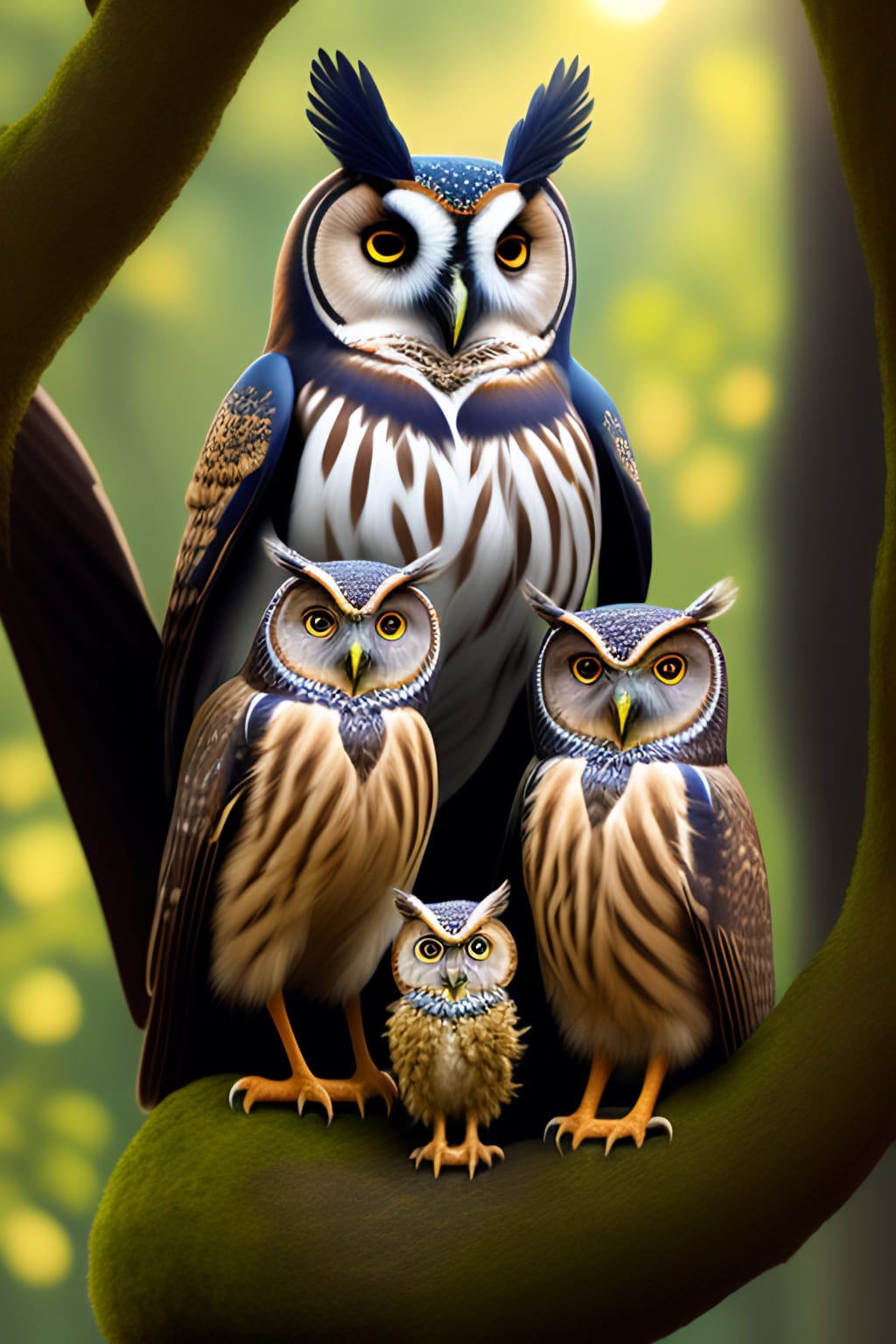
Five Mind-Blowing Facts About Owls
Owls are some of the most fascinating creatures on Earth. They are known for their sharp eyesight, silent flight, and eerie hoots. But there is much more to these nocturnal predators than meets the eye. Here are five mind-blowing facts about owls:
1. Owls don't have eyeballs.
That's right, owls don't have eyeballs in the traditional sense. Instead, their eyes are more like tubes that are fused to the skull. This gives owls a wider field of vision and allows them to focus on objects both near and far. However, it also means that owls cannot move their eyes independently of their heads. To compensate for this, owls have incredibly flexible necks that allow them to rotate their heads up to 270 degrees in either direction.
2. Owls can hear the faintest of sounds.
Owls have excellent hearing, which is essential for hunting in the dark. Their ears are located asymmetrically on their heads, which helps them to pinpoint the location of their prey. Owls can hear sounds that are too quiet for humans to detect, and they can even hear prey moving underground.
3. Owls can swallow their prey whole.
Owls don't have teeth, so they swallow their prey whole. This can include small mammals, birds, reptiles, and even fish. Once the prey is swallowed, it passes through the owl's digestive system, where the digestible parts are absorbed and the non-digestible parts are regurgitated in the form of a pellet.
4. Owls have silent flight.
Owls have specially adapted feathers that allow them to fly silently. This is essential for hunting prey without being detected. The owl's feathers have soft edges and downy barbs that help to muffle the sound of their flight.
5. Owls are symbols of wisdom and knowledge in many cultures.
Owls have long been associated with wisdom and knowledge in many cultures around the world. In ancient Greece, owls were sacred to the goddess Athena, who was the goddess of wisdom and crafts. In Native American cultures, owls are often seen as symbols of mystery, magic, and the spirit world.
Bonus Fact: Owls are not all nocturnal.
While most owls are nocturnal, there are a few species that are active during the day. These owls include the barn owl, the northern hawk owl, and the snowy owl.
Here are some additional mind-blowing facts about owls:
Owls have three eyelids. The first eyelid is the nictitating membrane, which is a translucent membrane that can close over the eye to protect it from dust and debris. The second and third eyelids are the upper and lower eyelids, which are similar to human eyelids.
Owls have a very high metabolism. This means that they need to eat a lot of food to maintain their energy levels. A typical owl will eat about 10% of its body weight in food each day.
Owls are very good at camouflage. Their feathers are often mottled or barred, which helps them to blend in with their surroundings. This makes it difficult for predators to spot them, and it also helps them to sneak up on their prey undetected.
Owls are found on all continents except Antarctica. There are over 200 different species of owls, and they range in size from the tiny elf owl, which is only about 5 inches tall, to the great gray owl, which can be up to 32 inches tall.
Owls play an important role in the ecosystem by helping to control populations of rodents and other small animals. Owls are also important prey animals for other predators, such as hawks, eagles, and foxes.
Owls are truly amazing creatures. With their unique adaptations and fascinating behaviors, they are a wonder to behold.
Owls and Conservation
Owls face a number of threats, including habitat loss, pesticide poisoning, and collisions with power lines. It is important to protect owls and their habitats so that these magnificent creatures can continue to thrive.
There are a number of things that you can do to help owls:
Support organizations that are working to protect owls and their habitats.
Avoid using pesticides in your yard and garden.
If you live in an area where owls are present, make sure to mark your windows with decals or other deterrents to prevent them from colliding with the glass.
Educate others about the importance of owls and how to protect them.
Owls are an important part of our natural world. By taking steps to protect them, we can help to ensure that they will be around for future generations to enjoy.
About the Creator
Product Services
To learn about the world in a new and exciting way. I research a wide range of topics to uncover the Five most mind-blowing facts, from the natural world to human history to current events.
Keep reading
More stories from Product Services and writers in Education and other communities.
Five Mind-Blowing Facts About the Human Brain
Five Mind-Blowing Facts About the Human Brain Introduction The human brain, often referred to as the most complex organ in the known universe, is a marvel of evolution. With its intricate structure and astonishing capabilities, the brain continues to baffle scientists and researchers worldwide. In this article, we'll explore five mind-blowing facts about the human brain that showcase its remarkable abilities and mysteries.
By Product Services2 years ago in Education
Preparing Health Systems to Perform Under High-Stakes Crisis Conditions
High-stakes crises have become an increasingly common challenge for health systems worldwide. Whether dealing with infectious disease outbreaks, natural disasters, mass casualty incidents, or cybersecurity breaches, healthcare organizations must be ready to respond rapidly and effectively. Preparation is essential not only to ensure patient safety but also to maintain operational stability during times of extreme pressure. Health systems that invest in proactive planning, strong leadership, and resilient infrastructure are better equipped to manage crises without compromising care quality. Preparing for high-stakes situations requires a comprehensive approach that focuses on readiness, coordination, and continuous learning.
By Craig Kent4 days ago in Education


Comments
There are no comments for this story
Be the first to respond and start the conversation.