
Five Mind-Blowing Facts about Apes
Five Mind-Blowing Facts about Apes


Five Mind-Blowing Facts about Apes
Apes are some of the most fascinating and intelligent creatures on Earth. They are closely related to humans, sharing many physical and behavioral traits. However, there are still many things we don't know about apes, and they continue to amaze us with their unique abilities and behaviors.
Here are five of the most mind-blowing facts about apes:
1. Apes can learn to use sign language to communicate with humans.
Chimpanzees and bonobos are the two species of apes that have been most extensively studied in terms of their ability to learn sign language. These apes have been taught to use signs to communicate a wide range of concepts, including their needs, wants, and emotions.
One of the most famous examples of an ape who learned to use sign language is Koko, a gorilla who was raised by humans. Koko learned to use over 1,000 signs, and she could even understand and respond to complex questions.
Koko's story shows us that apes are capable of understanding and communicating with humans in a way that was previously thought to be impossible. This raises important questions about the nature of consciousness and communication, and it challenges us to think about our relationship with apes in a new way.
2. Bonobos are the only known species of ape that is matriarchal.
In most ape societies, males are dominant and females are submissive. However, bonobos are the exception. In bonobo societies, females are the dominant sex. They hold the most powerful positions in the group, and they have priority access to food and mates.
One reason for bonobos' matriarchal social structure is that they are very peaceful animals. Bonobos rarely fight, and they resolve conflicts through cooperation and negotiation. This peaceful nature is thought to be due to the fact that bonobos have very high levels of oxytocin, a hormone that is associated with bonding and trust.
Bonobos' matriarchal social structure is a fascinating example of how different ape societies can be. It also shows us that there is no one "correct" way for a society to be organized.
3. Orangutans are the most intelligent of the great apes.
Orangutans are highly intelligent animals. They have been known to use tools, solve puzzles, and even learn to use computers.
One study found that orangutans are even better at some cognitive tasks than chimpanzees, our closest living relatives. For example, orangutans were better at remembering the location of hidden objects and at using tools to solve problems.
Orangutans' intelligence is likely due to their large brains and their complex social structure. Orangutans live in small groups consisting of a mother and her offspring. This social structure allows orangutans to develop strong bonds with each other and to learn from each other.
Orangutans' intelligence is a reminder that we still have much to learn about the cognitive abilities of our closest living relatives.
4. Gorillas are the largest primates on Earth.
Male gorillas can weigh over 400 pounds and stand over 6 feet tall. They are the largest primates on Earth, and they are truly impressive creatures.
Gorillas are also very strong. They are estimated to be up to 10 times stronger than humans. This strength allows gorillas to protect themselves from predators and to compete for mates and resources.
Despite their size and strength, gorillas are gentle giants. They are herbivores, and they spend most of their time eating and socializing. Gorillas are also very intelligent animals, and they have been known to use tools and solve puzzles.
Gorillas' size and strength are a reminder of the power of nature. They are also a reminder that even the largest and strongest animals can be gentle and intelligent.
5. Gibbons are the smallest of the great apes and are known for their long arms and legs.
Gibbons are the smallest of the great apes, but they are also the most agile. Gibbons have long arms and legs, which allow them to swing through the trees with ease. Gibbons can also leap up to 40 feet from one tree to another.
Gibbons are very social animals. They live in monogamous pairs or in small groups with their offspring. Gibbons communicate with each other using a variety of vocalizations, including songs, whistles, and barks.
Gibbons' long arms and legs and their ability to swing through the trees make them truly unique animals. They are a reminder of the diversity of life on Earth and of the importance of protecting our planet's forests.
Conclusion
These are just five of the many mind-blowing facts about apes. Apes are fascinating and intelligent creatures that continue to teach us new things about ourselves
About the Creator
Product Services
To learn about the world in a new and exciting way. I research a wide range of topics to uncover the Five most mind-blowing facts, from the natural world to human history to current events.
Keep reading
More stories from Product Services and writers in Education and other communities.
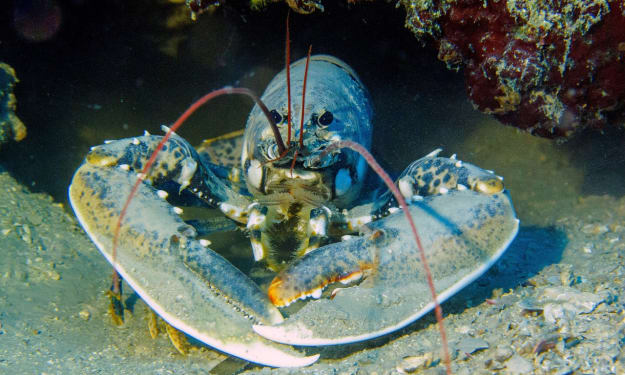
Five Mind-Blowing Facts About Lobsters
Five Mind-Blowing Facts About Lobsters Lobsters are one of the most popular seafood dishes in the world, but there is much more to these fascinating creatures than meets the eye. Here are five mind-blowing facts about lobsters:
By Product Services2 years ago in Education
Everyday Cooking Skills That Turn Home Kitchens Into Creative Spaces
Cooking at home is more than a routine task. It is a practical life skill that supports better health, saves money, and encourages creativity. While recipes are helpful, true kitchen confidence comes from understanding essential cooking skills that work across countless dishes. When home cooks grasp these fundamentals, they can adapt recipes, solve problems, and cook with freedom rather than fear.
By Erika Mackinnonabout 23 hours ago in Education


Comments
There are no comments for this story
Be the first to respond and start the conversation.