
Financial Crisis
"The Great Recession: Causes and Consequences of the 2008 Financial Crisis":
I. Introduction
Brief overview of the 2008 financial crisis and its impact
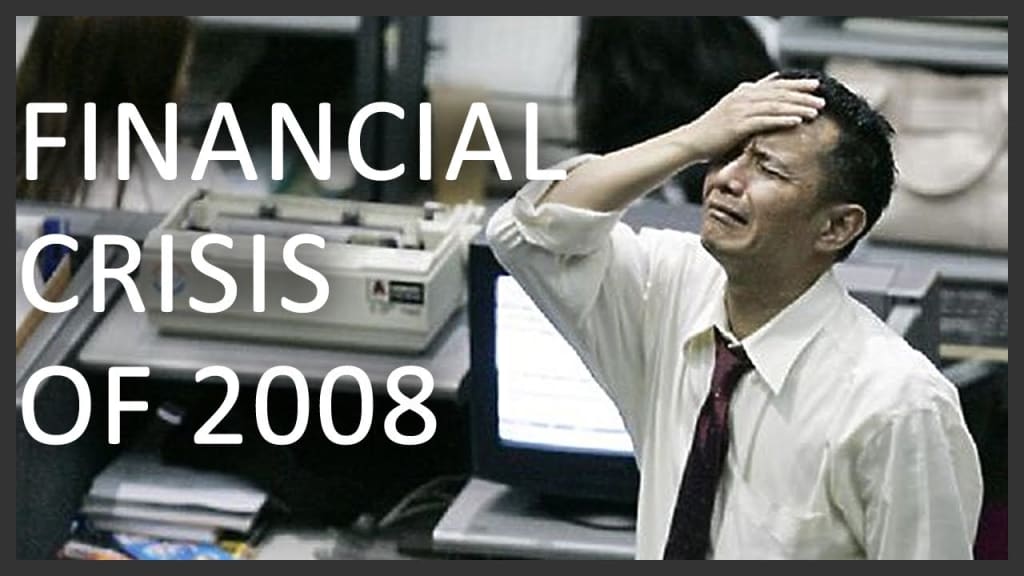
The 2008 financial crisis, also known as the Great Recession, was a severe global economic downturn that began in the United States in late 2007 and spread to other countries in 2008 and beyond. The crisis was triggered by a combination of factors, including a housing bubble and the widespread securitization of subprime mortgages, as well as financial deregulation and lax oversight. As these risky assets began to default, financial institutions suffered massive losses and the credit markets froze, leading to a sharp decline in economic activity and rising unemployment. The crisis also had significant consequences for households and governments, with millions of people losing their homes, savings, and jobs. Governments and central banks around the world intervened with massive stimulus programs and bailouts of financial institutions in an attempt to stabilize the global economy. While the worst of the crisis has passed, its effects continue to be felt today, and it remains a cautionary tale of the dangers of financial excess and instability.
Thesis statement: The Great Recession was caused by a combination of factors and had far-reaching consequences for the global economy.
Great! That's an accurate and concise thesis statement that sets up the main argument of the blog post. It acknowledges the complexity of the factors that led to the crisis and the magnitude of its impact on the global economy, which will be further explored and elaborated on in the following sections of the post.
II. Causes of the 2008 Financial Crisis
The Great Recession was caused by a complex web of factors that interacted with each other to create a perfect storm of financial instability. Here are some of the key causes of the crisis:
A. Subprime mortgage lending and the housing bubble
One of the primary factors that contributed to the 2008 financial crisis was the rapid expansion of subprime mortgage lending, which refers to the practice of lending money to borrowers with poor credit histories or low income. As housing prices soared in the early 2000s, lenders and investors began to create complex financial instruments known as mortgage-backed securities (MBS) and collateralized debt obligations (CDOs) that packaged and sold these subprime mortgages to investors. However, many of these loans were risky and unsustainable, and when housing prices began to decline in 2006-2007, borrowers began defaulting on their mortgages and the value of these securities plummeted.
B. Securitization and the spread of risky assets
The widespread securitization of subprime mortgages and other risky assets played a major role in the 2008 financial crisis. Investment banks and other financial institutions bought up these assets and bundled them together into complex financial instruments that were sold to investors around the world. These instruments were often highly leveraged and opaque, making it difficult to assess the true risk of investing in them. When the underlying assets began to default, investors suffered significant losses and the credit markets froze.
C. Financial deregulation and lack of oversight
Financial deregulation and a lack of oversight were major contributors to the 2008 financial crisis. In the 1990s and 2000s, there was a trend towards deregulation and the removal of barriers between different types of financial institutions. This allowed banks and other financial institutions to take on greater risk and engage in more complex and opaque financial transactions. At the same time, regulators and government agencies failed to adequately oversee and regulate these activities, allowing risky practices to go unchecked.
D. Global imbalances and trade deficits
The 2008 financial crisis was also influenced by global imbalances and trade deficits. Many countries, including the United States, had been running large trade deficits and relying on foreign capital to finance their spending. This led to an overreliance on debt and a vulnerability to shifts in global capital flows.
E. Role of credit rating agencies and faulty risk assessments
Finally, credit rating agencies played a role in the financial crisis by providing faulty risk assessments of many of the complex financial instruments that were sold to investors. These agencies often gave high ratings to securities that were later revealed to be much riskier than advertised, leading investors to overestimate the safety of their investments.
Overall, the 2008 financial crisis was caused by a complex interplay of factors that created a fragile and unstable financial system. While each of these factors contributed to the crisis in its own way, it was the combination of all of them that led to the catastrophic collapse of the global financial system.
III. Consequences of the Great Recession
The Great Recession had far-reaching consequences for the global economy, leading to widespread job losses, foreclosures, and a significant decline in economic activity. Here are some of the key consequences of the crisis:
A. High unemployment and slow economic growth
One of the most visible consequences of the Great Recession was the sharp increase in unemployment rates around the world. Millions of people lost their jobs as businesses closed or scaled back operations, leading to a prolonged period of slow economic growth. The unemployment rate in the United States, for example, peaked at 10% in 2009 and remained above 8% until 2012.
B. Foreclosures and housing market collapse
The housing market was one of the hardest hit sectors of the economy during the Great Recession. As housing prices declined and homeowners defaulted on their mortgages, millions of people lost their homes through foreclosure. The collapse of the housing market had significant ripple effects on the broader economy, as the housing industry is a major driver of economic growth.
C. Bank failures and government bailouts
The financial sector was also severely impacted by the Great Recession, with many banks and financial institutions suffering significant losses and some even going bankrupt. To prevent a complete collapse of the financial system, governments around the world implemented massive bailouts of financial institutions and injected large amounts of capital into the economy.
D. Debt and deficit levels
The Great Recession also had significant consequences for government debt and deficit levels, as governments around the world implemented stimulus programs and other measures to boost economic growth. This led to a significant increase in government debt, particularly in countries with large fiscal deficits such as the United States, Greece, and Spain.
E. Long-term economic and social impacts
Finally, the Great Recession had long-term economic and social impacts that are still being felt today. Many people who lost their jobs during the recession were unable to find new employment, leading to long-term unemployment and a loss of skills and productivity. The recession also had significant social and political consequences, leading to increased inequality, political polarization, and a loss of faith in government and institutions.
Overall, the Great Recession had a profound and lasting impact on the global economy, highlighting the fragility and interconnectedness of the financial system and the importance of sound economic policies and regulations.
IV. Lessons Learned and Reforms Implemented
The Great Recession exposed many weaknesses in the global financial system and led to significant reforms and changes in economic policy. Here are some of the key lessons learned and reforms implemented in the wake of the crisis:
A. Importance of financial regulation
One of the primary lessons learned from the Great Recession was the importance of financial regulation and oversight. Many of the risky practices and excessive risk-taking that led to the crisis were allowed to go unchecked due to a lack of regulatory oversight. In response, governments around the world implemented new regulations and oversight mechanisms to prevent future financial crises.
B. Need for stronger capital requirements
Another lesson learned from the Great Recession was the need for stronger capital requirements for financial institutions. Banks and other financial institutions need to have sufficient capital to weather economic downturns and absorb losses. The Basel III accords, which were implemented after the crisis, require financial institutions to maintain higher levels of capital and liquidity.
C. Importance of global coordination
The Great Recession also highlighted the importance of global coordination in addressing financial crises. The crisis was a global phenomenon, and it required coordinated responses from governments and central banks around the world to prevent a complete collapse of the financial system. The G20, which was formed in the wake of the crisis, has become an important forum for global economic coordination and cooperation.
D. Need for fiscal discipline
Finally, the Great Recession underscored the importance of fiscal discipline and responsible government spending. Many countries around the world had high levels of debt and deficits going into the crisis, which limited their ability to implement effective stimulus measures. In the aftermath of the crisis, many countries implemented fiscal consolidation measures to bring down debt and deficits.
Overall, the Great Recession led to significant reforms and changes in economic policy, with a greater emphasis on financial regulation, stronger capital requirements, global coordination, and fiscal discipline. These reforms have helped to create a more stable and resilient financial system, but there is still work to be done to prevent future crises and ensure sustainable economic growth.
V. Conclusion
The Great Recession of 2008 was a global economic crisis that had far-reaching consequences for the global economy. It was caused by a combination of factors, including lax regulation, excessive risk-taking, and a housing market bubble. The crisis led to significant job losses, foreclosures, and a decline in economic activity, and it exposed many weaknesses in the global financial system.
However, the crisis also led to significant reforms and changes in economic policy, with a greater emphasis on financial regulation, stronger capital requirements, global coordination, and fiscal discipline. These reforms have helped to create a more stable and resilient financial system, but there is still work to be done to prevent future crises and ensure sustainable economic growth.
The Great Recession was a painful reminder of the fragility and interconnectedness of the global economy, but it also highlighted the importance of sound economic policies and regulations. It is important to continue learning from the lessons of the crisis and to work towards creating a more equitable and sustainable global economic system.
About the Creator
Akash
i am a content creator and blog writer
Travel Made Easy: A Practical Guide to Planning a Smooth and Relaxing Vacation Anywhere
Travel has the power to refresh the mind, inspire new ideas, and create unforgettable memories. However, planning a vacation can sometimes feel more stressful than rewarding. From choosing destinations to managing time and expenses, many travelers feel overwhelmed before they even pack their bags. The key to enjoying a peaceful journey lies in thoughtful planning and a calm mindset. This guide explains how to plan a stress-free vacation anywhere while keeping the process simple, organized, and enjoyable.
By Nathalie Kyriakou6 days ago in Education



Comments
There are no comments for this story
Be the first to respond and start the conversation.