
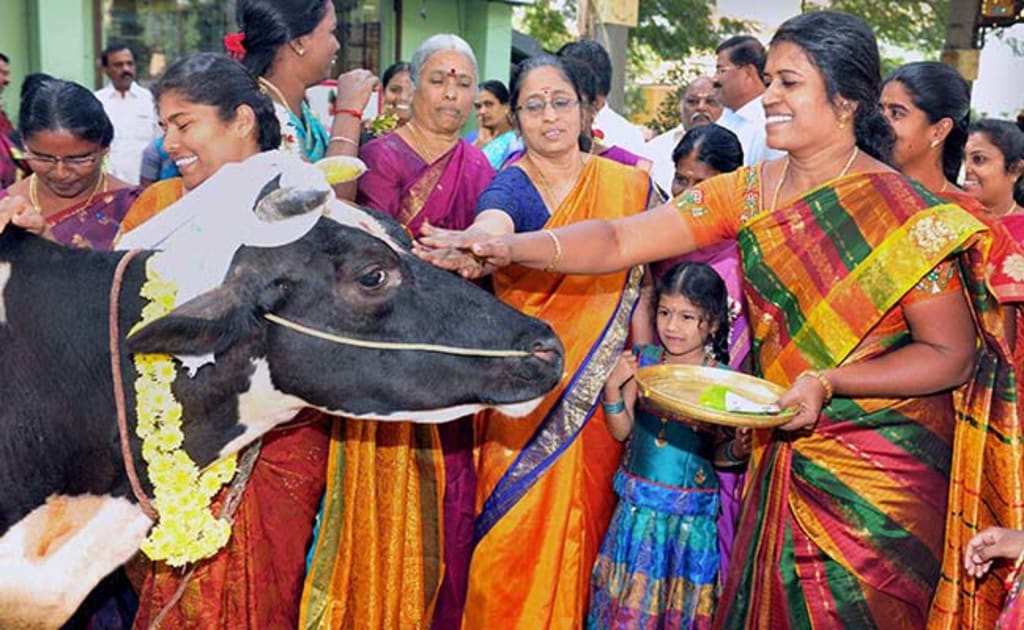
Pongal is a four-day harvest festival celebrated in the southern Indian state of Tamil Nadu and in parts of Sri Lanka, Singapore, and Malaysia by the Tamil community. It is typically celebrated in January, usually on the 14th or the 15th of the month, and marks the beginning of the Tamil month of Thai.
The festival is celebrated to thank the sun and the farm animals for their role in the harvest. Pongal is a time for families and friends to gather together and enjoy traditional foods, music, and games. It is also a time to honor the Hindu god Lord Surya, who is believed to bring prosperity and good fortune.
The most important ritual of Pongal is the cooking of the Pongal dish, which is a sweet porridge made of rice, lentils, and jaggery (a type of unrefined sugar). The dish is cooked in an earthen pot and is allowed to boil over, which is said to symbolize abundance and prosperity.
On the second day of the festival, called "Perum Pongal," farmers decorate and worship their cattle, thanking them for their role in the harvest. The third day is known as "Maatu Pongal" which is dedicated to cows and bulls, while the fourth and final day is "Kaanum Pongal," when families and friends visit each other and exchange sweets and savories.
In summary Pongal is harvest festival celebrated to thank the sun, farm animals and deity of the sun - Lord Surya for their role in the harvest, it is celebrated with traditional food, music, games, and ceremonies that are meant to bring good fortune and prosperity.
Pongal Impact On Economy
Pongal is not only an important cultural and religious celebration, but it also has a significant impact on the economy. As a harvest festival, Pongal plays a crucial role in the livelihoods of farmers and the agricultural industry in Tamil Nadu and other regions where it is celebrated.
One of the ways in which Pongal affects the economy is through the sale of agricultural produce. The festival marks the end of the harvest season, and farmers often sell their crops at markets and fairs that are set up specifically for Pongal. This provides farmers with an important source of income and helps to boost the agricultural economy.
Another way in which Pongal impacts the economy is through the production and sale of traditional Pongal sweet dishes. Pongal is traditionally made with rice, lentils, and jaggery, and it is a popular sweet dish during the festival. Many small and large scale sweet industries will increase their production to meet the demand for Pongal sweet.
Pongal is also a time for families to buy new clothes, gold and other household items. The festival season provides a boost to the textile and gold industry. Retailers see an increase in sales, as people prepare for the festival by buying new clothes and other items.
In addition, the festival also generates income for local businesses such as hotels and restaurants. As families and friends gather together for the celebrations, many people choose to eat out or stay in hotels. This provides a boost to the hospitality industry.
Pongal also provides an economic boost for the tourism industry. Tourists from all over India and abroad visit Tamil Nadu during Pongal to witness the celebration, which generates income for hotels, restaurants and local vendors.
In summary, Pongal is a significant event that has a wide-reaching impact on the economy. The festival provides a boost to the agricultural, sweet industry, textile, gold industry, tourism and the hospitality industry. It is a major source of income for farmers and other businesses, helping to sustain the local economy.
About the Creator
Keep reading
More stories from Sivasankaran and writers in Education and other communities.
Freelancer
Definition of freelancing and online freelancing Freelancing refers to the practice of working independently, rather than for a company or organization. Freelancers often offer their services on a project-by-project basis and are not permanently employed by any one employer. Freelancers may work in a variety of fields, such as writing, design, marketing, consulting, or any other profession that can be done remotely.
By Sivasankaran3 years ago in Education
Empowering Your Financial Journey: The Role of Wellness and Coaching
Financial success is not only about numbers, budgets, and investment strategies. It is also deeply connected to mindset, habits, and overall well-being. Many people work hard to improve their financial situation, yet they often overlook the emotional and behavioral aspects that influence financial decisions. Empowering your financial journey means recognizing that financial wellness and coaching can play a powerful role in building lasting stability and confidence.
By Mario Payne5 days ago in Education




Comments
There are no comments for this story
Be the first to respond and start the conversation.