
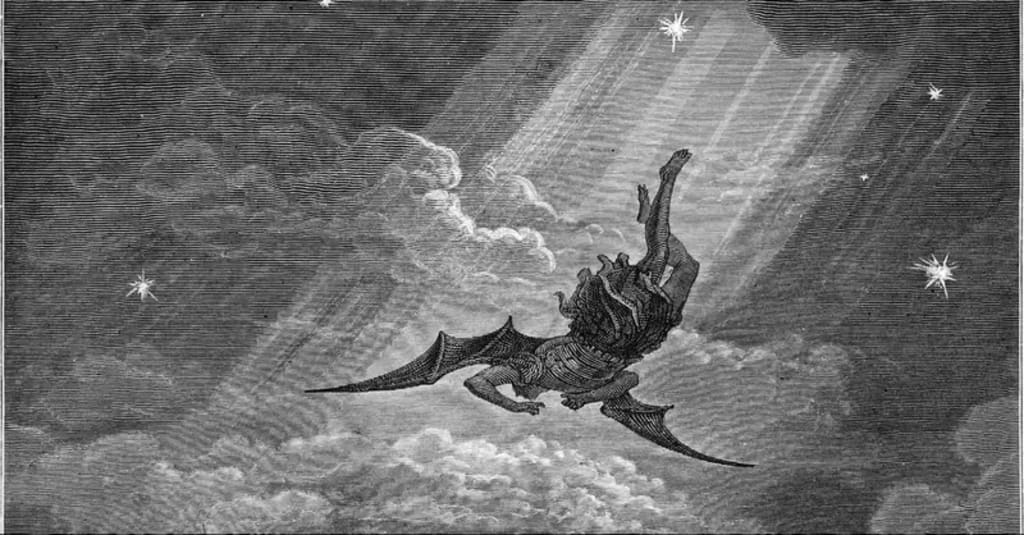
The fall of the Morning Star, commonly associated with the figure of Lucifer, is a tale that has captured the imagination of many throughout history. Rooted in Christian mythology, this story has been interpreted in various ways, serving as a cautionary tale about pride, disobedience, and the consequences of rebellion against God. While the story of the fall of Lucifer is not universally agreed upon and interpretations may differ across different religious traditions and denominations, it remains a topic of interest and intrigue. In this essay, we will delve into the story of the fall of the Morning Star, exploring its origins, significance, and various interpretations.
The origins of the story of the fall of the Morning Star can be traced back to religious texts, primarily the Bible, which is the central scripture of Christianity. In the Bible, there are several passages that are often associated with the fall of Lucifer, although the term "Lucifer" itself is not used explicitly in the story. One of the key passages that is often cited is Isaiah 14:12-15 from the Old Testament, which reads:
"How you have fallen from heaven,
morning star, son of the dawn!
You have been cast down to the earth,
you who once laid low the nations!
You said in your heart,
'I will ascend to the heavens;
I will raise my throne
above the stars of God;
I will sit enthroned on the mount of assembly,
on the utmost heights of Mount Zaphon.
I will ascend above the tops of the clouds;
I will make myself like the Most High.'
But you are brought down to the realm of the dead,
to the depths of the pit."
In this passage, the term "morning star" is often interpreted as a reference to Lucifer, and the passage is seen as describing his fall from Heaven due to his rebellion against God. The imagery of Lucifer desiring to ascend to the heavens and exalt himself above God is often seen as an expression of pride and disobedience, leading to his downfall.
Another passage often associated with the fall of Lucifer is Ezekiel 28:12-17, also from the Old Testament, which speaks of the "king of Tyre" but is often interpreted as having a dual meaning that refers to Lucifer as well. This passage describes the king of Tyre as being "anointed as a guardian cherub" and "blameless" in his ways until iniquity was found in him. It goes on to describe how he was cast out of the mountain of God and how his heart became proud due to his beauty and wisdom, leading to his fall.
Apart from the biblical passages, the story of the fall of Lucifer has also been influenced by other sources, such as apocryphal texts, literature, and artistic representations. For example, the apocryphal text known as the "Book of Enoch," which is not included in the biblical canon but is considered a significant text in certain Christian traditions, provides additional details about the fall of the angels, including Lucifer. According to the Book of Enoch, a group of angels led by a figure known as "Azazel" rebelled against God, and Azazel is often identified with Lucifer in some interpretations. This text expands on the story of the fall of the angels and provides more context to the tale of Lucifer's rebellion.
The fall of the Morning Star, also known as the fall of Lucifer, is a story that has captivated the human imagination for centuries. It is a tale that is deeply ingrained in Christian mythology and has been the subject of much theological reflection and artistic representation. The story of Lucifer's fall is typically associated with the concept of rebellion against God and the origin of evil, and it has been interpreted in various ways across different religious traditions and denominations.
In Christian tradition, Lucifer is often depicted as an archangel created by God, who served as a high-ranking angel in Heaven. He was known as the Morning Star or the Light Bearer, a symbol of beauty, power, and wisdom. However, according to the story, Lucifer's pride and desire for power led him to rebel against God, thinking that he could become equal to or greater than God. This rebellion ultimately led to his fall from grace.
The origins of the story of Lucifer's fall can be traced back to various passages in the Bible, particularly in the Old Testament. One of the most often cited passages is from the book of Isaiah in the Old Testament, which is often interpreted as a prophecy about the fall of the Morning Star:
"How you have fallen from heaven, morning star, son of the dawn! You have been cast down to the earth, you who once laid low the nations! You said in your heart, 'I will ascend to the heavens; I will raise my throne above the stars of God; I will sit enthroned on the mount of assembly, on the utmost heights of Mount Zaphon. I will ascend above the tops of the clouds; I will make myself like the Most High.'" (Isaiah 14:12-14, NIV)
This passage, along with other references in the Bible, has been interpreted as describing the rebellion of Lucifer against God and his subsequent fall from heaven. It portrays Lucifer's ambitious desire to elevate himself to a position of god-like status and authority, and his subsequent punishment for his pride and rebellion.
The story of Lucifer's fall has also been interpreted in other parts of the Bible, such as in the New Testament, where Jesus refers to seeing Satan fall from heaven like lightning (Luke 10:18). Additionally, passages in the Epistles of Peter and Jude mention the angels who sinned and were cast into darkness as an example of God's judgment (2 Peter 2:4, Jude 1:6).
The story of Lucifer's fall, however, is not limited to the Bible alone. It has also been influenced by other sources, such as Jewish and Christian apocryphal and pseudepigraphical texts, as well as later theological and literary works. For example, in the apocryphal Book of Enoch, which is not included in the biblical canon but is considered sacred by some Christian denominations, the fall of the angels, including the angel Azazel who rebels against God, is described in detail. These extra-biblical sources have contributed to the development of the story of Lucifer's fall and have shaped various interpretations and beliefs about this event.
The story of Lucifer's fall has also been the subject of much theological reflection and debate. Different theologians and scholars have interpreted the story in different ways, offering diverse perspectives on its meaning and significance. Some view it as a literal historical event, while others interpret it allegorically or metaphorically. Some see it as a cautionary tale about the dangers of pride and disobedience, while others see it as a reflection of the mystery of evil and the nature of God's justice and mercy.
About the Creator
Keep reading
More stories from Ehsan Masih and writers in Education and other communities.
The Existence of God
Title: The Existence of God: Exploring the Concept of a Divine Being Throughout human history, the concept of a higher power or divine being has been a topic of deep contemplation and debate. From ancient civilizations to modern societies, people have grappled with questions about the existence of God. While some individuals hold strong beliefs in the existence of God, there are others who identify as non-believers and express skepticism or doubt. In this blog, we will explore the concept of God and delve into some arguments and perspectives on the existence of a divine being.
By Ehsan Masih3 years ago in Education
How Toys Shape Young Minds and Inspire Lifelong Learning
Toys aid in development by providing children with the opportunity for exploration, stimulus for creativity and development of life skills. While playing with toys from infancy, children develop cognitively and emotionally. Toys have not only been used as objects of play and amusement, but also as a tool for imagination, exploration, and emotional development. The toy industry has had to adapt and grow with new educational models, innovations in design, and interactivity to meet children's modern developmental needs. By today, toys are not only for entertainment, they also carry the potential to shape how children think and interact with the world.
By Rohit Shah3 days ago in Education




Comments
There are no comments for this story
Be the first to respond and start the conversation.