
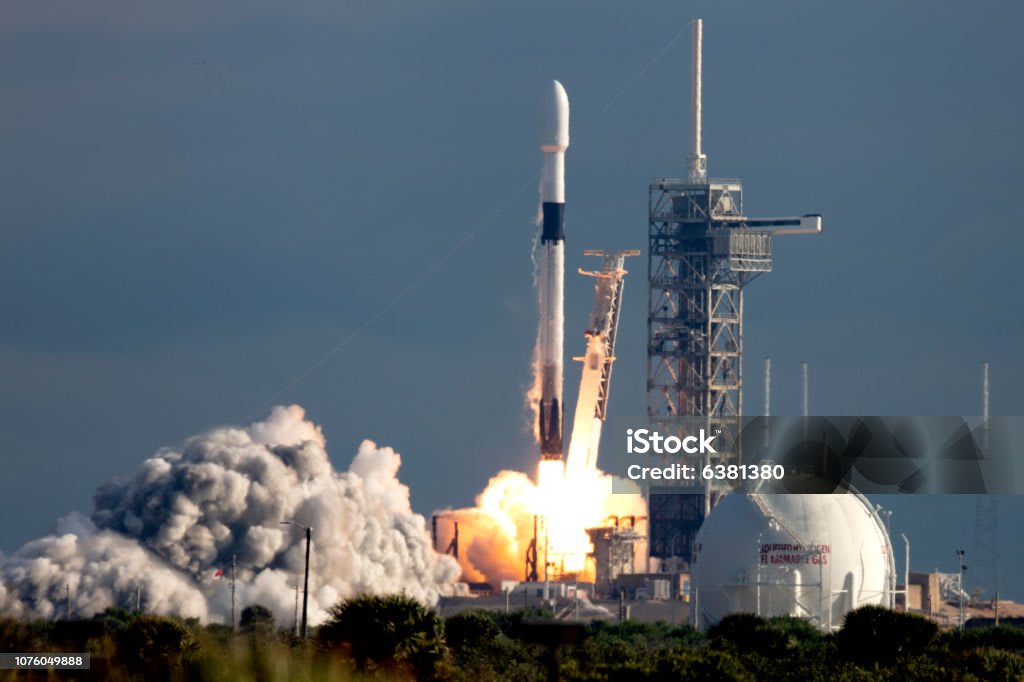
The Revolutionary Falcon 9 Rocket for Space Travel SpaceX, Elon Musk's private aerospace company, developed and produced the two-stage orbital launch vehicle known as the Falcon 9. Since its first successful flight in 2010, the Falcon 9 has become one of the most frequently used and reliable rockets in the world, playing a key role in reducing the cost of space travel and enabling the rapid expansion of satellite networks, space station resupply missions, and commercial space endeavors.
Design and Features
The nine first-stage engines of the Millennium Falcon from Star Wars inspired the Falcon 9 rocket's name. It has a height of about 70 meters (229.6 feet) and is powered by SpaceX-designed Merlin engines that burn liquid oxygen (LOX) and rocket-grade kerosene (RP-1). Key features of the Falcon 9 include:
Reusable First Stage: Perhaps its most groundbreaking aspect is its reusability. SpaceX designed the first stage of the Falcon 9 to return to Earth and land vertically after launch. Space missions are significantly less expensive thanks to this breakthrough. Payload Capacity: The Falcon 9 can carry payloads as large as 8,300 kilograms (18,300 pounds) into geostationary transfer orbit (GTO) and as large as 22,800 kilograms (50,265 pounds) into low Earth orbit (LEO). Payload Fairing: The rocket is equipped with a large payload fairing to protect satellites and cargo during ascent. These fairings are also being recovered and reused in newer missions.
Types of missions Falcon 9 is a highly versatile rocket used in a wide variety of missions:
Deployment of Satellites: It frequently launches scientific, military, and commercial satellites into orbit. International Space Station (ISS) Resupply: As part of NASA’s Commercial Resupply Services (CRS), Falcon 9 launches the Dragon spacecraft to deliver supplies to the ISS.
Crewed Missions: In 2020, Falcon 9 carried astronauts to space aboard the Crew Dragon capsule, becoming the first commercial rocket to do so. This marked the beginning of the Commercial Crew Program in collaboration with NASA.
Starlink: Falcon 9 is the backbone of SpaceX's Starlink project, deploying large batches of small satellites that aim to provide global broadband internet coverage.
Reusability and Cost Efficiency
One of Falcon 9’s most impressive achievements is its pioneering role in making rockets reusable. Previously, launch vehicles were single-use and discarded after each mission. SpaceX's ability to land and refurbish the Falcon 9's first stage has led to significant cost savings and more frequent launches.
To date, some Falcon 9 boosters have flown more than a dozen times, showcasing the durability and reliability of SpaceX's design.
Achievements and Milestones
First Private Company to Reach Orbit: SpaceX achieved this milestone with the Falcon 1 in 2008, setting the stage for Falcon 9's development.
First Reflight of an Orbital-Class Rocket: In March 2017, SpaceX launched and landed a previously flown Falcon 9 booster.
Record Number of Launches: In recent years, the number of orbital launches made by the Falcon 9 in a single year has surpassed that of any other rocket. What's next for Falcon 9? While SpaceX is actively developing the Starship system for deep space missions and Mars colonization, Falcon 9 continues to be the workhorse of the company’s launch operations. The Falcon 9 is likely to continue to play a crucial role in space missions for many years to come due to its established track record and ongoing enhancements.
Major Successes of Falcon 9
1. First Orbital Flight on June 4, 2010 The Falcon 9 made its maiden flight successfully, placing a test payload into orbit. SpaceX's transformation from a start-up to a serious player in the space industry was marked by this significant milestone. 2. First Commercial Expedition to the International Space Station Under NASA's Commercial Resupply Services contract, the Falcon 9 cargo spacecraft carried supplies to the International Space Station (ISS). It was the first time a private company delivered cargo to the ISS.
3. First Landing of a Reusable Booster (December 21, 2015)
SpaceX made history when Falcon 9’s first stage booster landed vertically at Cape Canaveral after launching into space. It was the first successful ground landing of an orbital-class rocket, proving reusability was possible.
4. First successful landing in the ocean (April 8, 2016) Falcon 9 achieved another key milestone by landing its booster on the autonomous drone ship, “Of Course I Still Love You”, in the Atlantic Ocean. This made it possible to recover from missions in which the rocket was unable to return to land. 5. First Useful Rocket Flight (March 30, 2017) SpaceX used a Falcon 9 booster that had already been used to launch a satellite and then landed it again. Through reusability, this was a significant step toward lowering the cost of spaceflight. 6. First Crewed Mission (May 30, 2020)
The first crewed launch from U.S. soil since the Space Shuttle program ended in 2011 and the first by a private company, Falcon 9 carried NASA astronauts Bob Behnken and Doug Hurley aboard the Crew Dragon spacecraft. 7. Deployment of the Starlink Mega-Constellation (Continuing as of 2019) Thousands of Starlink satellites have been launched by Falcon 9, establishing a global internet network that is expanding. Falcon 9's payload efficiency is demonstrated by launches that have carried more than 50 satellites simultaneously. 8. Reliability and Launch Cadence at Highest With over 200 successful launches (as of the beginning of 2025) and an impressive safety and reliability record, the Falcon 9 rocket has grown to become one of the most frequently flown rockets in the world.
About the Creator
How Powerful Can AI Be? Understanding the Limits and Possibilities of Machine Intelligence
Shant Khayalian — Balian’s Deep Tech The Question of Power We live in a time of extraordinary change. Machines are writing our emails, designing proteins, driving cars, creating art, and even passing legal and medical exams. In just a few years, artificial intelligence has gone from an obscure branch of computer science to a central force shaping the world around us.
By Chant Khialian7 days ago in Education
How AI Is Impacting the Jobs of Website Designers and Developers
Artificial Intelligence (AI) is transforming industries across the globe, and the world of website design and development is no exception. From streamlining workflows and enhancing creativity to automating repetitive tasks and reshaping professional roles, AI’s influence is broad and deep. In this article, we explore how AI is impacting website designers and developers — the opportunities it presents, the challenges it introduces, and how professionals can adapt to thrive in an AI-augmented landscape.
By Rajiv Menona day ago in Education



Comments
There are no comments for this story
Be the first to respond and start the conversation.