
Exploring the Choices of Life
A Literary Analysis of Robert Frost's "The Road Not Taken"
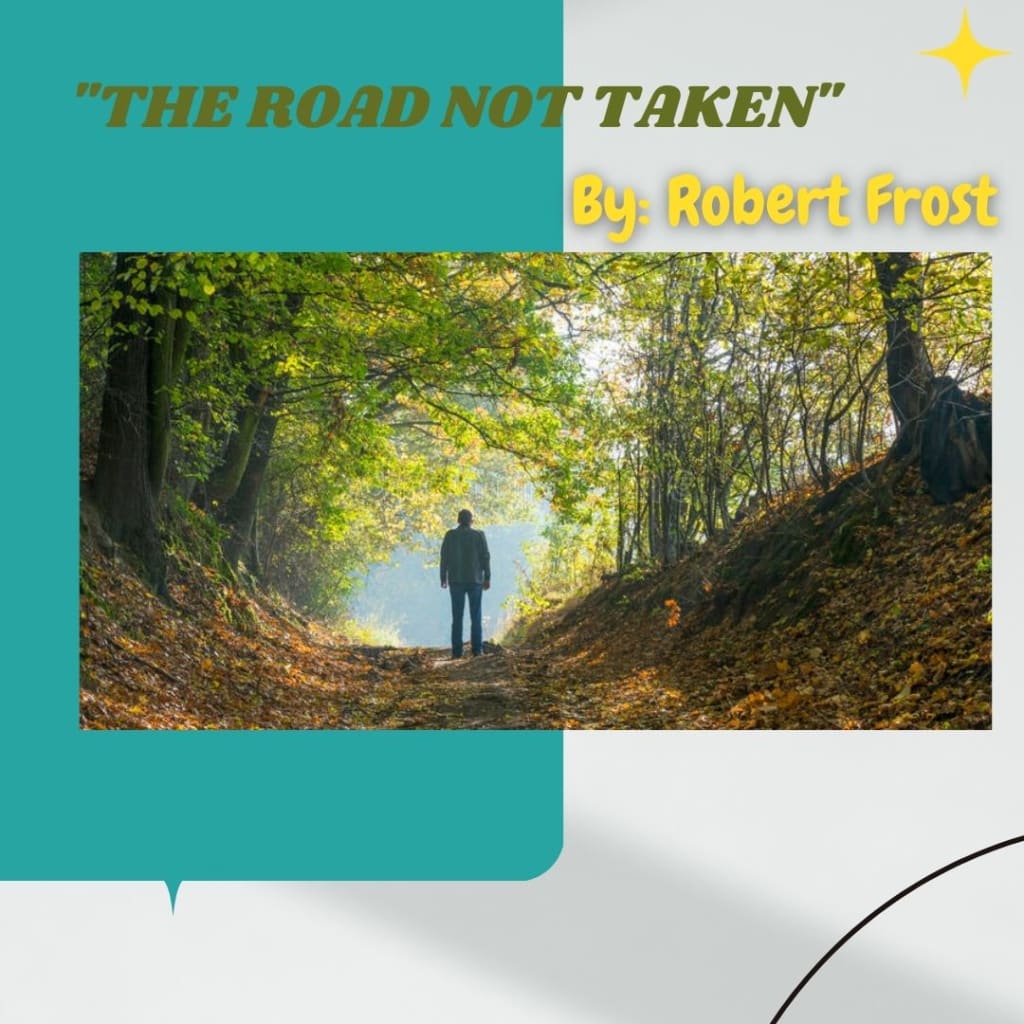
"The Road Not Taken" is a reflective poem written by Robert Frost, and was first published in 1916 as the first poem of his collection "Mountain Interval".
The poem is written in the first person and describes the speaker's decision to take a path that is less traveled, despite the fact that it may be more difficult and uncertain. The speaker reflects on the journey, noting that the other path "perhaps leads on to Boughs of fruit" while the one they chose "perhaps the better claim."
The poem concludes with the speaker saying that they "took the one less traveled by, / And that has made all the difference."
The poem is often interpreted as a metaphor for the choices one makes in life and the importance of taking risks and going against the norm.
Here is the full text:
"The Road Not Taken" by Robert Frost
Two roads diverged in a yellow wood,
And sorry I could not travel both
And be one traveler, long I stood
And looked down one as far as I could
To where it bent in the undergrowth;
Then took the other, as just as fair,
And having perhaps the better claim,
Because it was grassy and wanted wear;
Though as for that the passing there
Had worn them really about the same,
And both that morning equally lay
In leaves no step had trodden black.
Oh, I kept the first for another day!
Yet knowing how way leads on to way,
I doubted if I should ever come back.
I shall be telling this with a sigh
Somewhere ages and ages hence:
Two roads diverged in a wood, and I—
I took the one less traveled by,
And that has made all the difference.
- "Two roads diverged in a yellow wood" - The speaker is presented with a fork in the road and must make a choice.
- "And sorry I could not travel both" - The speaker expresses regret that they cannot take both paths.
- "And be one traveler, long I stood" - The speaker takes a moment to consider the options before them.
- "And looked down one as far as I could" - The speaker looks down one of the paths as far as they can see.
- "To where it bent in the undergrowth" - The path disappears into the underbrush.
- "Then took the other, as just as fair" - The speaker chooses the other path.
- "And having perhaps the better claim" - The speaker acknowledges that the other path may have been a better choice, but chooses this one instead.
- "Because it was grassy and wanted wear" - The speaker is drawn to the path that is less traveled and in better condition.
- "Though as for that the passing there" - The speaker acknowledges that in the long run, it may not make a significant difference which path they choose.
- "Had worn them really about the same" - Both paths have been worn down by travelers, so neither is truly "better."
- "And both that morning equally lay" - Both paths were equally attractive to the speaker at the beginning of their journey.
- "In leaves no step had trodden black" - The paths are untouched and unspoiled.
- "Oh, I kept the first for another day!" - The speaker feels a sense of longing for the path they did not choose.
- "Yet knowing how way leads on to way" - The speaker is aware that each choice leads to further choices and that they may never return to this fork in the road.
- "I doubted if I should ever come back" - The speaker is uncertain if they will ever return to this point in their journey.
- "I shall be telling this with a sigh" - The speaker reflects on their journey with a sense of regret.
- "Somewhere ages and ages hence" - The speaker imagines themselves in the future, still thinking about this moment.
- "Two roads diverged in a wood, and I" - The speaker sums up the situation.
- "I took the one less traveled by" - The speaker chose the path that was less traveled.
- "And that has made all the difference" - The choice the speaker made had a significant impact on their life.
The poem describes the speaker's journey through a wood and their decision to take a path that "has made all the difference." The setting of the poem is in a wood and the imagery of nature is used to reflect the theme of choices and the journey of life. The choice of the path not taken is a metaphor for the choices one makes in life and the importance of taking risks and going against the norm.
The author, Robert Frost, is known for his use of rural settings, imagery, and the exploration of the human condition. His poems often have a strong sense of nostalgia, and the themes of nature, life, and human emotions.
The poem was written in the early 20th century, in the era of Modernism. This era is characterized by a rejection of traditional values and forms, and an emphasis on individualism and self-expression. This perspective is reflected in the poem, as the speaker is reflecting on their own choices and the impact they have had on their life. The imagery of the untrodden path, less traveled by, also reflects the theme of individualism and non-conformity which was popular in that era.
About the Creator
Keep reading
More stories from Mubashshira Malik and writers in Education and other communities.
The Booming Demand for Custom T-Shirt Design
Custom t-shirt design is a rapidly growing trend in the fashion industry, with more and more consumers seeking out unique and personalized clothing options. This trend is driven by the rise of e-commerce and social media platforms, which have made it easier for individuals and small businesses to create and sell custom designs. The market for custom t-shirt design is also being fueled by a desire for self-expression and a growing focus on sustainability and ethical fashion.
By Mubashshira Malik3 years ago in Lifehack
Navigating the Most Complex Heart Conditions
Cardiology is advancing at a remarkable pace, thanks to next-generation imaging technologies that allow doctors to see the heart in extraordinary detail. For patients with complex or rare cardiac conditions, these tools provide insights that traditional methods often miss. By combining structural, functional, and metabolic imaging, physicians can make accurate diagnoses, plan effective treatments, and monitor progress with unprecedented precision. Modern cardiac imaging is redefining how heart disease is detected and managed.
By Nishi Patel3 days ago in Education
Scaling a Business by Doing Less, Not More
Many business owners believe growth comes from adding more. More services, more markets, more tools, and more staff. While this sounds logical, it often leads to confusion and burnout. Scaling a business becomes easier and more sustainable when leaders choose to do less, but do it better.
By Darrell Hulsey5 days ago in Education



Comments
There are no comments for this story
Be the first to respond and start the conversation.