
Exploring Surface and Volume Extruders in Simcenter 3D
Simulation Accuracy and Efficiency with Surface and Volume Extruders, and Gap Closure in Siemens Simcenter 3D

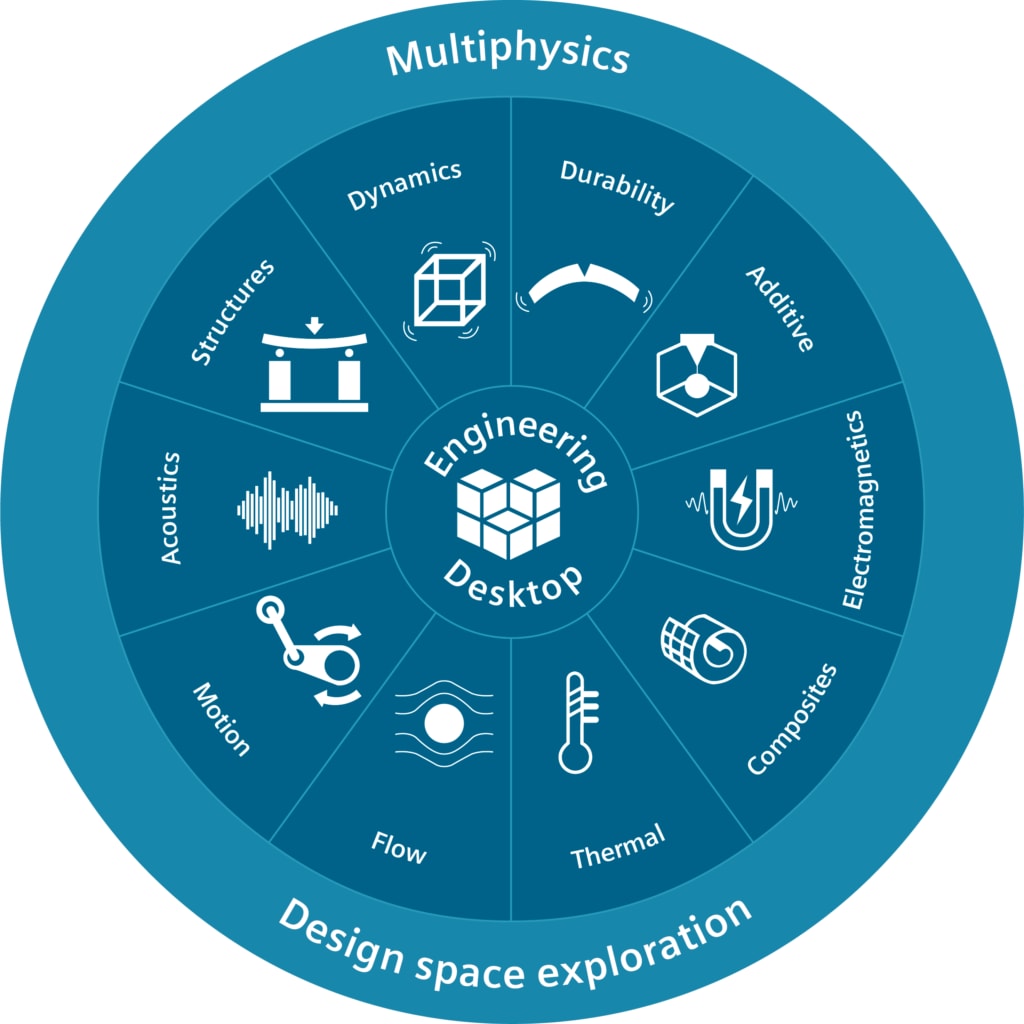
Simcenter 3D, part of Siemens Digital Industries Software, is a comprehensive simulation platform that offers various tools and capabilities for engineers to analyze and optimize their designs. Among its array of features, surface and volume extruders stand out as powerful tools for creating complex geometries and preparing models for simulation. Additionally, the surface wrapper functionality plays a crucial role in closing gaps within models, ensuring accurate and reliable simulation results.
Surface and Volume Extruders:
Surface and volume extruders in Simcenter 3D provide engineers with efficient methods for generating geometry from existing shapes or profiles. These tools are particularly useful for creating intricate geometries required for simulations such as fluid flow, heat transfer, and structural analysis.
Surface extrusion involves extending a two-dimensional profile along a specified direction to create a three-dimensional surface. This feature allows engineers to quickly create complex shapes by extruding profiles along curves or surfaces. Users can control parameters such as extrusion direction, length, and taper angle to achieve the desired geometry.
Surface extruders are commonly used in applications like airfoil design, where engineers need to create streamlined shapes with specific aerodynamic properties. By extruding airfoil profiles along curved paths, designers can simulate airflow over complex surfaces accurately.
Volume extrusion takes surface extrusion a step further by creating solid bodies from two-dimensional profiles. This functionality enables engineers to generate complex solid geometries by extruding profiles along specified paths or surfaces.
Volume extruders are invaluable in industries such as automotive and aerospace, where intricate components with varying cross-sections are prevalent. For example, designers can use volume extrusion to create engine manifolds with intricate internal passages or fuselage structures with varying thicknesses.
Gap Closure in Surface Wrapper:
Surface wrapper functionality in Simcenter 3D allows engineers to create watertight surfaces from imported geometry or CAD models. However, imported geometries often contain gaps or discontinuities that can adversely affect simulation accuracy. The gap closure feature addresses this issue by automatically filling in small gaps and discontinuities within the model.
Gap closure algorithms analyze the imported geometry and identify areas where surfaces do not align correctly or where small openings exist. The software then intelligently fills in these gaps while preserving the overall shape and integrity of the model. This ensures that the resulting surfaces are watertight and suitable for simulation purposes.
By closing gaps within the model, engineers can avoid issues such as leakage in fluid flow simulations or stress concentration in structural analyses. Moreover, gap closure enhances the accuracy and reliability of simulation results by ensuring that the model accurately represents the physical geometry.
Let's consider designing an Intake Manifold
Background:
An intake manifold is a critical component in an internal combustion engine that distributes air-fuel mixture to the engine cylinders. It plays a significant role in engine performance and efficiency. Designing an optimized intake manifold requires intricate geometries to ensure proper airflow distribution and minimal pressure losses.
Simulation Goals:
The goal is to design an intake manifold for a high-performance automotive engine and simulate airflow to optimize performance. The design must incorporate complex internal passages to enhance airflow while minimizing pressure drop.
Utilizing Simcenter 3D:
1. Surface Extrusion:
Engineers start by designing the cross-sectional profiles of the intake manifold runners. These profiles represent the desired airflow paths within the manifold. Using Simcenter 3D's surface extrusion tool, engineers extrude these profiles along the curved path of the manifold to create the initial surfaces.
2. Volume Extrusion:
Once the surface geometry is created, engineers utilize Simcenter 3D's volume extrusion capabilities to convert the surfaces into solid bodies. This involves extruding the surface geometry inward to create a manifold with the desired internal volume and passages.
3. Gap Closure:
Upon importing the geometry or CAD model of the intake manifold into Simcenter 3D, engineers may encounter small gaps or misalignments between surfaces. To address this, they employ Simcenter 3D's gap closure functionality. The software automatically identifies and fills in these small gaps, ensuring the manifold surfaces are watertight.
Simulation and Analysis:
With the intake manifold geometry prepared using Simcenter 3D's surface and volume extruders, engineers proceed to simulate airflow through the manifold using computational fluid dynamics (CFD) analysis. They analyze parameters such as velocity distribution, pressure drop, and turbulence to optimize the design for maximum efficiency and performance.
Optimization and Validation:
Engineers iteratively refine the design based on simulation results, adjusting parameters such as runner length, diameter, and curvature. They use Simcenter 3D's optimization tools to automatically explore design alternatives and identify the most efficient configurations. Additionally, they validate the optimized design through further simulations and physical testing.
In this example, Simcenter 3D's surface and volume extruders, coupled with the gap closure functionality, enable engineers to design and analyze a complex intake manifold efficiently. By leveraging these tools, they can create geometrically intricate components, simulate airflow dynamics accurately, and optimize designs for improved engine performance and efficiency. Ultimately, Simcenter 3D empowers automotive engineers to develop innovative solutions that meet stringent performance requirements and drive product excellence.
Surface and volume extruders, along with the gap closure functionality in Simcenter 3D, are indispensable tools for engineers involved in simulation and analysis. These features enable users to create complex geometries efficiently, prepare models for simulation, and ensure the accuracy and reliability of results. By leveraging these capabilities, engineers can accelerate product development, optimize designs, and bring innovative products to market faster than ever before.
About the Creator
LTS Inc.
Longterm Technology Services has worked with companies around the world to realize digital transformation through solutions in CAD, CAM, CAE, PDM, product lifecycle management (PLM), production scheduling, plant simulation, and more.
Breakthrough Technologies Every Chemical Engineer Should Know About
The chemical engineering profession is undergoing a transformation fueled by technological advancements. From digital innovation to sustainable manufacturing, new tools and methods are expanding what chemical engineers can accomplish. Staying informed about these breakthroughs is essential for those who want to remain at the forefront of the field.
By Kyle Vandermolen3 days ago in Education
One Hard Thing
Stop me if you’ve heard this one before: You have the number, you know your schedule- you’ve even picked out the perfect day and time to make this appointment. Shoot, you’ve even picked out alternative days and times just in case their schedules can’t accommodate you!
By Taylor Rigsby7 days ago in Motivation


Comments
There are no comments for this story
Be the first to respond and start the conversation.