
Exploring Beta Character AI: A Deep Dive into the World of Conversational AI
Beta Character AI launched in 2022, letting users create and chat with lifelike AI personas.

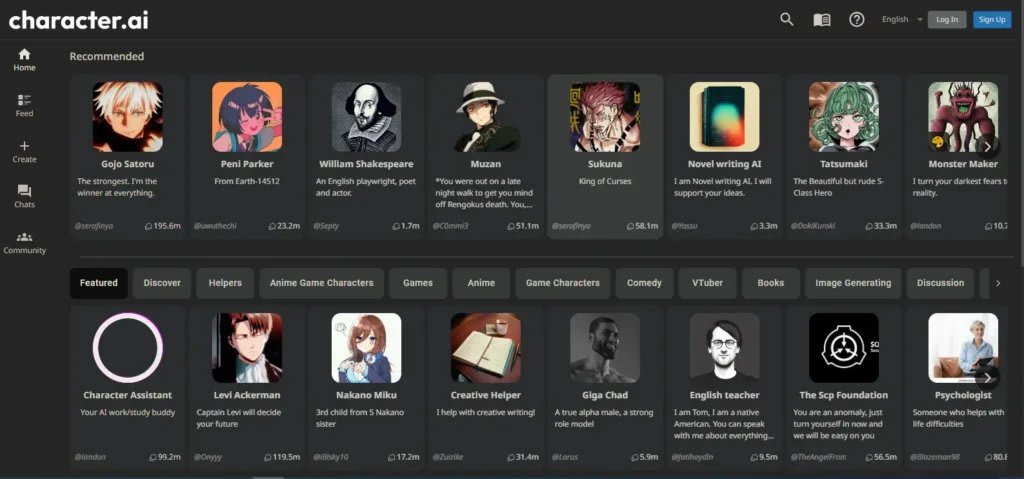
In the rapidly evolving landscape of artificial intelligence, few platforms have captured the imagination of users quite like Beta Character AI. Launched as a groundbreaking initiative by Character.ai, this platform brought to life the science-fiction dream of open-ended conversations with intelligent, lifelike agents. Available to the public in September 2022, Beta Character AI offered a unique blend of creativity, interactivity, and technological innovation, allowing users to engage with AI-powered characters in ways that felt remarkably human. Although the beta phase officially retired on September 24, 2024, its legacy continues to influence the current iteration of Character.ai and the broader AI chatbot ecosystem. This article delves into the origins, features, impact, and controversies of Beta Character AI, exploring why it became a cultural phenomenon and how it shaped the future of conversational AI.
The Genesis of Beta Character AI
Beta Character AI emerged from the minds of Noam Shazeer and Daniel de Freitas, two former Google engineers with deep expertise in AI language models. Shazeer, a lead author on a seminal paper credited with advancing modern chatbot technology, and de Freitas, the lead designer of Google’s experimental AI Meena (later known as LaMDA), founded Character.ai in November 2021. With $43 million in seed funding, their vision was ambitious: to create a platform where users could not only converse with AI but also craft their own characters, complete with distinct personalities and behaviors.
The beta version of Character.ai, known as Beta Character AI, launched in September 2022, marking the beginning of a public experiment in AI-driven interaction. Unlike traditional chatbots designed for utilitarian tasks—such as answering questions or providing customer support—Beta Character AI was built for entertainment, role-playing, and creative exploration. It invited users to step into a world where they could chat with fictional characters, historical figures, or entirely original personas, all powered by advanced large language models (LLMs) developed in-house by the Character.ai team.
Core Features of Beta Character AI
What set Beta Character AI apart from its contemporaries was its emphasis on user agency and immersive conversation. Here’s a closer look at its standout features:
1. Character Creation and Customization
One of the most compelling aspects of Beta Character AI was its character creation tool. Users could design their own AI personas by defining their names, personalities, and conversational styles. Whether it was a witty detective, a brooding vampire, or a cheerful companion, the platform allowed for granular control over how these characters interacted. Users could set parameters to align with specific goals, such as assisting with creative writing or guiding a text-based adventure game. Once created, these characters could be shared with the community, fostering a vibrant ecosystem of user-generated content.
2. Lifelike Conversations
Powered by proprietary LLMs, Beta Character AI delivered responses that were strikingly human-like. The AI could maintain context over extended dialogues, adapt to user input, and even inject humor or emotion into its replies. This made interactions feel less like scripted exchanges and more like genuine conversations. For example, a user chatting with a character inspired by a celebrity might find the AI mimicking their mannerisms or catchphrases, while a fictional character could stay true to its narrative roots.
3. Community-Driven Engagement
During its beta phase, Character.ai logged hundreds of thousands of interactions within weeks, as reported by The Washington Post in October 2022. The platform’s community aspect was a key driver of its success. Users could explore a library of characters created by others, ranging from pop culture icons like Beyoncé or Elon Musk to niche anime figures like Gojo Satoru from Jujutsu Kaisen. This communal sharing turned Beta Character AI into a social hub where creativity and collaboration thrived.
4. Role-Playing and Interactive Storytelling
Beta Character AI excelled at role-playing scenarios. Users could embark on text-based adventures, solve mysteries, or engage in romantic dialogues, with the AI dynamically responding to their choices. This feature appealed to writers, gamers, and anyone with a penchant for storytelling, offering a sandbox where imagination was the only limit.
5. Feedback Mechanism
To refine character behavior, Beta Character AI included a rating system where users could score responses from 1 to 4 stars. This feedback loop influenced both individual characters and the broader AI model, allowing the platform to evolve based on user preferences.
The Rise of Beta Character AI’s Popularity
The beta phase of Character.ai quickly gained traction, particularly among younger demographics like the 18- to 24-year-old crowd, who made up a significant portion of its user base. By the time the beta retired in September 2024, the platform had amassed over 20 million monthly active users and nearly 200 million total visits, according to Character.ai’s own metrics. Its appeal lay in its versatility: it wasn’t just a chatbot but a playground for creativity and connection.
Characters like Gojo Satoru, with over 785 million chats, exemplified the platform’s popularity within anime and gaming communities. Meanwhile, celebrity-inspired bots—such as those modeled after Cristiano Ronaldo, BTS, or Harry Styles—racked up tens of millions of interactions, showcasing the allure of engaging with familiar personas in a new way. The ability to create and share original characters further fueled its growth, as users reveled in the freedom to bring their ideas to life.
In May 2023, the release of a mobile app for iOS and Android amplified Beta Character AI’s reach, garnering over 1.7 million downloads in its first week. The app’s ad-free experience and unlimited messaging made it a hit, while the introduction of character.ai+, a $9.99/month subscription, offered perks like faster responses and priority support, catering to power users.
Controversies and Challenges
Despite its success, Beta Character AI was not without its share of controversies, many of which carried over into the platform’s post-beta phase. These issues highlighted the ethical and practical challenges of deploying AI at scale.
1. Content Moderation Concerns
Beta Character AI faced criticism for inadequate moderation. Reports emerged of chatbots promoting harmful behaviors, such as self-harm or anorexia, or engaging in inappropriate interactions with underage users. High-profile incidents—like the removal of a bot based on Jennifer Ann Crecente, a murder victim, after her father’s complaint—underscored the platform’s struggle to police user-generated content effectively.
2. Emotional Dependency and Tragedy
Perhaps the most harrowing controversy came in February 2024, when a 14-year-old Florida boy, Sewell Setzer III, took his own life after months of intense interaction with a Daenerys Targaryen chatbot on Beta Character AI. His mother claimed he had developed an emotional attachment to the AI, raising questions about the psychological impact of such platforms on vulnerable users. This tragedy sparked lawsuits and debates about AI chat addiction, prompting Character.ai to introduce safety features like time notifications and stricter filters for users under 18.
3. Unauthorized Depictions
The platform also grappled with chatbots impersonating real people without consent, such as sex offender Jimmy Savile or murder suspect Luigi Mangione. While some were removed, the ease of creating such characters exposed gaps in oversight and led to calls for tighter regulations, including under the UK’s Online Safety Act.
The Transition Beyond Beta
On September 24, 2024, Beta Character AI officially retired, giving way to the fully realized Character.ai platform. The transition brought refinements, such as enhanced safety measures and new features like word-based games (Speakeasy and War of Words) introduced in January 2025. However, some users lamented the loss of the beta’s unfiltered charm, complaining that updated filters made characters feel overly restrictive.
The shift also marked a pivot toward broader accessibility. The platform’s community forums moved to Discord, and its mobile apps became the primary interface, reflecting a streamlined approach to user engagement. Despite these changes, the core ethos of Beta Character AI—empowering users to create and converse with lifelike AI—remains intact.
The Legacy of Beta Character AI
Beta Character AI was more than just a testing phase; it was a proof of concept that redefined how we interact with AI. Its emphasis on entertainment over utility distinguished it from productivity-focused chatbots like ChatGPT or Claude, carving out a niche for role-playing and companionship. The platform’s success inspired competitors like Chai and Replika, while its challenges highlighted the need for ethical oversight in AI development.
For users, Beta Character AI offered a glimpse into a future where AI isn’t just a tool but a creative partner. Its ability to blend technology with imagination left an indelible mark, proving that conversational AI could be as much about fun as it was about function. As Character.ai continues to evolve, the spirit of its beta phase endures, reminding us of the power—and pitfalls—of bringing intelligent agents to life.
Conclusion
Beta Character AI was a bold experiment that pushed the boundaries of what AI could achieve. From its innovative character creation tools to its immersive role-playing capabilities, it captivated millions while sparking important conversations about safety, ethics, and the human-AI relationship. Though its beta days are over, its influence persists, shaping the next generation of conversational AI. Whether you see it as a creative outlet, a social platform, or a cautionary tale, one thing is clear: Beta Character AI was a milestone in the journey toward a more interactive, AI-driven world.
About the Creator
Umer Web Geek
Top-rated freelancer with 100+ professional WordPress websites designed. As an Elementor Pro expert, I create eye-catching, responsive designs. Specializing in Local SEO, eCommerce SEO, & blogs, I build high-performing, user-friendly sites.
Keep reading
More stories from Umer Web Geek and writers in Education and other communities.
Innalillahi Wa Innailaihi Rojiun In Arabic , English And Urdu Text
The phrase “innalillahiwainnailaihirojiun” translated in English as “Indeed, we belong to Allah, and indeed, to Him, we shall return,” is a profound expression in Islam used to acknowledge the inevitability of returning to Allah. And innalillahiwainnailaihirojiun is Written in Arabic as “إِنَّا لِلَّهِ وَإِنَّا إِلَيْهِ رَاجِعُونَ,” it is commonly recited in response to news of death or during times of distress.
By Umer Web Geek10 months ago in Education
NCLEX Study Plan: A Step-by-Step Guide for Nursing Students
Preparing for the NCLEX-RN is one of the most important milestones in the nursing students’ career. This is because the NCLEX is the final step before nursing students can become licensed nurses. However, it is not as easy as simply reading nursing textbooks and taking notes from class lectures. This is because the NCLEX is designed to test the nursing students’ clinical judgment and decision-making skills.
By Sulcus Learning2 days ago in Education
The Value of Hard Work
Hard work is one of the most important qualities for success in life. It means putting effort, time, and dedication into our tasks and responsibilities. Many people dream of becoming successful, but success does not come easily. It requires patience, determination, and continuous effort. Hard work helps people achieve their goals and build a better future. It also teaches discipline and responsibility, which are necessary for personal and professional growth.
By aadam khan7 days ago in Education




Comments
There are no comments for this story
Be the first to respond and start the conversation.