
ERP Real Life experience for supply chain management
A Story for College Students Entering the Real World of Supply Chain Management

- When I was sitting where you are now—lecture halls, case studies, PowerPoint slides—I thought technology in supply chain was one thing: big systems that magically fix everything.
Fast forward a few years. I’m now working in supply chain management, and my company has fully implemented SAP across procurement, inventory, production planning, and logistics.
Let me tell you what I love, what I don’t, and what no one clearly explained to me back in college.
Day One With SAP: “Wow… This Is Serious”
The first thing SAP teaches you is discipline.
Suddenly:
Every purchase order must follow a process
Every inventory movement is logged
Every approval has a workflow
Every mistake leaves a trace
From a management perspective, this is powerful. SAP forces structure where chaos used to live.
What I Like About ERP Systems Like SAP
1. One Source of Truth
Before SAP, different departments had different numbers. Procurement had one Excel file, warehouse had another, finance had a third.
Now? One system. One version of the truth.
2. Control and Compliance
As a manager, SAP gives you visibility and control:
Who approved what
When materials moved
Where delays happened
This is critical for audits, financial accuracy, and operational stability.
3. Process Standardization
ERP systems are great at answering:
> “How should things be done?”
They define the backbone of the supply chain.
---
But Here’s the Part No One Warned Me About
After the excitement faded, reality kicked in.
What I Don’t Like (And You Should Know This)
1. SAP Tells You What Happened — Not What Will Happen
ERP systems are excellent historians.
They record transactions perfectly.
But when I ask:
“What will demand look like next month?”
“Which supplier is likely to fail?”
“How much safety stock is actually optimal?”
SAP alone struggles to answer that.
2. Heavy, Rigid, and Slow to Change
Any small change requires:
Configuration
Testing
Approval
Time
ERP systems are built for stability, not speed.
3. Humans Still Make the Decisions
SAP shows reports.
Managers still interpret them—often based on experience, gut feeling, or pressure.
And that’s where things break.
---
The Moment I Understood the Difference: ERP vs ML Applications
This is the part I wish someone explained to me in college.
ERP (Like SAP) Answers:
What did we order?
What do we have in stock?
What was delivered late?
What is the current cost?
ERP is transactional and operational.
---
Machine Learning Applications Answer:
What will customers order?
When should we reorder?
Which supplier is becoming risky?
How can we reduce inventory without hurting service?
ML tools are predictive and prescriptive.
They don’t just show data. They learn from it.
---
Where ML Consulting Companies Come In
ML consulting companies don’t replace SAP. They sit on top of it.
Think of it like this:
SAP is the nervous system
ML applications are the brain
ML consultants:
Pull historical data from ERP systems
Clean and analyze it
Build forecasting, optimization, and risk models
Feed insights back to decision-makers
Instead of asking:
> “What happened last quarter?”
You start asking:
> “What’s the best decision right now?”
---
A Real Example From My Work
Before ML tools:
We reordered based on fixed rules
Safety stock was static
Overstock and stockouts happened together (yes, both)
After ML-driven demand forecasting:
Reorder points adjusted dynamically
Inventory dropped without hurting service
Decisions became data-backed, not opinion-based
SAP executed the orders. ML told us what orders made sense.
That’s the difference.
---
What I Want You, as College Students, to Understand
Here’s the honest takeaway:
ERP systems will always be foundational
They keep the supply chain running
But they won’t make it smart on their own
The future supply chain professional:
Understands ERP processes
Speaks the language of data
Knows how ML augments—not replaces—core systems
If you only know SAP, you’ll be operational. If you understand how ML works with SAP, you’ll be strategic.
---
Final Advice From Someone Already Inside
Don’t think in terms of:
> “ERP vs AI”
Think:
> “ERP plus AI”
Learn processes. Learn systems. But also learn how decisions should be made when data, not guesswork, leads the way.
That’s where real supply chain leadership lives.
About the Creator
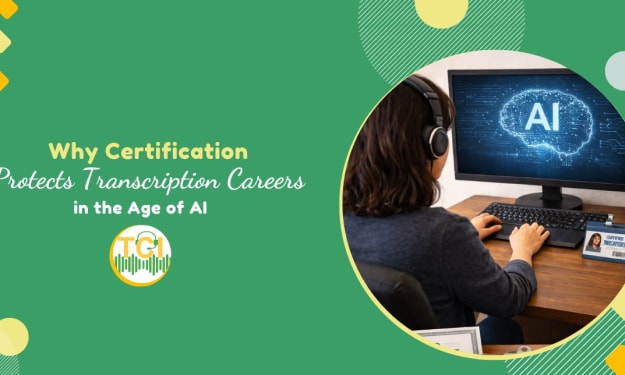
Why Certification Protects Transcription Careers in the Age of AI
Artificial Intelligence has rapidly transformed the transcription industry. Speech-to-text tools now promise instant results, lower costs, and effortless productivity. For businesses focused purely on speed, AI often appears to be the perfect solution. However, beneath this promise lies a critical reality: speed without accuracy creates risk.
By Mahesh Kumara day ago in Education
What It Really Takes to Get a Wikipedia Page Approved in 2026
These days, Wikipedia isn't like the one some folks recall. Back then, an okay article often made it through with just small tweaks. Now things feel tighter, more intense. Every day brings thousands of fresh entries. Most vanish fast, blocked before they stick around. Getting turned down used to be rare. Lately, that's just how it goes.
By Hillshire Media7 days ago in Education
The Dryads are Calling
They say the forest by Phoenix River sings. Perhaps it is just the wind howling through the leaves, or a particular birdsong. But Percy Fisher knows better; he knows what lies in those woods, and he knows that the forest sings of his demise.
By Leigh Hooperabout 11 hours ago in Fiction



Comments
There are no comments for this story
Be the first to respond and start the conversation.