
Empowering Minds, Changing the World
How Education Becomes the Strongest Force for Global Transformation
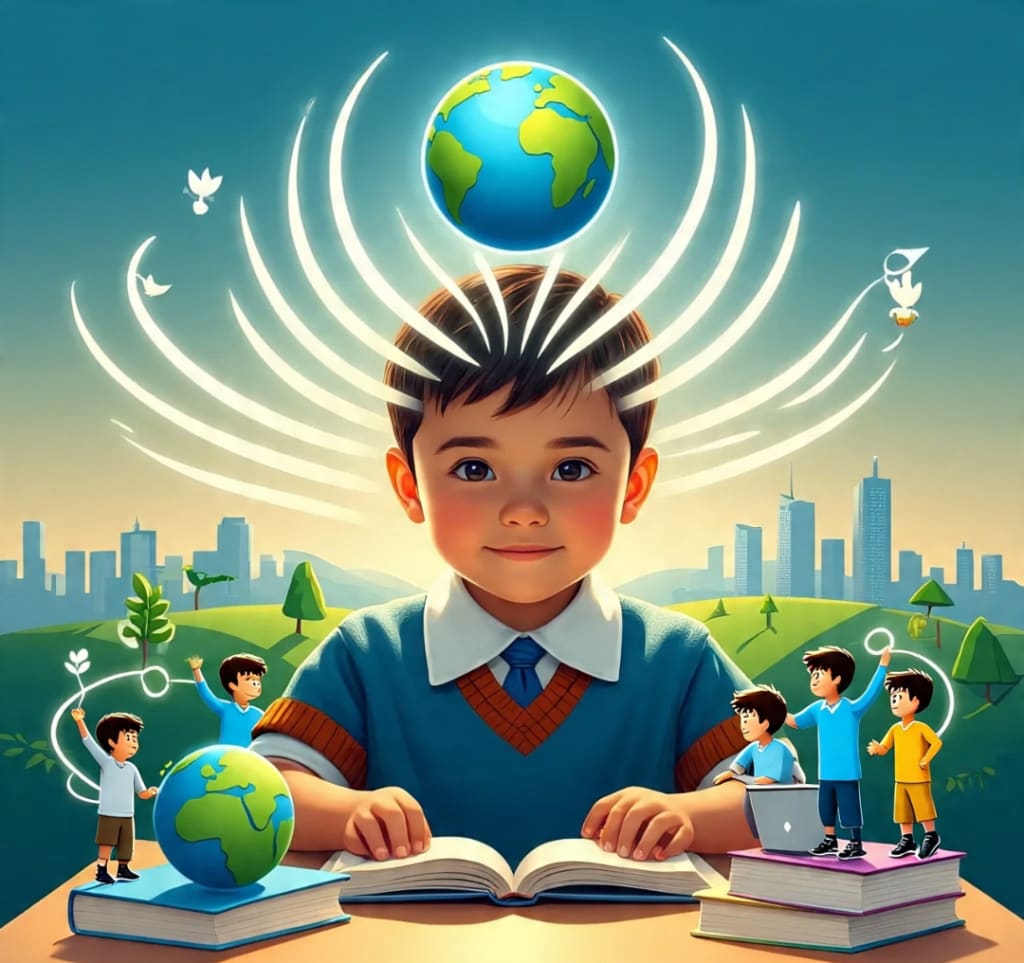
In the quiet hills of northern Kenya, the sun was just beginning to rise over the village of Laretu. A soft, golden light filtered through the acacia trees, warming the red earth and stirring life into a place that, for generations, had been forgotten by progress.
But something was changing.
Twelve-year-old Amina sat under a tree, her well-worn notebook balanced on her knees. Her eyes scanned the pages with a mixture of determination and wonder. Only a few years earlier, books were foreign objects in her home—luxuries reserved for cities and for boys. But now, every morning before tending to her family’s goats, Amina read. And every night before sleep, she dreamed—not of marriage or chores, but of chemistry labs, stethoscopes, and faraway universities.
What had happened in Laretu was not magic. It was education.
A small, solar-powered school had been built just three years ago, through a collaboration between a global nonprofit and local leaders. At first, only a few families were willing to send their children—especially girls. But over time, change began to ripple. Amina's older brother, once resistant to her learning, watched her explain the water cycle better than any adult in the village. Her father, who had never learned to read himself, began to ask her to read letters for him. The village began to see knowledge not as a threat to tradition, but as a bridge to a better life.
Across the globe, similar ripples were forming. In a refugee camp in Jordan, Syrian children who had lost their homes and families were rebuilding their identities through classrooms filled with stories, science, and hope. In the favelas of Brazil, coding programs were turning at-risk youth into software developers, some of whom would go on to launch startups tackling real-world problems in healthcare and finance. In rural Bangladesh, mobile classrooms on boats were reaching flood-prone communities, ensuring that even climate change could not interrupt a child’s right to learn.
Education was proving to be the great equalizer—not instantly, and not perfectly—but undeniably.
What made education so powerful was not just the transfer of knowledge, but the transformation of the self. When people learned, they began to question. They asked why things were the way they were, and whether they had to remain that way. Amina began to ask why her village lacked clean water, and what she could do to fix it. Others asked why women weren’t allowed to own land, or why corruption was accepted as normal. Education planted the seeds of critical thinking, and critical thinking sparked action.
By the time Amina was sixteen, she had started a girls’ science club. By nineteen, she had received a scholarship to study environmental engineering abroad. And by twenty-five, she returned—not to escape her past, but to rebuild it.
With help from university contacts and local government grants, Amina led a project to design and install a low-cost water purification system in Laretu, using solar distillation methods adapted from her studies. Illnesses dropped, children missed fewer school days, and mothers had more time for community enterprises.
But perhaps the most transformative part was what she inspired. Younger girls began to follow in her footsteps. Boys, too, started to see education not as a threat to their identity, but as an expansion of it. The idea that power came through violence or wealth began to shift—now, the most respected people in the village were teachers, scientists, and community organizers.
On a global scale, stories like Amina’s were multiplying. Educated populations were driving democratic reforms, innovating climate solutions, and demanding accountability from their leaders. Education wasn’t merely preparing people for jobs—it was preparing them to reshape the world.
The United Nations’ reports confirmed what many already believed: no other single factor had as wide-reaching an impact on global well-being as education. It reduced poverty, improved health outcomes, promoted gender equality, and strengthened economies. In every corner of the world, empowered minds were rewriting futures.
Standing on a small hill overlooking her village, Amina once said to a group of visiting students, “We used to think change had to come from outside—from governments, from donors, from heroes. But real change starts when one person learns something new, and decides not to keep it to themselves.”
In a world facing crises of inequality, climate, and conflict, it was not weapons, wealth, or even technology that promised the greatest hope. It was education—humble, patient, and persistent—that lit the way forward.
Empowering minds, changing the world.
The transformation had already begun.
About the Creator
Keep reading
More stories from Muhammad Saad and writers in Education and other communities.
Unlocking Potential: The Power of Education
Education is more than just books and classrooms. It’s the bridge between dreams and reality, the spark that ignites curiosity, and the tool that empowers individuals to shape their future. Around the world, access to quality education has proven to be one of the most powerful forces for positive change—not only for individuals but for entire communities. Take the story of Amina, a young girl from a small rural village. For years, education in her community was seen as a luxury, especially for girls. Most families prioritized early marriage and household responsibilities over schooling. But Amina had a different vision for her life. She dreamed of becoming a doctor to help the sick in her village who often lacked access to healthcare. Thanks to a community education initiative, Amina was given the opportunity to attend school. The road wasn’t easy—she walked several kilometers each day and often studied by candlelight—but her determination never faded. Years later, Amina graduated from medical school and returned to her village, where she opened a small clinic. Today, she not only provides healthcare but also mentors young girls, encouraging them to pursue their own dreams through education. Amina’s story is just one example of how education changes lives. Education Opens Doors Across the globe, research consistently shows that higher levels of education are linked with better job opportunities, higher incomes, and improved health. But the benefits go far beyond personal gain. When people are educated, they are more likely to engage in their communities, vote, start businesses, and help others rise with them. Education fosters critical thinking, empathy, and innovation—qualities that every thriving society needs. For children, the early years of education build the foundation for lifelong learning. As they progress through school, they gain not just knowledge but also confidence and communication skills. For adults, continuing education opens doors to new careers, better financial security, and personal growth. The Ripple Effect Education doesn’t just affect the learner—it creates a ripple effect. Studies show that when women are educated, their children are more likely to survive infancy, attend school themselves, and grow up healthier. Educated parents are better equipped to support their children's learning, manage their family’s health, and contribute to their local economies. In communities where education levels rise, poverty often decreases. Local businesses grow, crime rates fall, and innovation flourishes. Education is like planting a seed—it takes time to grow, but when nurtured, it transforms entire landscapes. Barriers Still Remain Despite the progress made globally, millions of people still lack access to quality education due to poverty, conflict, gender inequality, and lack of resources. For many, even basic education remains out of reach. In some parts of the world, children walk miles to reach the nearest school. In others, they face overcrowded classrooms, untrained teachers, or outdated materials. Girls, in particular, face additional challenges such as early marriage, cultural bias, or safety concerns that prevent them from completing their studies. However, positive change is possible—and happening every day. Governments, non-profits, and community leaders are working together to break down barriers, build schools, train teachers, and provide scholarships to those who need them most. Technology as a Gateway In recent years, technology has become a powerful tool in expanding access to education. Online classes, mobile learning apps, and virtual classrooms have brought learning to remote villages, refugee camps, and busy city neighborhoods. Even during times of crisis—like the COVID-19 pandemic—technology enabled millions to continue learning from home. With the right investment and planning, digital education can bridge the gap for students who would otherwise be left behind. Investing in the Future Education is not just an expense—it’s an investment. For every dollar spent on education, societies see multiple dollars returned in the form of economic growth, public health, and civic engagement. By ensuring that every child, teen, and adult has the opportunity to learn, we build stronger economies and more peaceful societies. We unlock the potential of inventors, teachers, artists, entrepreneurs, and leaders who will shape the future. A Call to Action As Amina’s story shows, the impact of education goes far beyond the classroom. It’s about empowerment, opportunity, and transformation. It’s about planting seeds today that will bloom into a better tomorrow. Whether you’re a student, parent, teacher, or policymaker, there’s a role to play in supporting education. Advocate for equal access, donate to educational programs, mentor a young learner, or simply encourage those around you to keep learning. In a world facing so many challenges, education is one of our most hopeful solutions. It equips us to solve problems, understand each other better, and dream bigger. Let’s invest in learning. Let’s unlock potential. Let’s build a brighter future—one educated mind at a time.
By Muhammad Saad 7 months ago in Education
Natural Ways to Clear Blackheads and Whiteheads
Blackheads and whiteheads are very common skin problems that affect people of all ages. They usually appear on the nose, chin, forehead, and sometimes on the cheeks. These small bumps form when the pores of the skin become clogged with oil, dead skin cells, and dirt. Blackheads appear dark because the clogged material inside the pore reacts with air and becomes oxidized, while whiteheads remain covered by skin, giving them a white or flesh-colored appearance.
By DigitalAddi3 days ago in Education
The Piggy Project
I’ve had so many names in this life I lose track of which ones were ever really mine and which ones I wore because someone needed me to. Some were handed to me before I had words to refuse them, before I knew what they meant, before I knew I could say no. Most weren’t meant to hurt. That doesn’t mean they didn’t leave marks. Marks that told me who I belong to, who I am by way of who claims me, recognizes me in the good and bad, who walks beside me.
By Fatal Serendipity6 days ago in Confessions


Comments
There are no comments for this story
Be the first to respond and start the conversation.