
Elon Musk: The Visionary Entrepreneur Reshaping Technology, Space, and Energy
by David Pieringer

Introduction
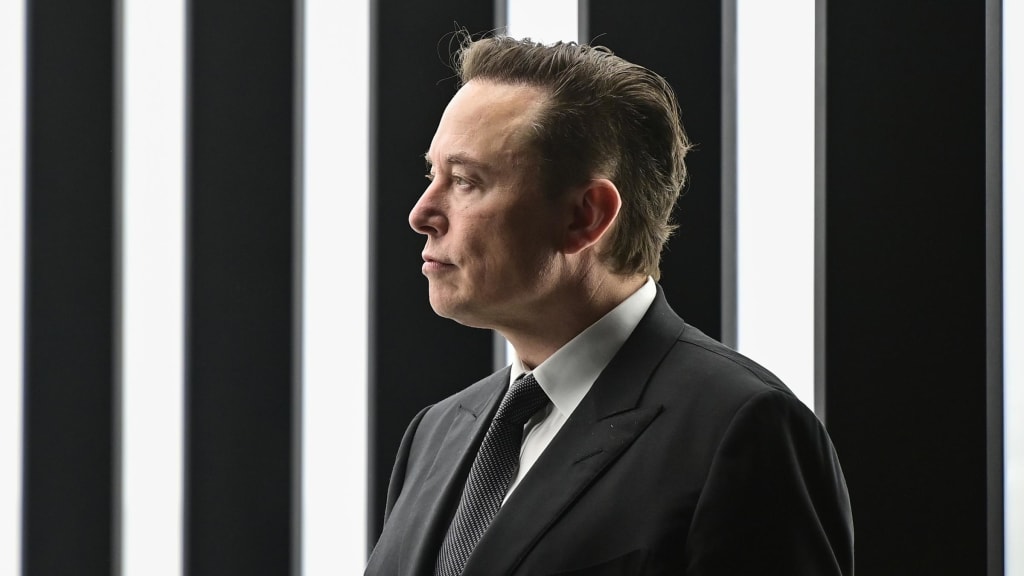
Elon Musk is one of the most influential and divisive figures in modern history, standing at the crossroads of technology, space exploration, energy sustainability, and digital transformation. Born in Pretoria, South Africa, on June 28, 1971, Musk has built a career marked by audacious goals, relentless drive, and an uncanny ability to blend futuristic visions with practical business models. From PayPal to Tesla, SpaceX, Neuralink, and The Boring Company, Musk’s ventures have shaped the future in ways few could have anticipated. His innovative approach, combined with his outspoken public persona, has led to both adulation and criticism. This article explores Musk’s journey, his major contributions, and the impact he has had on society, technology, and the environment.
Early Life and Education
Elon Musk’s fascination with technology and the future began at an early age. As a child in South Africa, Musk was an avid reader, often losing himself in science fiction books and learning to program at just 10 years old. By the age of 12, he developed and sold a video game called Blastar, which displayed his early affinity for technology and business. Musk’s intellectual curiosity, however, was accompanied by an often difficult social environment. He faced bullying and social isolation during his youth, experiences that likely fueled his determination to leave South Africa and pursue his ambitions on a larger stage.
At 17, Musk moved to Canada, enrolling at Queen's University, before transferring to the University of Pennsylvania. There, he earned degrees in both economics and physics, disciplines that would shape his approach to entrepreneurship. Despite being accepted to a Ph.D. program in applied physics at Stanford University, Musk left after just two days to chase the burgeoning opportunities of the internet boom. This decision marked the beginning of Musk’s entrepreneurial career.
Zip2 and X.com: Musk’s Early Ventures
Musk’s first major venture was Zip2, a software company that provided business directories and maps for newspapers. Founded in 1995 with his brother Kimbal, Zip2 was among the early efforts to merge the internet with traditional business services. Although the startup faced difficulties, Musk’s persistence paid off when Compaq acquired Zip2 in 1999 for nearly $300 million. Musk received $22 million from the sale, providing him with the capital to start his next venture, X.com.
X.com, an online payment company founded in 1999, was initially positioned to revolutionize digital finance. Musk recognized the potential for online banking, a vision that led X.com to merge with Confinity, which had developed a money-transfer service called PayPal. Musk became the CEO of PayPal, but internal disagreements soon resulted in his departure. Despite this, PayPal’s eventual acquisition by eBay in 2002 for $1.5 billion in stock solidified Musk’s status as a multimillionaire and laid the groundwork for his future endeavors.
SpaceX: Redefining Space Exploration
Perhaps Musk’s most ambitious project is SpaceX, a private aerospace manufacturer and space transportation company founded in 2002. Driven by his desire to make humanity a multiplanetary species, Musk established SpaceX with the goal of reducing the cost of space travel and developing technology capable of colonizing Mars. This mission seemed nearly impossible at the time, given the complexity and expense of space exploration.
SpaceX’s early years were fraught with challenges. The company’s first three rocket launches failed, nearly bankrupting the startup. Musk poured much of his personal fortune into keeping SpaceX afloat, demonstrating his commitment to the mission. In 2008, the fourth launch succeeded, marking a pivotal moment for the company. SpaceX soon secured a $1.6 billion contract with NASA to deliver cargo to the International Space Station (ISS), validating Musk’s vision and stabilizing the company financially.
SpaceX continued to achieve historic milestones. In 2010, it became the first privately funded company to send a spacecraft, the Dragon, to the ISS. In 2015, SpaceX successfully landed the Falcon 9 rocket’s first stage, marking the first time in history a rocket was reused for multiple launches, dramatically lowering costs and proving that reusable rockets could transform space economics. Musk’s ultimate goal remains the colonization of Mars, with the Starship project currently in development as the vehicle intended to transport humans to the Red Planet.
Tesla: Leading the Electric Vehicle Revolution
Tesla, Inc., co-founded by Musk in 2004, has redefined the automotive industry. Initially an investor and chairman, Musk became CEO in 2008, steering Tesla from a niche electric car company to one of the world’s most valuable automotive manufacturers. Musk’s vision was clear: to accelerate the world’s transition to sustainable energy. At a time when electric vehicles (EVs) were seen as impractical and costly, Musk’s commitment to creating high-performance, aesthetically pleasing electric cars changed public perception.
Tesla’s breakthrough came with the release of the Model S in 2012. The car received widespread acclaim for its range, design, and performance, solidifying Tesla’s place as a leader in EV technology. Musk’s focus on vertical integration, with the development of the Gigafactory to produce lithium-ion batteries at scale, further solidified Tesla’s competitive advantage. Over the years, Tesla has released multiple models, including the Model 3, Model X, and Model Y, broadening its appeal and contributing to the normalization of electric vehicles worldwide.
Under Musk’s leadership, Tesla has also pursued advancements in autonomous driving and energy storage. The Tesla Autopilot system, while controversial, has positioned Tesla as a leader in self-driving technology, and Musk’s vision of a robotaxi fleet hints at a future where transportation is not only electric but also autonomous. Tesla’s ventures in solar energy, particularly through the acquisition of SolarCity, reflect Musk’s broader goal of reducing global reliance on fossil fuels.
The Boring Company: Tackling Urban Transportation
While Tesla and SpaceX dominate the headlines, Musk’s other ventures are equally innovative, albeit smaller in scale. The Boring Company, founded in 2016, aims to solve urban congestion through underground tunnels for high-speed transportation. Musk’s idea for The Boring Company came after a particularly frustrating experience with Los Angeles traffic. His solution? Building a network of underground tunnels where electric vehicles could travel at high speeds, bypassing surface-level congestion.
The Boring Company has completed several test tunnels, most notably a tunnel loop system under the Las Vegas Convention Center, where Tesla vehicles transport passengers through a network of tunnels. While the concept is still in its early stages, Musk envisions expanding it to other cities, potentially transforming urban transportation by providing a fast, sustainable alternative to traditional roadways.
Neuralink: Bridging Humans and Artificial Intelligence
In 2016, Musk co-founded Neuralink, a neurotechnology company focused on developing brain–machine interfaces (BMIs). Neuralink’s mission is to create devices that can be implanted into the human brain, allowing individuals to communicate with computers directly. Musk believes that as artificial intelligence (AI) advances, it may pose existential risks to humanity. By integrating human cognition with AI, Musk hopes Neuralink can offer a form of symbiosis between humans and machines, ultimately enhancing cognitive abilities and potentially treating neurological disorders.
Neuralink has made significant strides in animal testing, demonstrating that its technology can enable monkeys to control computers with their minds. The company’s long-term vision includes applications for treating conditions such as paralysis, memory loss, and even blindness. While the ethical and medical implications of Neuralink’s work are still being debated, the project highlights Musk’s forward-thinking approach to the convergence of technology and biology.
Controversies and Criticisms
Despite his achievements, Musk is no stranger to controversy. His outspoken and often unfiltered presence on social media has led to a series of public incidents that have drawn both admiration and criticism. In 2018, Musk tweeted that he was considering taking Tesla private at $420 per share, leading to an investigation by the U.S. Securities and Exchange Commission (SEC). Musk settled with the SEC, stepping down as Tesla’s chairman and paying a $20 million fine, though he remained CEO.
Musk’s leadership style has also come under scrutiny. Known for his demanding work ethic, Musk often expects his employees to work long hours and embrace his intense approach to productivity. Some former employees have spoken out about the pressures of working at his companies, citing a high-stakes, high-stress environment. Musk’s criticism of government regulations, particularly concerning COVID-19 restrictions, has also generated backlash, sparking debates on issues ranging from worker safety to public health.
The Musk Effect: Cultural and Economic Impact
Elon Musk’s influence extends far beyond his companies. His ventures have spurred entire industries, from electric vehicles to private space exploration, with companies worldwide attempting to follow his lead. Tesla’s success has compelled traditional automakers to invest heavily in electric vehicles, accelerating the transition to sustainable transportation. SpaceX’s cost-effective approach to spaceflight has encouraged a new era of space tourism and exploration, with companies like Blue Origin and Virgin Galactic exploring similar avenues.
Musk’s celebrity status, fueled by his prolific social media presence, has also made him a cultural icon. His tweets can move markets, and his support of cryptocurrencies like Bitcoin and Dogecoin has influenced the broader digital economy. Musk’s role as a thought leader—whether he is discussing Mars colonization, artificial intelligence, or energy independence—continues to capture public attention and inspire discourse about the future of technology and humanity.
Vision for the Future
Elon Musk’s ultimate vision is a future where humanity is sustainable, multiplanetary, and technologically advanced. His projects reflect a cohesive, if daunting, set of goals. Tesla seeks to reduce carbon emissions through electric vehicles and renewable energy solutions. SpaceX aims to expand human civilization beyond Earth, potentially safeguarding humanity’s survival. Neuralink and The Boring Company, though
About the Creator
David Pieringer
Welcome to my page! I'm a dedicated writer and student with a passion for both education and sports. Balancing my love for learning with my athletic pursuits, I strive to excel in everything I do.
Keep reading
More stories from David Pieringer and writers in Education and other communities.
Maximizing Profitability: Strategies for Business Owners
Maximizing Profitability: Strategies for Business Owners Increasing revenue is a key objective for any business owner. By understanding and implementing proven strategies, businesses can enhance their profitability. Here, we delve deeper into various methods, supported by literature, to help businesses maximize their earnings.
By David Pieringer2 years ago in Education
A Memory I’ll Hold On to Forever
The hallway outside the classroom was unusually quiet that morning. Most of the students had already arrived. Their voices floated through the door; laughter, small conversations, the rustling sound of chairs being moved across the floor.
By Lori A. A.2 days ago in Education
The Devastating Failure of Modern Education: Why Our Schools Are Producing Obedient Workers Instead of Critical Thinkers
The modern education system is fundamentally broken, not in the sense that it is failing to achieve its intended purpose, but rather in the more insidious sense that it is succeeding brilliantly at a purpose that no longer serves the needs of students, society, or the future we are rapidly hurtling toward, and this success in achieving outdated objectives while the world transforms around it represents one of the great institutional failures of our time, a failure with consequences that ripple through every aspect of contemporary life from economic inequality to political polarization to our collective inability to address existential challenges like climate change and technological disruption. The factory model of education that we inherited from the industrial revolution, designed explicitly to produce compliant workers who could follow instructions, tolerate boredom, and accept hierarchy without question, persists largely unchanged despite the fact that the factories it was meant to serve have either disappeared or been automated, and we continue to subject millions of children to a system that treats them as widgets to be processed through standardized procedures, measured against arbitrary benchmarks, and sorted into categories that will largely determine their economic and social outcomes for the rest of their lives.
By The Curious Writerabout 23 hours ago in Education
Hottest in the Office
Dear Rafi, You’re very distracting to work around. For the first second I saw you the other day, I thought you were some type of executive. It took a moment to realize no, you were just the new guy, dressed up for the job he wants. Be still, my heart.
By Gabriel Shames5 days ago in Pride



Comments
There are no comments for this story
Be the first to respond and start the conversation.