
Elon musk's Tesla: Powering the Future with Clean Energy
How Tesla is Leading the Charge in Sustainable Tech

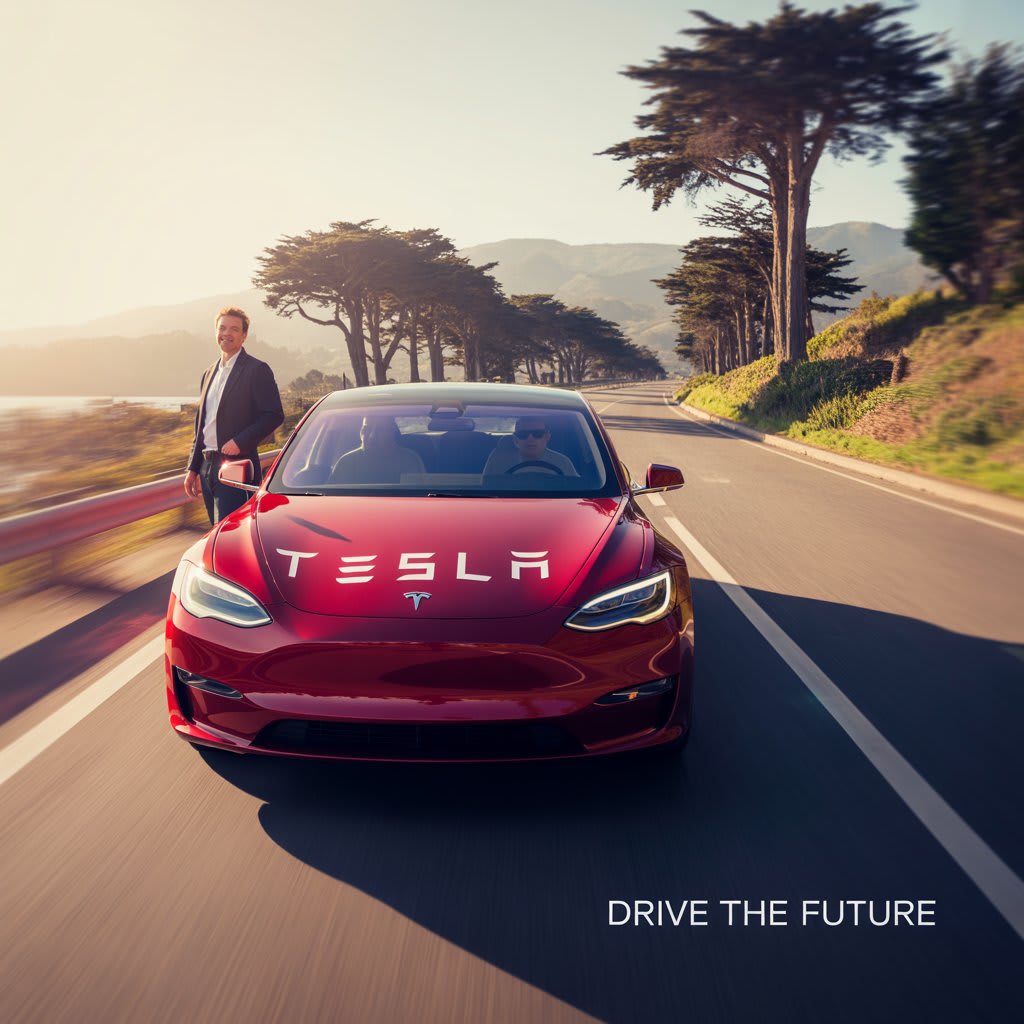
In the early 2000s, the electric vehicle (EV) industry was little more than a dream. Conventional automakers treated EVs as impractical novelties, and clean energy was often dismissed as too expensive or unreliable. Then came Elon Musk—entrepreneur, engineer, and provocateur—with a radical idea: electric vehicles could be fast, sleek, and powerful, and more importantly, they could help save the planet. With that vision, Tesla was born—not just as a car company, but as a clean energy movement.
Today, Tesla is more than just a household name. It’s a technology powerhouse that is reshaping industries and redefining what’s possible in the energy and transportation sectors. Tesla’s mission—“to accelerate the world’s transition to sustainable energy”—has guided every move it’s made, from its first electric Roadster to the energy-efficient Gigafactories and beyond. But how exactly is Tesla leading the charge in sustainable technology?
The Tesla Vehicle Revolution
Tesla began its automotive journey in 2008 with the launch of the Tesla Roadster, a sleek sports car built on a Lotus chassis that proved electric vehicles could be fun and fast. While limited in production, it marked a turning point. Tesla had shown that EVs didn’t have to compromise performance. They could be aspirational.
The real breakthrough came with the Model S, released in 2012. It shattered expectations: over 250 miles of range, instant torque, and a minimal, futuristic interior. Awards and accolades followed, and Tesla's vehicles quickly became status symbols and proof of concept for the broader EV market.
From there, Tesla expanded its lineup with the Model X SUV, the affordable Model 3, and the Model Y crossover, offering a variety of options that made EVs more accessible. With plans to launch the Cybertruck, Semi truck, and a next-generation Roadster, Tesla continues to challenge norms and push technological boundaries.
At the heart of Tesla’s success is its battery technology. Tesla’s proprietary battery packs and thermal management systems allow its cars to go further and charge faster than most competitors. By building its own Gigafactories, Tesla not only secured its supply chain but also dramatically lowered battery production costs, which is essential for scaling clean energy solutions.
Beyond Cars: Energy Innovation
While most people associate Tesla with cars, Musk has always insisted that Tesla is an energy company. That vision materialized with products like the Tesla Powerwall, Powerpack, and Megapack—energy storage systems designed for homes, businesses, and utility-scale applications.
The Powerwall, for example, stores excess solar energy for use at night or during power outages, giving consumers more control over their energy usage. In places like California, Australia, and Germany, Powerwalls are being used to build decentralized, resilient energy grids.
Tesla has also pushed forward with solar technology, notably through its acquisition of SolarCity in 2016. This led to the launch of the Tesla Solar Roof, which integrates solar cells into roof tiles. While adoption has been slower than expected, the concept is revolutionary—generating clean energy without bulky panels.
Large-scale projects, like the Hornsdale Power Reserve in South Australia—one of the largest lithium-ion batteries in the world—demonstrate Tesla’s potential to stabilize electrical grids and provide backup power during outages. These installations help reduce reliance on fossil fuel peaker plants and accelerate the transition to renewable energy.
A Culture of Disruption
Tesla’s approach to sustainability isn’t just about the products—it’s also about the company’s culture. Traditional automakers work through dealerships, but Tesla sells directly to consumers. Its over-the-air software updates improve vehicles long after they’re purchased. Its Autopilot and Full Self-Driving (FSD) technologies are pushing the boundaries of AI in transportation.
Internally, Tesla encourages rapid innovation, often making decisions that prioritize speed over bureaucracy. This culture of bold experimentation has brought challenges, including production delays and public criticism, but it has also allowed Tesla to remain agile and ambitious.
Tesla’s commitment to vertical integration—building everything from batteries to software in-house—has given it unmatched control over its technology and data. This not only leads to better user experiences but also accelerates improvements and cost reductions.
Environmental Impact and Future Goals
Tesla’s environmental impact goes beyond emissions-free driving. According to the company’s 2023 Impact Report, Tesla vehicles have collectively prevented millions of tons of CO₂ emissions. Its factories increasingly rely on renewable energy, and its long-term goal is to build a fully sustainable ecosystem—from energy generation and storage to transportation.
Looking ahead, Tesla aims to produce 20 million vehicles per year by the end of the decade, a massive scale-up that would rival the largest carmakers. It also plans to increase the deployment of its energy storage products and expand into new markets, particularly in Asia and Europe.
In addition, Tesla continues to develop next-generation batteries, focusing on cobalt-free chemistries, faster charging, and longer life spans. Projects like the 4680 battery cell could significantly boost energy density and reduce costs, further accelerating global EV adoption.
Conclusion: More Than a Car Company
Elon Musk’s Tesla is more than a disruptor—it’s a force reshaping the future. By merging technology, energy, and transportation, Tesla is at the forefront of the clean energy revolution. Its cars inspire, its batteries empower, and its solar solutions illuminate a path to a sustainable planet.
As climate challenges intensify and the world races toward decarbonization, Tesla stands as both a symbol and an engine of change. It's not just about building cool cars—it's about building a cleaner, smarter, and more sustainable world.
About the Creator
Am@n Khan
I'm educational storyteller passionate about turning knowledge into engaging narratives.
I write about topics like science, history and life skills.
Contact
WhatsApp : +923336369634
Why Great Customer Service Is Non-Negotiable for Modern Businesses
Excellent customer service is no longer something businesses can choose to offer later. It is a basic requirement in today’s fast-moving market. Customers expect respect, clear communication, and fast solutions. When they do not get these things, they leave. This is why excellent customer service is non-negotiable for businesses that want to survive and grow.
By Apex Service Partners5 days ago in Education
The Devil's Cut
“Comrade, finally you’re awake.” The voice was smooth, sensual. A flickering incandescent bar was all that lit the white, sterile room. All Vladimir remembered was everything going black. He tried to move his arms and found them strapped to the gurney.
By Matthew J. Fromm4 days ago in Fiction


Comments (1)
Good luck same to