
Elevate Your Fantasy Writing
Expert tips for beginning authors

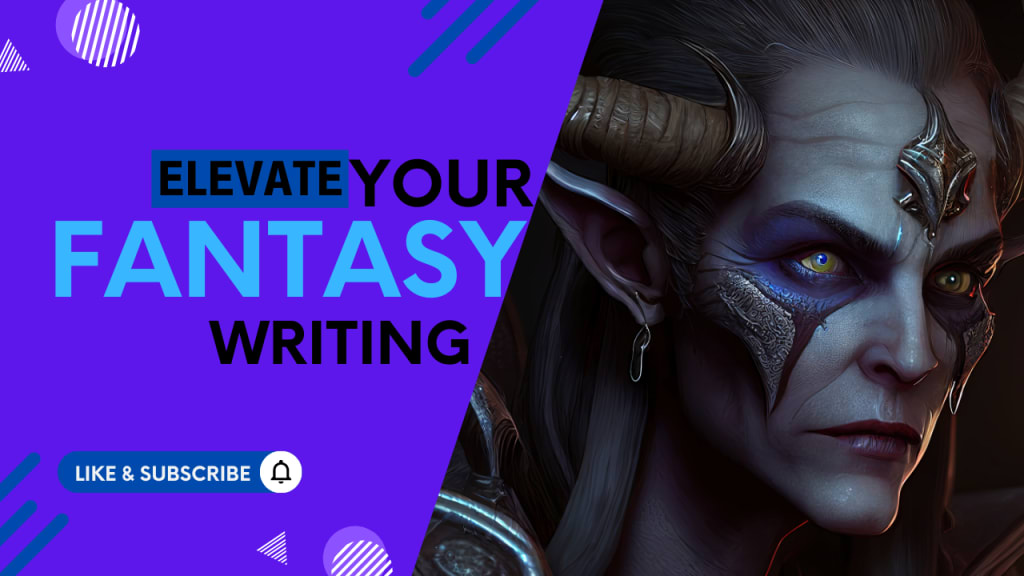
Hello friends! My name is Jake Montanez, and on my YouTube channel, I share my writing journey to help aspiring authors hone their craft and improve their writing skills. Today I'm going to talk about how to become a better fantasy fiction writer.
I grew up reading books by Tolkien and Terry Brooks, and that's kind of molded how I approach my own writing when I'm sitting down to come up with a story.
First and foremost, it's important to have a solid understanding of the fantasy genre. Reading a wide variety of fantasy books can help you familiarize yourself with the different conventions and tropes of the genre.
There are many different types of subcategories within fantasy that include things like high fantasy, urban fantasy, and epic fantasy, so you can find one that you're particularly drawn to. Once you grasp the genre well, it's time to start developing your own ideas. The key to writing great fantasy fiction is to create a believable and immersive world.
This means taking some time to develop detailed and well-thought-out settings, characters, and cultures. As you create your world, think about the laws of physics that pertain to the magic systems you decide to come up with.
What is the world's history or even just the regional history of where your characters are having their story take place? What are any religions that they may believe in or may not believe in, or things that dominate global structures and how the economy works?
I'm a pantser, so I come up with this stuff as I go, and I believe that you should have enough world-building to know how things operate in your world, but you shouldn't get yourself so immersed and wrapped up in creating it that you actually forget that you need to be writing a story.
It's also important to have a strong plot and a well-developed character system. A good fantasy story should have clear and compelling conflicts that drive the story forward, as well as a cast of characters that are both relatable and interesting.
Your characters should be complex and three-dimensional with their own motivations and desires and flaws. Each main character should grow through the course of the story, so make sure you have a decent conflict that they are driven by in order to accomplish something by the end of your story. One distinct but not exclusive aspect of fantasy writing is the use of magic and other fantastical elements. It's important to establish clear rules and limitations for your fantasy elements and use them consistently throughout your story. This will help you create a sense of believability and will make it easier for your readers to suspend disbelief.
I don't know how many stories I have read where characters just go off the cuff and their power levels explode and they're able to do all sorts of random stuff and they get Mary Sue'd or Gary Stu'd. They're just more powerful than they should be for the portion of the story that they're embodying.
Next up, pay attention to the pacing of your story. Fantasy stories often have a lot of world-building, especially in like the first book or the beginning of your story, and you're creating a lot of exposition for the background of your characters and the places that they inhabit, and that can slow down the pace of your story.
So instead, I recommend dropping hints and tidbits of those organically as you write. You don't want to lead off with a large exposition dump. Don't just have an entire chapter devoted to the religious structure that is governing the entire planet. That just is silly and will slow things down.
Be mindful of this and try to balance the slower and more descriptive parts of your story with some action and suspense. Everybody wants to read for the action, so get to the fun stuff and let the other things fall in line organically as you go. Finally, don't be afraid to seek feedback and revise your work.
Writing is a process and it's important to be open to constructive criticism from alpha readers and beta readers that are telling you the things that work for them or don't work for them as they're reading the story and be willing to make changes to improve your story.
You may love a particular chapter or a scene or even a character, but those things may need to be heavily restructured or rewritten or just removed entirely in order for you to improve the flow of the story so that it works better and is a more satisfying result for the reader.
In conclusion, writing fantasy fiction requires a combination of creativity, imagination, and discipline. By following these tips and focusing on your world-building and your character development, and making sure that the pacing of your story is right, and that your magic systems are believable and grounded in the world that you've created, you'll be on your way to creating a compelling and immersive fantasy story that readers will love. You always need to keep reading and writing, and most importantly, don't be afraid to take risks and be bold with your storytelling. The only way to improve your stories now or in the future is to continue to write.
About the Creator
Jacob Montanez
I explore science fiction and fantasy through writing prompts, often with a macabre or surreal twist. Most of my work is currently short stories here on Vocal Media, with an eye for longer form content I share on Royal Road and Patreon.
Keep reading
More stories from Jacob Montanez and writers in Education and other communities.
How to Use Midjourney AI
How to Use Midjourney AI: Quick Start Guide and Intro | Write Shift Watch this on Youtube for a visual demonstration. I’m sharing my latest obsession, Midjourney AI. Midjourney is an Artificial Intelligence bot that utilizes writing prompts coupled with commands to create breathtaking artwork.
By Jacob Montanez3 years ago in Geeks
Top 10 Essential Skills for Success in 2026
By 2026, the job market is no longer driven only by degrees or titles. Technology, especially Artificial Intelligence (AI), automation, and remote work, has changed how companies operate and how people work. Many routine tasks are now handled by machines, while humans are expected to do work that requires thinking, judgment, creativity, and emotional understanding. This shift means that skills — not just education — determine success. The following 10 skills are considered essential for 2026 because they combine technology awareness with human intelligence. Let’s understand them one by one, step by step.
By Talha khan3 days ago in Education



Comments
There are no comments for this story
Be the first to respond and start the conversation.