
Einstein's most famous quote is totally misunderstood
Einstein's famous quote

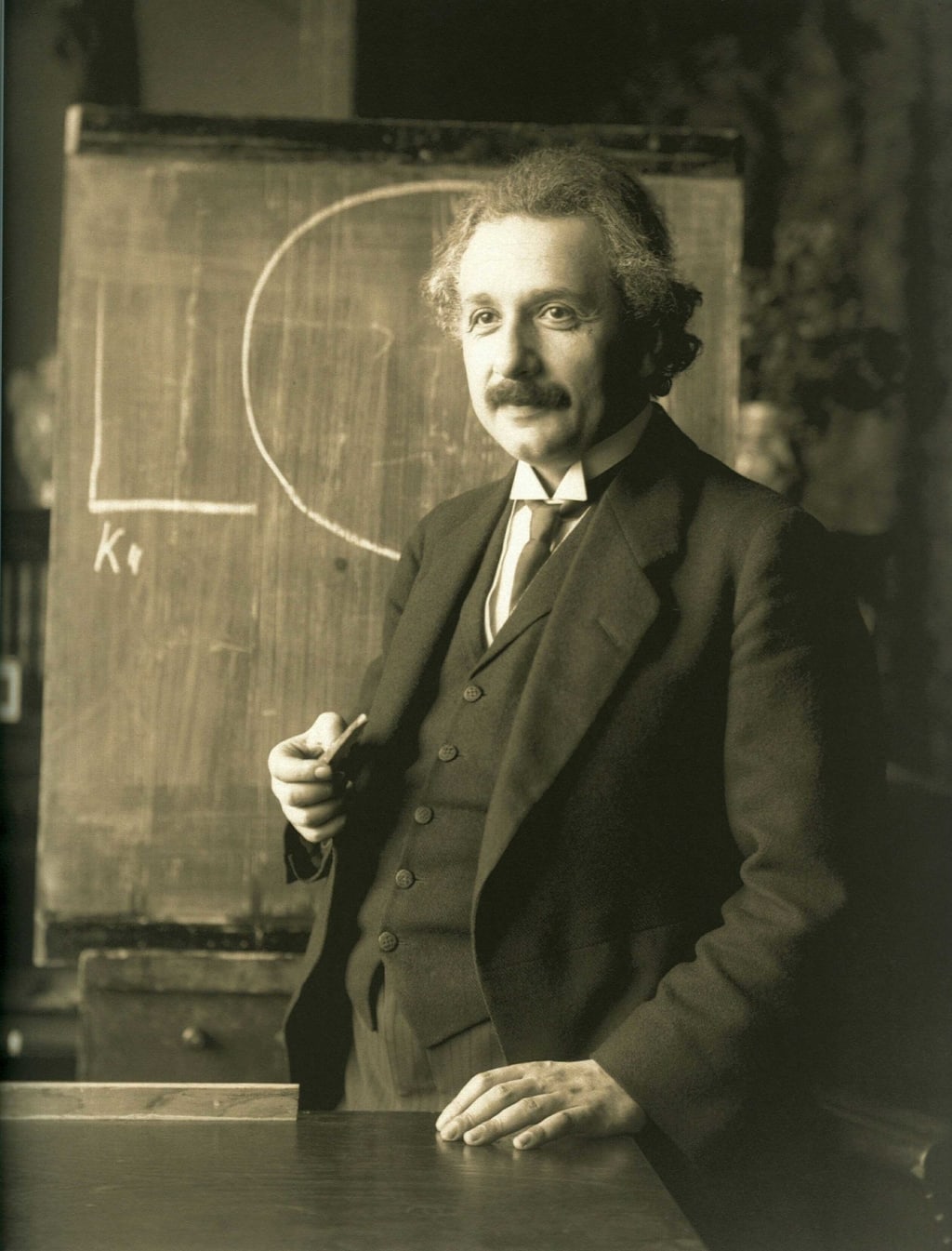
Albert Einstein is widely considered one of the greatest scientists of all time, and his contributions to the field of physics are legendary. He is also famous for his many insightful and thought-provoking quotes, which continue to inspire and challenge people today. One of his most famous quotes, however, is often misunderstood and misinterpreted. In this article, we will explore the true meaning of this quote and why it is so important.
The quote in question is "God does not play dice with the universe." This statement is often taken to mean that Einstein believed in a personal God who controlled the universe like a puppet master, and that he rejected the notion of chance and randomness in the cosmos. However, this interpretation is not only incorrect but also does a disservice to the depth and complexity of Einstein's thinking.
To understand the true meaning of this quote, we need to delve into the historical and philosophical context in which it was made. In the early 20th century, the field of physics was undergoing a revolution, thanks in large part to the work of Einstein himself. He had developed his theory of relativity, which fundamentally changed our understanding of space, time, and gravity. At the same time, physicists were grappling with the strange and counterintuitive world of quantum mechanics, which described the behavior of subatomic particles.
One of the key concepts in quantum mechanics is that of probability. Unlike classical physics, which deals with deterministic equations that predict the exact behavior of objects, quantum mechanics is inherently probabilistic. It tells us that the behavior of particles is governed by a wave function, which gives us the probability of finding a particle in a certain position or with a certain property. This means that, at the quantum level, there is always an element of chance involved.
This probabilistic nature of quantum mechanics troubled many physicists, including Einstein. He was uncomfortable with the idea that the universe was fundamentally unpredictable and subject to random chance. He believed in the idea of a "hidden variable" that would determine the outcome of quantum events, even if we couldn't observe or measure it directly.
It was in this context that Einstein made his famous statement about God and dice. He was not arguing for a personal God who controlled the universe but rather using a metaphor to express his discomfort with the idea of chance and randomness at the quantum level. He was essentially saying that he couldn't accept the idea that the universe was fundamentally unpredictable, that there must be some underlying order or structure that we just couldn't see.
In fact, Einstein's view on the relationship between science and religion was much more nuanced and complex than this quote might suggest. He was deeply interested in questions of metaphysics and the nature of reality, and he believed that science and religion both had a role to play in exploring these questions. He once said, "Science without religion is lame, religion without science is blind." For Einstein, science and religion were two complementary ways of approaching the same ultimate reality.
So why does this quote continue to be so misunderstood and misinterpreted? Partly, it is because it is such a memorable and pithy statement that lends itself to easy repetition and simplification. People remember the phrase "God does not play dice" without necessarily understanding the context or complexity of Einstein's thinking. It is also because the quote has been co-opted by various groups and individuals for their own purposes. Some religious fundamentalists have seized on the quote as evidence that Einstein believed in a personal God who intervened in the universe, while some New Age mystics have used it to support their belief in a predetermined, predestined universe.
But to truly appreciate Einstein's thinking, we need to move beyond the soundbite and delve into the nuances of his philosophy. He was a deeply intellectual and curious individual who grappled with some of the biggest questions in science
About the Creator
Keep reading
More stories from sourav saha and writers in Education and other communities.
Stock Market Beginners Guide
Introduction Welcome to "A Beginner's Guide to Investing in the Stock Market." Investing in the stock market can be an exciting and potentially lucrative endeavor, but it can also be overwhelming for those who are new to the world of investing. This guide is designed to provide you with the foundational knowledge and tools necessary to begin your investment journey with confidence.
By sourav sahaabout a year ago in Education
Why the Sun Will Never Go Supernova: The Science Explained
What Is a Supernova? A supernova is a massive stellar explosion that occurs at the end of a star’s life cycle. During a supernova, a star can briefly outshine an entire galaxy and release more energy than our Sun will produce in its entire lifetime.
By shahkar jalal7 days ago in Education



Comments
There are no comments for this story
Be the first to respond and start the conversation.