
Education in South Korea: A Beacon of Excellence Amidst Challenges
K-Education's Zenith: Illuminating Systemic Strengths and Societal Strains

Introduction
South Korea’s education system is a global benchmark, renowned for its academic rigor and remarkable outcomes. With a literacy rate of 98.8% and a top-tier ranking in the PISA assessments (7th globally in 2018), South Korea has transformed from a nation with a 22% literacy rate in 1945 to an educational powerhouse. This post explores the structure, strengths, challenges, and future of South Korea’s education system, offering insights into its role in shaping a dynamic society.
The Structure of South Korean Education
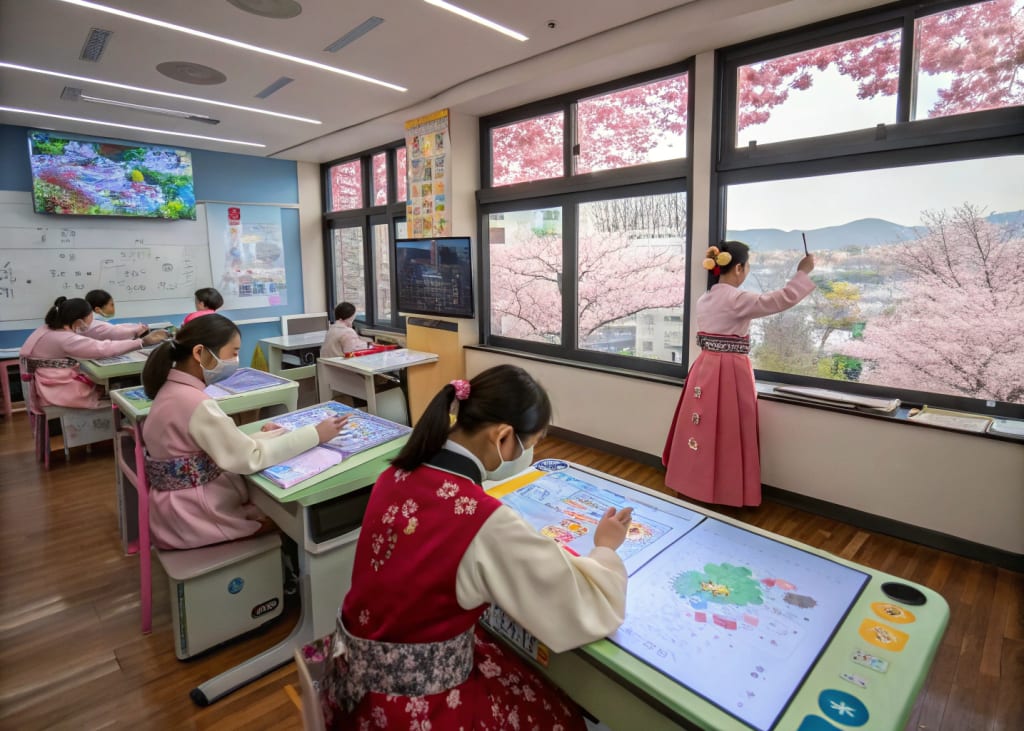
South Korea follows a 6-3-3-4 single-track system: six years of compulsory primary education, three years of middle school, three years of high school, and four years of university, with optional kindergarten (1–3 years) and junior colleges (2–3 years). Primary and middle school education is free, while high school and tertiary education require tuition fees. The Ministry of Education oversees a centralized curriculum, recently revised to emphasize creativity and global competencies. The academic year runs from March to July and September to February, with students often studying late into the night, supplemented by private tutoring or hagwons.
Achievements and Global Standing
South Korea’s education system is a cornerstone of its economic miracle. Since the 1960s, heavy investment in education—nearly 4% of GDP—has produced a highly skilled workforce, driving technological and economic growth. The country ranks among the top in PISA scores for reading, mathematics, and science, with 70% of 24–35-year-olds holding tertiary education credentials, the highest globally. Prestigious universities like Seoul National University, Korea University, and Yonsei University (collectively “SKY”) are highly competitive, shaping career and social prospects.
The Role of Hagwons and Cultural Values
Deeply rooted in Confucian values, South Korea places immense importance on education as a path to social mobility. This “education fever” fuels a $20 billion private tutoring industry, with households spending 21–33% of their income on hagwons. The Suneung, a rigorous university entrance exam, is a national event, with flight operations paused during its listening section. However, this intense focus has drawbacks, with critics arguing it fosters rote learning and stifles creativity.
Challenges and Criticisms
The system’s competitive nature creates significant challenges. The pressure to excel in Suneung leads to “exam hell,” with students studying up to 16 hours daily, contributing to mental health issues. Over 200 students reportedly took their lives in 2009 due to academic stress. Socioeconomic disparities exacerbate inequalities, as wealthier families afford better hagwons and access to elite schools. Only 36.8% of South Koreans work in fields matching their majors, indicating a skill mismatch. Additionally, the focus on standardized testing limits critical thinking and innovation.
Reforms and the Path Ahead
The government is addressing these issues through reforms. The National Education Policy aims to reduce reliance on hagwons by eliminating “killer questions” from Suneung and promoting holistic education. Recent curriculum changes emphasize creativity, English fluency, and vocational training to align with 21st-century needs. Efforts to decentralize education and introduce essay-based assessments in primary schools aim to foster critical thinking. Additionally, initiatives to support multicultural education and gender equity in STEM fields are gaining traction.
Conclusion
South Korea’s education system is a testament to its commitment to human capital, transforming the nation into a global leader. However, its high-pressure environment and inequalities demand reform to prioritize student well-being and creativity. By balancing academic excellence with holistic development, South Korea can continue to inspire the world while nurturing happier, well-rounded individuals.
Call to Action
What are your thoughts on South Korea’s education system? How can it balance excellence with student well-being? Share your views in the comments and join the conversation!
About the Creator
Arjun. S. Gaikwad
Truth Writing unveils reality beyond illusion, power, and propaganda words that awaken conscience and challenge comfort. Fearless, honest, and thought-provoking, it explores politics, humanity, and spirit to inspire awareness and change.
Reader insights
Outstanding
Excellent work. Looking forward to reading more!
Top insights
Compelling and original writing
Creative use of language & vocab
Easy to read and follow
Well-structured & engaging content
Excellent storytelling
Original narrative & well developed characters
Expert insights and opinions
Arguments were carefully researched and presented
Eye opening
Niche topic & fresh perspectives
Masterful proofreading
Zero grammar & spelling mistakes
On-point and relevant
Writing reflected the title & theme
Keep reading
More stories from Arjun. S. Gaikwad and writers in Education and other communities.
The Evolution and Future of Education in India: A Journey of Transformation
Introduction India, a land of ancient wisdom and modern aspirations, has an education system that reflects its diverse culture and dynamic growth. From the gurukuls of ancient times to cutting-edge digital classrooms, education in India has undergone a remarkable transformation. With a population of over 1.4 billion, India’s education sector is one of the largest in the world, shaping the future of millions. This article explores the current state, challenges, and future potential of education in India, highlighting its strides and opportunities.
By Arjun. S. Gaikwad7 months ago in Education
Smart Home Plumbing Habits That Protect Your Pipes
Owning a home brings pride and comfort. It also brings responsibility. Plumbing is one of the most critical systems in any house. Small mistakes can lead to leaks, damage, and high repair costs. This guide shares essential plumbing tips every homeowner should know. The goal is to help you avoid trouble and keep your home running smoothly.
By Lickety Split4 days ago in Education
The Mental Edge in Golf: How Emotional Control and Focus Drive Peak Performance
Golf is widely recognized as a technical sport, but seasoned players know that true success begins in the mind. The mental game of golf plays a decisive role in shot consistency, course management, and competitive confidence. From handling pressure on the tee box to maintaining concentration on the final putt, mental toughness in golf often determines outcomes more than physical strength or swing mechanics.
By Jeb Kratzig5 days ago in Education



Comments
There are no comments for this story
Be the first to respond and start the conversation.