
Educating in the age of algorithms
The educational challenge of our time: teaching to be, not just to know.

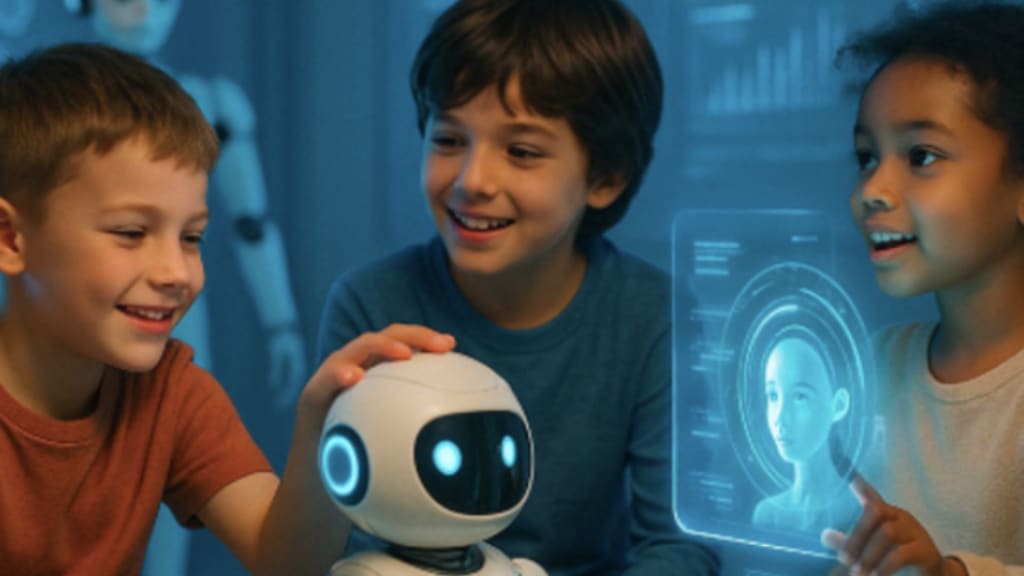
Artificial intelligence is rapidly transforming the labor, social, and educational worlds. Many of the technical skills we value today—those that for decades have been the foundation of professional and academic training—are increasingly replicable by algorithms and automated systems. We are already seeing how tasks that once required years of learning can now be solved in seconds through technology.
In this new context, a fundamental question inevitably arises: what role do people play? What role should education play?
This is where education urgently needs to make a deep and courageous shift. Because if we continue limiting ourselves to teaching what a machine can do better, faster, and cheaper, we will be preparing our students for a world that no longer exists—a world that is fading while we continue using old maps that lead nowhere.
More than ever, education must focus on what makes us profoundly human and unique: personal values, ethics, empathy, creativity, resilience, and above all, critical thinking. These skills are not accessories to academic training; they are its essential core. They are the competencies that will make the difference between passively adapting to a changing environment and consciously and meaningfully transforming it.
Because what artificial intelligence can never replace is the human ability to connect authentically, to create something truly original, to question the status quo, to imagine new futures, and to act with purpose. AI can process data, but it cannot have consciousness. It can generate responses, but it cannot feel ethical commitment or a sense of belonging.
Human talent will not disappear, but it will need to be expressed differently. It will no longer be enough to memorize information or repeat known formulas. The real challenge will be for each person to discover who they truly are, what drives them, what values guide them, what they can contribute to the world, and how they can do so in an authentic and meaningful way.
This process of self-discovery and personal development requires educational spaces that go far beyond simply transmitting content. We need schools and learning environments that foster genuine curiosity, that encourage deep reflection, that value diverse talents, and that accompany students in building their identity and life projects.
To achieve this, it is essential to embrace a perspective that recognizes and nurtures multiple intelligences in the classroom. Not all children learn or excel in the same way, and it is precisely this variety that enriches any educational community. Promoting different forms of expression and understanding—through art, music, logical thinking, bodily movement, among others—allows each student to connect with their potential, feeling recognized and valued for their uniqueness.
We all have something to offer. But if we don't create spaces to discover, develop, and share it, we risk wasting a generation of human potential that the world desperately needs.
In a scenario where information is available in seconds on any connected device, the real value will lie in what cannot be consulted online: authenticity, original creativity, meaningful collaboration, personal integrity, and the willingness to contribute to a greater good.
Therefore, 21st-century education cannot simply focus on teaching "what needs to be known" in terms of data or technical skills. It must primarily serve as guidance so that every child and every young person can discover who they are, what they are good at, and how they can put their talents at the service of others.
The final question is unavoidable: Are we ready to educate from this perspective? Are we ready to transform our classrooms, our methods, our priorities, and ourselves as educators?
Because the future will not be built by technology alone. It will be built, above all every one of us.
About the Creator
EDboxlab
Inspira, transforma y aprende




Comments
There are no comments for this story
Be the first to respond and start the conversation.