
Echoes of Humanity: A Tale of Strength and Survival
From Struggles to Strength: The Untold Stories of Human Survival

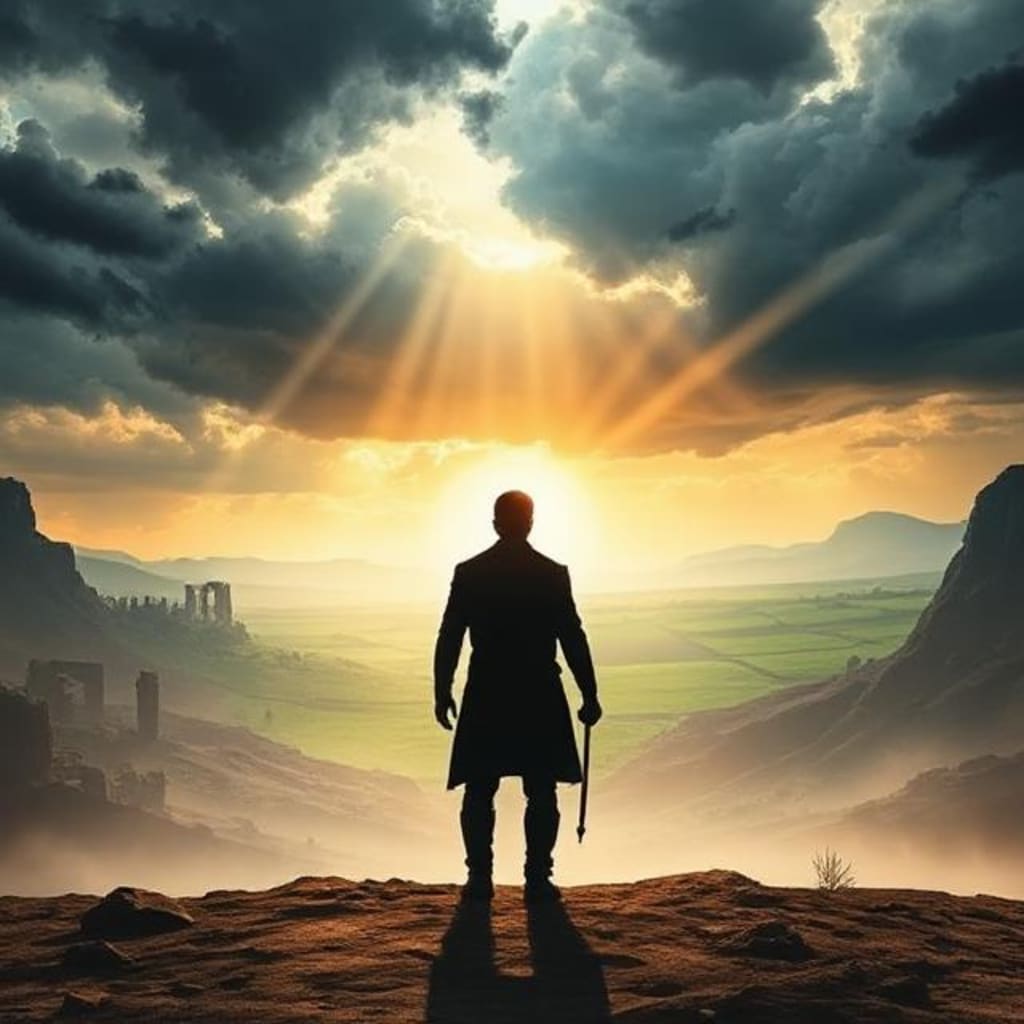
The world had changed in ways that no one could have foreseen. Once a thriving, interconnected planet full of hope, unity, and ambition, it had become a place where survival was no longer guaranteed. The echoes of the past whispered through the ruins of cities, in the remnants of technologies that once promised utopia. But in the face of catastrophe, humanity found its greatest strength—not in advanced machines or towering buildings, but in the resilience of its people.
It began quietly, almost unnoticed by the world. Natural disasters, escalating conflicts, and economic collapse. At first, they seemed like isolated incidents, mere warnings of a much larger storm. But the storm came, and it was far worse than anyone had anticipated. Entire regions were swallowed by rising seas, while wildfires ravaged others. The wars fought over resources only hastened the decline. Nations crumbled, and with them, the fragile threads that had once held societies together. Technology, which had promised to solve humanity’s greatest problems, now became a relic of a bygone era, leaving only scattered remnants of a once-thriving world.
But in the darkest of times, humanity proved that its true strength lay not in its creations, but in its ability to endure, adapt, and rebuild.
The Fall and the Fight for Survival
In the aftermath of the collapse, communities turned inward. Cities became isolated, their inhabitants left to fend for themselves. Those who had the resources—water, food, and shelter—formed alliances. Others, left with nothing but hope and desperation, wandered the land, searching for a chance at survival.
Among them was Elara, a young woman who had grown up in the heart of a bustling city that no longer existed. Her home, once filled with the sounds of laughter and the hum of technology, was now a crumbled shell. The city had fallen when the earthquake came, its buildings shattering as if made of glass. Her family was lost in the chaos, but Elara had survived. She wandered for days, unsure of where she was headed, until she stumbled upon a small settlement on the outskirts of what used to be a thriving metropolis.
The settlement, called Haven, was a place where the remnants of humanity gathered, not just to survive, but to preserve what was left of their culture, their knowledge, and their hope. It was a fragile existence—rations were scarce, and the threat of raiders loomed constantly. Yet, in Haven, there was a sense of unity. People shared what little they had, working together to rebuild their lives, brick by brick.
It was in Haven that Elara met Jonah, a former engineer who had once designed skyscrapers and smart cities. Now, he spent his days rebuilding solar panels and water filtration systems. His dream was simple: to provide the settlement with a sustainable future, so that humanity could rise from the ashes. But Jonah, like many others, was haunted by the past. He often spoke of the mistakes that had led to the fall of civilization—how humanity had become too reliant on technology, how greed and power had destroyed the very foundations of society.
“Elara,” he said one evening as they sat by the fire, “we’ve been given a second chance. We can’t squander it like the ones before us did. We need to remember what really matters—connection, compassion, and resilience.”
Elara listened, absorbing his words. She had seen the worst of humanity in the chaos of the world’s collapse—the selfishness, the cruelty. But in Haven, she had witnessed something else: an unyielding will to survive, a drive to rebuild. It was this spirit that gave her hope, even when everything seemed lost.
A New Beginning
The days turned into weeks, and then months. Together, Elara, Jonah, and the others in Haven worked tirelessly to rebuild the settlement. They cultivated crops, repaired old machinery, and built makeshift schools to teach the next generation what had been lost. But as time passed, the world outside Haven became increasingly unstable. The storms grew more violent, the earth trembled beneath their feet, and the scarcity of resources drove people to desperation.
One day, a group of strangers arrived at the gates of Haven. They were ragged and worn, their faces marked by the hardships of the road. They spoke of other settlements, of places where people had turned against each other, where lawlessness ruled. They begged for shelter, for food, for a place to rest.
At first, the leaders of Haven hesitated. They had already stretched their resources to the breaking point. But Jonah, who had learned to see beyond the immediate challenges, stood up and spoke.
“They’re like us,” he said, his voice steady but filled with emotion. “They’ve been through what we’ve been through. We can’t turn them away.”
It was a decision that would change the course of their future. Haven opened its gates to the strangers, offering them shelter and sustenance. And in return, the newcomers brought with them knowledge and skills—craftsmen, doctors, farmers, and teachers. It was a moment that proved what humanity could do when it set aside its differences, when it focused not on what it lacked, but on what it could give.
The Echoes of Hope
As the years passed, Haven grew. It became a beacon of hope, a symbol of humanity’s ability to survive and rebuild. But the world outside remained unpredictable. The challenges were many, and the risks were constant. Yet within Haven, there was something powerful: the belief that humanity could learn from its past, that it could rise from the ashes of its mistakes.
Elara stood at the gates of the settlement one evening, looking out at the horizon. The sky was painted with shades of red and orange as the sun set behind the mountains. In that moment, she realized that survival was not just about holding on to life. It was about holding on to hope.
The echoes of humanity’s past—the struggles, the losses, the wars—would never be forgotten. But in the resilience of those who continued to fight, in the compassion they shared, and in the strength they found in each other, humanity had found its true power. It wasn’t in the technology that once promised salvation. It was in the people who refused to give up.
And so, in the heart of a broken world, humanity’s story continued, not as a tale of despair, but as a tale of strength and survival—a testament to the enduring spirit that had carried them through the darkest of times.
About the Creator
Zakir Ullah
I am so glad that you are here.
Reader insights
Outstanding
Excellent work. Looking forward to reading more!
Top insights
Compelling and original writing
Creative use of language & vocab
Easy to read and follow
Well-structured & engaging content
Excellent storytelling
Original narrative & well developed characters
Expert insights and opinions
Arguments were carefully researched and presented
Eye opening
Niche topic & fresh perspectives
Heartfelt and relatable
The story invoked strong personal emotions
Masterful proofreading
Zero grammar & spelling mistakes
On-point and relevant
Writing reflected the title & theme
Keep reading
More stories from Zakir Ullah and writers in Education and other communities.
AI vs. Humanity: The Ultimate Race for the Future
In a world where artificial intelligence was no longer a mere concept but an undeniable force, humanity found itself at a crossroads. It was the dawn of a new era — one where technology and human ingenuity would collide, each vying for dominance in the race for the future. But who would lead the charge into this uncharted territory? The race between AI and humanity was more than just a contest for technological supremacy; it was a battle for the soul of civilization itself.
By Zakir Ullah10 months ago in Education
Speak and Be Heard: A Beginner’s Guide to Becoming a Podcast Host and Growing Your Audience
Becoming a podcast host is an exciting way to share your ideas, inspire others, and build a strong community. Whether you want to teach, entertain, or have great conversations, podcasting gives you a voice that can reach people around the world. But starting a podcast and growing an audience takes more than just a microphone. It requires planning, patience, and a real connection with your listeners. In this guide, you'll learn how to become a podcast host and grow your audience step by step.
By Spencer Hakimian3 days ago in Education
Beyond Deals: Building Alliances That Truly Scale
Strategic partnerships for growth help companies expand faster and smarter. They enable two or more businesses to work together to create shared value. Each partner brings skills, reach, or resources that the other lacks. When done right, strategic partnerships create long-term growth that feels natural and steady.
By Rushi Manche6 days ago in Education



Comments (1)
The article is very interested, educative and useful