
Dr. Martin Luther King Jr.
A Leader for Justice and Equality

Dr. Martin Luther King Jr.: A Leader for Justice and Equality

Dr. Martin Luther King Jr. was one of the most important leaders in American history. 🌟 He stood up for justice, fairness, and equality during a time when Black people were treated unfairly simply because of their skin color. ✊🏽 Born on January 15, 1929, in Atlanta, Georgia, Dr. King grew up in a segregated world where laws and customs kept Black and white people apart. These laws made life much harder for Black Americans, but Dr. King dedicated his life to changing that.
Dr. King was a minister, a civil rights leader, and a believer in solving problems peacefully. 🕊️ He helped bring about some of the biggest changes in American history, always fighting for a better future where everyone was treated equally. ⚖️
Dr. King’s Belief in Nonviolence
One of Dr. King’s most famous ideas was his commitment to nonviolence. ✌🏾 Inspired by Mahatma Gandhi, an Indian leader who used peaceful protests to fight injustice, Dr. King believed that violence only created more problems. Instead, he encouraged people to stand up for their rights through marches, boycotts, and speeches. 📢
One of his most famous actions was the Montgomery Bus Boycott in 1955. After Rosa Parks refused to give up her bus seat to a white passenger, Dr. King helped organize a boycott where African Americans stopped riding buses for over a year. 🚌✊🏾 This peaceful protest led to a major victory when the Supreme Court ruled that segregation on buses was illegal.
Dr. King was arrested many times for his protests, but he never gave up. 🚔 He believed that going to jail for a good cause was a badge of honor. His famous “Letter from Birmingham Jail” explained why it was important to fight injustice, even if it meant breaking unfair laws. 📜
Dr. King’s Speeches
Dr. King’s speeches were powerful and full of hope. 🌈 He inspired millions of people with his words, calling for a world where everyone was treated equally.
1. “I Have a Dream” Speech: In 1963, Dr. King gave one of his most famous speeches during the March on Washington for Jobs and Freedom. Standing in front of the Lincoln Memorial, he spoke to an estimated 250,000 people, the largest civil rights gathering in U.S. history at the time. 🏛️ Dr. King shared his dream of a world where people would “not be judged by the color of their skin but by the content of their character.” ✨ His words became a symbol of hope and equality for generations to come.
2. Final Speech in Memphis: On April 3, 1968, the day before he was assassinated, Dr. King gave his final speech in Memphis, Tennessee. He was there to support Black garbage workers who were fighting for fair pay and better working conditions. 🚛🗑️ In his speech, he said, “I’ve been to the mountaintop. I may not get there with you, but I want you to know tonight, that we, as a people, will get to the promised land.” His words showed his unshakable hope, even in the face of danger. 💪🏾
Dr. Martin Luther King Jr. gave over 2,500 speeches during his lifetime.
The Fight for Workers’ Rights
Dr. King believed that fairness wasn’t just about race—it was about making sure all people were treated with dignity and respect. 🙌🏾 In 1968, he went to Memphis to support African American garbage workers who were being paid unfairly and forced to work in unsafe conditions. He marched with them, showing the world that everyone deserves fair treatment, no matter their job.
Sadly, Dr. King was assassinated on April 4, 1968, in Memphis. 🕊️ He gave his life fighting for justice and equality, leaving behind a legacy that continues to inspire people around the world. 🌍
What Does It Mean to Be “Woke”?
The idea of being “woke” isn’t new. It means being aware of social problems like racism and injustice and working to make things better. 🌟 The phrase “stay woke” was first made popular in 1938 by Huddie Ledbetter, a Blues musician known as Lead Belly. 🎸 In his song, “Scottsboro Boys,” he used the phrase to encourage people to stay alert and aware of injustice.
Dr. King was an example of someone who was “woke.” He noticed the unfair treatment of African Americans and worked to change it. Today, being woke means staying informed and standing up for fairness, just like Dr. King did.
Examples of Dr. King’s Lessons in Daily Life
Dr. King’s ideas are still important today. Here are some examples of how his lessons can apply to your everyday life:
- Fairness for Everyone: Imagine if only certain kids were allowed to play on the playground. 🛝 Dr. King would say that’s unfair, and you can work to make sure everyone gets a chance.
- Kindness and Inclusion: If you see someone sitting alone at lunch, invite them to sit with you. 🍎 Including others is a way to honor Dr. King’s dream.
- Helping Others: If a classmate is struggling with their homework, offer to help. 📚 Dr. King believed in lifting each other up.
- Standing Up for What’s Right: If you see someone being teased or bullied, tell an adult or stand with the person being bullied. 🛑✋🏾
- Celebrating Differences: Learn about other cultures and traditions. 🌏 Dr. King believed diversity made the world a better place.
Dr. King’s Legacy of Fairness
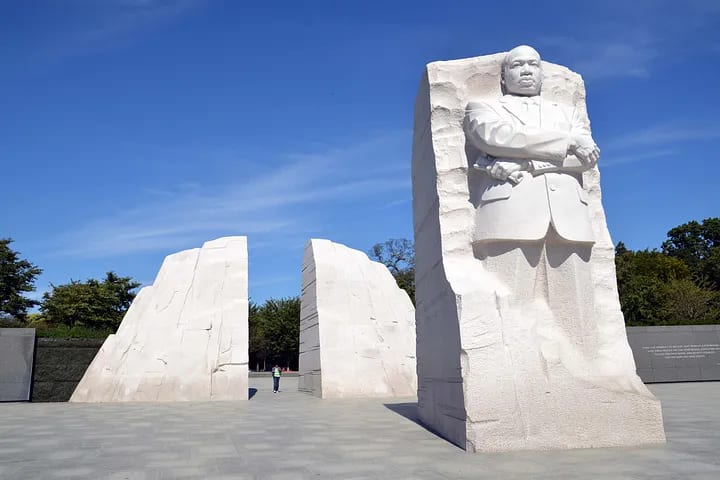
Dr. Martin Luther King Jr. dreamed ).a world where everyone was treated fairly, no matter their skin color, background, or job. 🌟 He worked tirelessly to make that dream a reality, and his lessons remind us that fairness is about making sure everyone has what they need to succeed and feel valued. A monument was built in Washington, DC on the National Mall in honor of Dr. King (Stone of Hope and Mountain of Despair).
Each time you stand up for what’s right, include someone who feels left out, or treat others with kindness and respect, you’re helping keep Dr. King’s dream alive. 💖
Remember: Fairness and equality are for everyone. By working together, we can build a world where everyone feels valued and included. 🤝
#MartinLutherKingJr ✊🏾 #StayWoke 🌍 #FairnessForAll 💪🏾 #kidpower 🕊️ #Nonviolence
About the Creator
Dr William M White
William M. White, Ed D MLE, earned a Doctorate in Leadership from Fielding Graduate University and Harvard's MLE certificate. He is a leadership researcher, professor, executive, author, and co-founded of National Diversity Collaborative.
Keep reading
More stories from Dr William M White and writers in Education and other communities.
Altadena Wildfires
The destructive wildfires raging across Los Angeles County have taken a devastating toll on communities, with one historic neighborhood hit particularly hard. As of Friday (January 10), the Palisades and Eaton fires have collectively burned over 30,000 acres of land. The Eaton fire, located just east of Los Angeles near Pasadena, has caused widespread destruction in Altadena, a historic Black neighborhood.
By Dr William M White12 months ago in Humans
Why Certification Protects Transcription Careers in the Age of AI
Artificial Intelligence has rapidly transformed the transcription industry. Speech-to-text tools now promise instant results, lower costs, and effortless productivity. For businesses focused purely on speed, AI often appears to be the perfect solution. However, beneath this promise lies a critical reality: speed without accuracy creates risk.
By Mahesh Kumar17 minutes ago in Education
What It Really Takes to Get a Wikipedia Page Approved in 2026
These days, Wikipedia isn't like the one some folks recall. Back then, an okay article often made it through with just small tweaks. Now things feel tighter, more intense. Every day brings thousands of fresh entries. Most vanish fast, blocked before they stick around. Getting turned down used to be rare. Lately, that's just how it goes.
By Hillshire Media5 days ago in Education
A Failed Artist, A Disillusioned Poet, An Underpaid Game Show Host
I took my son and niece to Gori, a small town in Georgia where Joseph Stalin was born. They talked me into visiting the Stalin's Museum, the largest in the post-Soviet space. I had resisted going there because I just can't stand the monster and know enough about him, or so I thought.
By Lana V Lynx7 days ago in FYI




Comments
There are no comments for this story
Be the first to respond and start the conversation.