
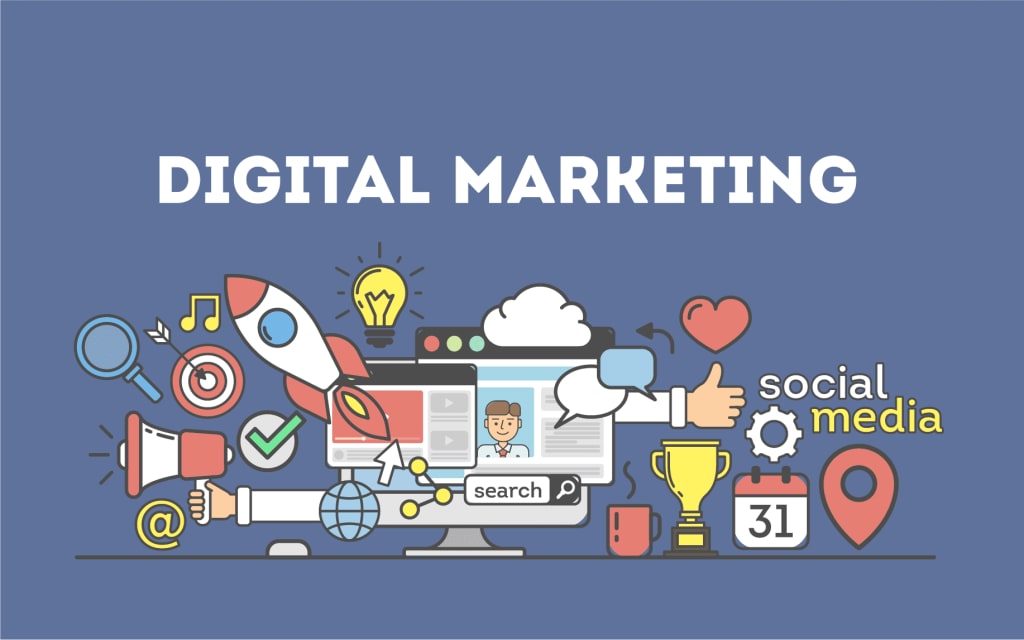
Digital marketing is the process of promoting products, services, or brands through the use of digital channels, such as the internet, social media, email, mobile apps, and other digital platforms. The goal of digital marketing is to reach and engage with a target audience in order to drive sales, leads, or other desired actions.
Digital marketing includes a wide range of tactics and strategies, including:
Search Engine Optimization (SEO): Improving the visibility of a website in search engine results pages (SERPs)
Pay-Per-Click (PPC) Advertising: Placing ads on search engines, social media platforms, or other websites and paying a fee each time the ad is clicked
Content Marketing: Creating and distributing valuable content to attract and engage with a target audience
Social Media Marketing: Promoting products, services, or brands through social media platforms
Email Marketing: Sending promotional messages or newsletters to a list of subscribers
Influencer Marketing: Partnering with individuals who have a large following on social media to promote a product or service
Affiliate Marketing: Partnering with other businesses or websites to promote products or services and earning a commission for each sale or lead generated
Video Marketing: Creating and distributing videos to promote a product, service, or brand
Digital marketing allows businesses to reach a wider audience and target specific groups of consumers with more precision. It also provides a cost-effective way to track and measure the results of marketing campaigns, which can be used to improve and refine marketing strategies.
1. Define Your Target Audience:
Understanding who your target audience is and what they need is crucial to creating effective digital marketing campaigns. By identifying your target audience, you can create relevant and engaging content that will appeal to them and increase the chances of converting them into customers.
2. Create a Strong Online Presence:
Establishing a strong online presence is essential for building trust and credibility with your target audience. This includes having a professional website and active social media accounts, as well as ensuring that your business is listed on relevant directories and review sites.
3. Use a variety of Digital Channels:
Digital marketing offers a wide range of channels for reaching your target audience. Utilizing a variety of channels such as email, social media, pay-per-click, and display advertising will help you to reach a wider audience and increase the chances of conversions.
4. Optimize for Mobile:
With the increasing use of mobile devices, it is important to optimize your digital marketing efforts for mobile. This includes having a mobile-friendly website and creating campaigns that are optimized for mobile devices.
5. Measure and Analyze Your Results:
Digital marketing allows you to track and measure the results of your campaigns in real-time. By monitoring your metrics and analyzing the data, you can identify what is working and what is not, and make adjustments to improve the performance of your campaigns.

1. Not having a clear target audience:
One of the most important things to avoid in digital marketing is not having a clear target audience. Without a well-defined target audience, it will be difficult to create effective marketing campaigns and to measure their success.
2. Neglecting Mobile Optimization:
With the increasing use of smartphones and mobile devices, it is crucial to make sure that your website and marketing campaigns are optimized for mobile. Failing to do so can result in a poor user experience and lower conversion rates.
3. Ignoring SEO:
Search Engine Optimization (SEO) is essential for increasing visibility and driving traffic to your website. Neglecting SEO can result in low visibility and a lack of organic traffic to your website.
4. Over-reliance on paid advertising:
While paid advertising can be an effective way to drive traffic and generate leads, relying too heavily on it can be costly and may not provide a good return on investment. It is important to have a balance of both paid and organic marketing strategies.
5. Lack of measurement and analysis:
Without measuring and analyzing the performance of your digital marketing campaigns, it will be difficult to make informed decisions about how to improve them. It's important to have a proper tracking and measurement system in place to measure the success of your campaigns and make data-driven decisions.

In conclusion, digital marketing is a powerful tool for promoting products, services, or brands through digital channels. It allows businesses to reach a wider audience and target specific groups of consumers with more precision. To be successful in digital marketing, it is important to have a clear understanding of your target audience, establish a strong online presence, use a variety of digital channels, optimize for mobile, and measure and analyze your results. By following these principles, businesses can create effective digital marketing campaigns that will drive sales, leads, and other desired actions. However, it is important to note that digital marketing is a constantly evolving field, and it is important to stay up to date with the latest trends and best practices in order to achieve the best results.
About the Creator
Keep reading
More stories from Umar Shafik and writers in Education and other communities.
Astronomy
Astronomy is the study of the universe and everything in it. It is a fascinating field that has captivated people for centuries. From the earliest civilizations to modern day, people have been gazing up at the stars in wonder and trying to understand the mysteries of the cosmos.
By Umar Shafik3 years ago in Earth
My Journey Exploring Panasonic Avionics Corporation
When I first dove into the world of aerospace technology, one company kept popping up again and again: Panasonic Avionics Corporation (PAC). Over the years, I’ve learned that this organization isn’t just another supplier it’s a powerhouse in in-flight entertainment and communication systems (IFEC) that has quietly shaped how millions of passengers experience air travel.
By Beckett Dowhan7 days ago in Education


Comments
There are no comments for this story
Be the first to respond and start the conversation.