
Difference Between Counselling and Guidance
What is the difference between guidance and counseling? Let's see

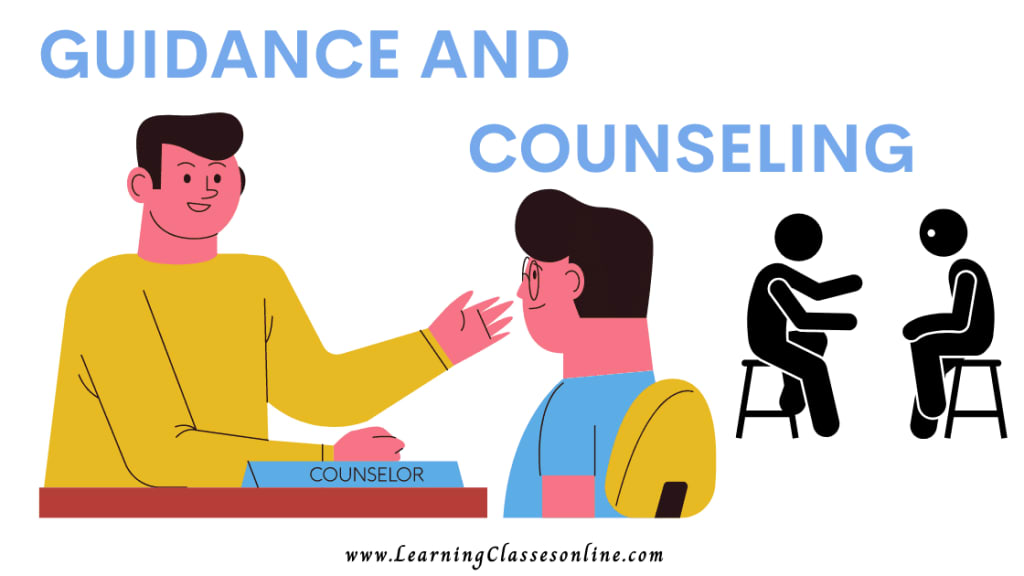
Well, guidance functions by a professional providing clients with ready solutions. The primary goals of counselling are to discuss and comprehend the current issue. In counselling, a person receives the necessary encouragement and empowerment to choose the best course of action with regard to the problem at hand. This occurs in private counselling sessions. You learn more about the distinctions and a lot more in this post.
Difference Between Counselling and Guidance
What distinguishes counselling from guidance, then? Counselling allows a person to convey their emotions, concerns, and difficulties to the counsellor, whereas guidance is advice that is delivered.
What is Guidance?
Guidance is information provided to a person on topics like careers. The best course of action is suggested by an authority in the relevant sector, such as one who specialises in career decisions. Making people aware of the benefits and drawbacks of their choices is the goal of guidance. It educates people on how to make moral decisions. People are educated by professionals that decisions have consequences, especially in the long run.
The strategy utilised to assist students in making wise course or career decisions is called guidance. It attempts to support the person's self-development for the future. It provides them with prepared solutions.
Guidance can be obtained from a variety of sources, some of which are qualified to do so and others who are not. It is crucial to confirm that a person has the training and licencing necessary to give advice. A growing number of life coaches are unfortunately attempting to unethically blur the lines between coaching and psychology/counselling without the training, credentials, or research background to attempt to start giving helpful advice. Unfortunately, as with many things in life, the watchword is always buyer beware. Before beginning any kind of contact with a professional, always check their licencing, education, and certifications!
What is counseling?
A client can freely discuss anything with the counsellor or therapist during counselling. They discuss their feelings, anxieties, and issues with the counsellor. The therapist then assists them in addressing their issues as well as any additional causes for their visit. The main goal of counselling is to encourage an individual to be open so they can receive the necessary support.
The conversation between the client and the counsellor frequently takes place in a private setting.
Before presenting prospective remedies, counselling explores the underlying causes of the issues. The counsellor tries to encourage the client to adopt a positive outlook on life.
The Differences Between Guidance and Counseling
Counselling is curative, whereas guidance is preventative. You could look for advice while making job decisions, but you go to counselling to save your marriage from falling apart.
Counselling enables a person to shift their perspective, while guidance assists them in making the greatest decisions. While counselling assists clients in developing their own well-informed solutions, guidance provides clients with ready options.
While counselling takes a more thorough effort to identify the problem's underlying causes before addressing it, guidance takes an external approach to the issue at hand.
The best method for addressing issues with schooling and careers is guidance, but the best method for addressing issues with socio-psychological issues and other personal issues is counselling.
An authority in the relevant field or anybody superior can offer advice. It doesn't call for formal training. People who have received professional training to treat psychological issues provide counselling.
While counselling equips people to develop the most effective strategies to handle a problem, guidance offers clients ready answers and conclusions.
Confidentiality is not always guaranteed in counselling. It can be done for a single person or a whole group. Since counselling sessions are always one-on-one, you are guaranteed confidentiality.
Conclusion
Finally, it is evident how counselling and guidance differ from one another. Counselling and advice both focus on finding solutions to issues. While counselling focuses on identifying problems and addressing them before identifying solutions using a variety of techniques like therapy, psychotherapy, and more, guidance's primary goal is to provide a solution.
About the Creator
Muneeb Butt
“There is no rule on how to write. Sometimes it comes easily and perfectly: sometimes it’s like drilling rock and then blasting it out with charges.” ~ Ernest Hemingway
Keep reading
More stories from Muneeb Butt and writers in Education and other communities.
Benefits Of Startup India Initiative?
One of the centrepiece initiatives of the Honourable Prime Minister Shri Narendra Modi Ji and his administration is Startup India. Both the number of startups and unicorns has increased significantly in India during the past several years. One of the causes of this is the government’s extensive backing of new businesses. To make the procedure for companies very comfortable, initiatives like startup India were developed.
By Muneeb Butt3 years ago in Education
Real Estate vs. Stock Market Investing: Which Path Builds More Wealth?
Real estate vs. stock market investing is a common debate for anyone who wants to grow wealth. Many people ask which option is safer, which earns more money, and which fits their lifestyle. The truth is that both choices can build wealth over time. However, they work in very different ways. You need to understand the strengths and risks of each before you decide.
By Manny Khoshbin7 days ago in Education
The Reality of doing it all before graduation
Many kids hear from their parents that they should try to live life to the fullest and do as much as they can before it’s too late. None of them is wrong in that regard, but putting it into practice is a little harder than it sounds.
By Aydn Young7 days ago in Education
A Historic Declaration
We the People of the Husbands of the United States of America, in Order to form a more perfect Union, and I mean you...with me...establish Justice, insure domestic Tranquility, provide for the common defence, promote the general Welfare, and secure the Blessings of Liberty to ourselves, after Puberty, do ordain and establish this Declaration of Co-Dependence.
By Gerard DiLeo7 days ago in Humans


Comments
There are no comments for this story
Be the first to respond and start the conversation.