
David Lynch Dies at 78: A Visionary Who Redefined Storytelling
Celebrating the Life, Legacy, and Unmatched Genius of a Cinematic Icon

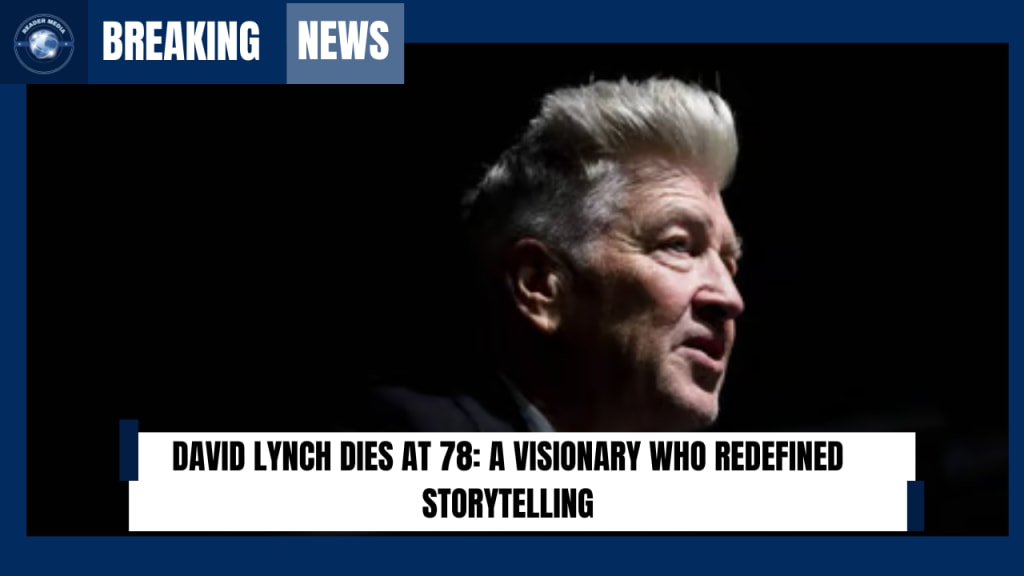
David Lynch, the iconic filmmaker whose surreal and imaginative storytelling redefined cinema and television, has passed away just days shy of his 79th birthday. From Eraserhead to Twin Peaks, Lynch’s unparalleled creativity captured the complexities of human nature, blending the mundane with the extraordinary. His work became a cornerstone of modern pop culture, influencing countless filmmakers and delighting audiences with his unique vision.
A Life Fueled by Creativity and Quirk
Lynch’s artistic genius was fueled by a combination of cigarettes, coffee, and candy—an odd trio that became part of his lore. While these indulgences shaped his image, they also played a role in his health struggles. Diagnosed with emphysema in 2020, Lynch urged others to avoid smoking, sharing his own challenges as a cautionary tale.
Despite his health, Lynch’s zest for life and art never wavered. His ability to find beauty in the strange and darkness in the ordinary made him a singular figure in the world of storytelling.
From Montana to the World Stage
David Keith Lynch was born in 1946 in Missoula, Montana. His early life was marked by frequent moves due to his father’s career as a research scientist. Initially aiming to become a painter, Lynch pursued art at the Pennsylvania Academy of the Fine Arts in Philadelphia. It was during this time that his love for filmmaking emerged, leading to the creation of his first short film in 1967.
After moving to Los Angeles with his family, Lynch enrolled at the American Film Institute (AFI) Conservatory. There, he began work on what would become his debut feature film, Eraserhead. Released in 1977, the unsettling black-and-white film gained a cult following and introduced audiences to Lynch’s distinctive style.
The Elephant Man: A Touching Masterpiece
Lynch’s success with Eraserhead caught the attention of Hollywood. In 1980, he directed The Elephant Man, a biographical drama about Joseph Merrick, a man with severe deformities living in Victorian London. The film earned eight Academy Award nominations, including Best Director and Best Adapted Screenplay, solidifying Lynch’s reputation as a master storyteller.
Unlike his later, more surreal projects, The Elephant Man was a poignant and straightforward film. Yet, its visual poetry and emotional depth carried Lynch’s unmistakable signature.
Bold Risks and Challenges: Dune and Blue Velvet
After the critical success of The Elephant Man, Lynch directed Dune (1984), a sci-fi epic based on Frank Herbert’s novel. Despite its ambitious scope, the film faced production challenges and was a commercial failure. However, Lynch rebounded with Blue Velvet (1986), a psychological thriller that became one of his most acclaimed works.
Blue Velvet exposed the dark underbelly of small-town America, blending mystery, violence, and seduction. Kyle MacLachlan, Isabella Rossellini, and Dennis Hopper delivered unforgettable performances, making the film a cultural phenomenon.
Revolutionizing Television with Twin Peaks
In 1990, Lynch forever changed television with Twin Peaks. Co-created with Mark Frost, the series followed FBI agent Dale Cooper (Kyle MacLachlan) as he investigated the murder of high school student Laura Palmer in a small town. The show’s mix of surrealism, humor, and drama captivated audiences, earning 14 Emmy nominations in its first season.
Though the series lost momentum in its second season, it maintained a loyal cult following. In 2017, Lynch returned with Twin Peaks: The Return, a continuation set 25 years after the original. The revival reaffirmed Lynch’s ability to innovate and captivate.
Exploring Other Creative Avenues
Lynch’s talents extended beyond film and television. He was an accomplished musician, painter, and photographer. His experimental music albums reflected the haunting soundscapes of his films, while his art, often dark and abstract, was exhibited worldwide.
In addition to his creative pursuits, Lynch was a lifelong advocate of transcendental meditation. He founded the David Lynch Foundation to promote meditation’s mental health benefits, particularly for at-risk populations. His passion for creativity and well-being defined his multifaceted legacy.
A Legacy of Iconic Films
Lynch’s filmography includes a diverse range of works that defy categorization. From the noirish brilliance of Mulholland Drive (2001) to the heartfelt simplicity of The Straight Story (1999), his movies explored the human condition with depth and imagination.
Mulholland Drive, a tale of aspiring starlets in Hollywood, combined dreamy visuals with dark undertones, challenging viewers with its puzzle-like structure. Meanwhile, The Straight Story captured the journey of an elderly man driving a tractor across state lines to reconcile with his estranged brother—a testament to Lynch’s ability to find beauty in simplicity.
Balancing Darkness and Light
Lynch was known for probing the complexities of the American spirit. His work celebrated sunny, middle-American values while fearlessly exploring the darker aspects of humanity. Films like Blue Velvet and Twin Peaks juxtaposed idyllic settings with unsettling secrets, highlighting the duality of human nature.
He often found inspiration in the ordinary—a robin with a bug, steam rising from a grate, or the bright blue of a cloudless sky. These moments became emblematic of his ability to blend the surreal with the familiar, creating stories that felt both otherworldly and deeply personal.
Why We Were Lucky to Live in the Age of Lynch
David Lynch’s contributions to art and storytelling transcended medium and genre. He challenged audiences to embrace the strange and find beauty in the unexpected. As his family shared, “There’s a big hole in the world now that he’s gone. But, as he would say, ‘Keep your eye on the donut and not on the hole.’”
Lynch’s work will continue to inspire generations of creators, reminding us to dream big, take risks, and find meaning in life’s mysteries. He wasn’t just a filmmaker—he was a storyteller who reshaped how we see the world.
Disclaimer
This content has been created by an AI language model and is intended to provide general information. While we strive to deliver accurate and reliable content, it may not always reflect the latest developments or expert opinions. The content should not be considered as professional or personalized advice. We encourage you to seek professional guidance and verify the information independently before making decisions based on this content.
This information is sourced from Time
About the Creator
Reader Media News
Welcome to Reader Media – your go-to source for the latest news, expert insights, and in-depth articles across business, tech, health, entertainment, sports, and more. Stay informed and engaged with the world through quality content.
Keep reading
More stories from Reader Media News and writers in Education and other communities.
House Speaker Mike Johnson Removes Rep. Mike Turner as Chair of Intelligence Committee
In a surprising move, House Speaker Mike Johnson has removed Republican Rep. Mike Turner as chair of the House Intelligence Committee for the 119th Congress. This decision, coming just days before Donald Trump is sworn in for his second term as president, has raised questions and concerns about the future direction of this key oversight panel.
By Reader Media Newsabout a year ago in Education
Ferrara Enterprises Inc: A Trusted Manufacturer of NSN Components for Aviation and Industrial Systems
In the aerospace and defense supply chain, reliable component manufacturers play a crucial role in maintaining aircraft systems and industrial equipment. One such manufacturer is Ferrara Enterprises Inc, a company associated with producing components that appear in various National Stock Number (NSN) catalogs used across aviation, defense, and industrial sectors.
By Beckett Dowhanabout 13 hours ago in Education
The Power of Fellowship: Strengthening Faith Through Shared Moments and Unity
The Power of Fellowship in Everyday Faith The power of fellowship plays an important role in many faith communities. It brings people together through shared beliefs, prayer, and support. Fellowship is not only about gathering in one place. It is about building meaningful relationships that help people grow in faith.
By World Olivet Assembly2 days ago in Education


Comments
There are no comments for this story
Be the first to respond and start the conversation.