

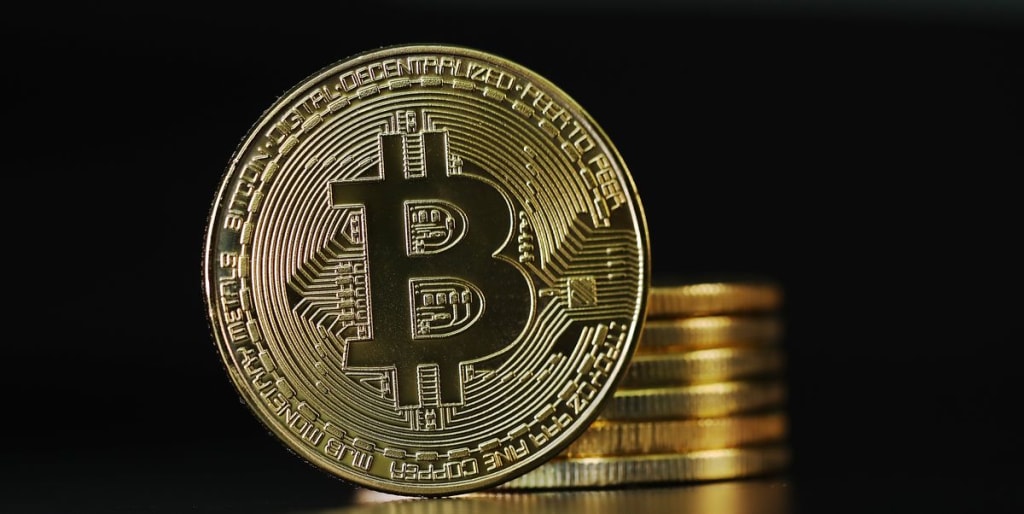
Digital medium of exchange using cryptography on a ledger to secure transactions and to verify transfer of ownership.
Ten thousand bitcoin for two large pizzas.
The idea seems laughable today, but this is considered the first real-world Bitcoin transaction in history.
Now famously known as “Bitcoin Pizza Day,” May 22, 2010 witnessed the first time bitcoin — which reached a peak of $69,000 per piece in November 2021 — was used to purchase something tangible.
In order to get those two pizzas, the bitcoins were sent to a volunteer in England, who made a transatlantic phone call and paid for the $30 delivery of pizza to Florida-based programmer Laszlo Hanyecz.
Thirty dollars may not seem like much now, but it was an important step in the history of cryptocurrency, which has since become arguably the most exciting technological innovation of the 21st Century. We trace this history below, explaining how Bitcoin and cryptocurrency first developed, and where they may be going.
The Idea for Cryptocurrency
The idea for cryptocurrency first emerged in 1983, when American cryptographer David Chaum published a conference paper outlining an early form of anonymous cryptographic electronic money. The concept was for a currency that could be sent untraceably and in a manner that did not require centralized entities (i.e. banks). In 1995, Chaum built on his early ideas and developed a proto-cryptocurrency called Digicash. It required user software to withdraw funds from a bank and required specific encrypted keys before said funds could be sent to a recipient.
Bit Gold, often deemed a direct precursor to Bitcoin, was designed in 1998 by Nick Szabo. It required a participant to dedicate computer power to solving cryptographic puzzles, and those who solved the puzzle received a reward. Combined with Chaum’s work, it results in something that comes very close to resembling Bitcoin.
But Szabo could not solve the infamous double-spending problem (digital data can be copied and pasted) without the use of a central authority. As such, it was not until a decade later when a mysterious person or group, using the pseudonym Satoshi Nakamoto, set the history of Bitcoin and later cryptocurrencies in motion, by publishing a white paper called “Bitcoin – A Peer to Peer Electronic Cash System.”
The Beginning (2008-2010)
On October 31, 2008, Satoshi Nakamoto published the Bitcoin white paper, describing the functionality of the Bitcoin blockchain network. Satoshi formally began work on the bitcoin project on August 18th, 2008, when they purchased Bitcoin.org. While it’s not the subject of this article, it’s worth noting that Bitcoin (and all other cryptocurrencies) wouldn’t be possible without blockchain technology, which at its simplest involves creating unalterable data structures.
The history of Bitcoin was underway. Satoshi Nakamoto mined the first block of the Bitcoin network on January 3, 2009. They embedded a headline from The Times newspaper in this initial block, making a permanent reference to the economic conditions — involving bank bailouts and a centralized financial system — that Bitcoin was partly a reaction against.
This first block — which resulted in 50 bitcoins being mined — is now referred to as the Genesis Block. Bitcoin had virtually no value at this time, as well as for the first few months of its existence. Six months after bitcoin became tradeable, in April 2010, the value of one BTC was just under 14 cents. By early November, the price ‘surged’ to 36 cents before settling at around 29 cents.
The Market Begins to Form (2010-2014)
While it wasn’t yet worth much, Bitcoin was showing it had real world value. In February 2011 it rose to $1.06 before coming back down to roughly 87 cents. In the spring, in part due to a Forbes story on the new “crypto currency,” the price took off. From early April to the end of May, the value of bitcoin rose from 86 cents to $8.89.
On June 1, after Gawker published a story about the currency’s appeal in the online drug dealing community, the price more than tripled in a week, to about $27. The market value of bitcoins in circulation approached nearly $130 million. However, by September 2011, the value had dropped back down to around $4.77.
In October of that same year, Litecoin appeared, one of many forks (i.e. updated versions) of Bitcoin. Litecoin soon became the second-biggest cryptocurrency by market cap, with the earliest archive of CoinMarketCap (from May 2013) showing PPCoin, Namecoin and 10 others trailing in the distance. Such cryptocurrencies were quickly dubbed ‘altcoins’, with some forked from Bitcoin and others based on new code.
In 2012, Bitcoin prices grew steadily, and in September of that year the Bitcoin Foundation was established to promote Bitcoin’s development and uptake. Then known as OpenCoin, Ripple was also launched that year, with the project attracting venture capital the next year.
In 2013, amid federal, criminal, regulatory, and software related issues, bitcoin’s price constantly rose and crashed. On November 19 its price reached $755, only to crash down to $378 the same day. By November 30 it was all the way up to $1,163 again. This was, however, the beginning of another long-term crash that ended with Bitcoin dropping back down to $152 by January 2015.
Part 2 Coming
stay tuned.....
About the Creator
Financial Independents
The only way to do great work is to love what you do. If you haven’t found it yet, keep looking. Don’t settle. As with all matters of the heart, you’ll know when you find it.
Keep reading
More stories from Financial Independents and writers in Education and other communities.
The Simple Path to Wealth
"The Simple Path to Wealth" is a book written by JL Collins, a personal finance blogger, and retiree. The book is a guide to achieving financial independence and retire early (FIRE) through a combination of simple, common-sense investing strategies and frugal living.
By Financial Independents3 years ago in Education
Why ISO Certification Is Becoming a Business Standard for Companies in the UAE
Businesses in the UAE operate in a competitive environment. Clients expect reliability. Regulators expect compliance. International partners expect structured operations. Because of these expectations, companies are adopting management systems that improve how they operate.
By Umar Quality Jounal6 days ago in Education
Book Tasting Cafe
I’m always looking for ways to get my students interested in new books. When I received the new books this year, I decided to make introducing them to the students a little more fun. Normally I just pull them from the boxes, process them, and put them on display. This time I decided to start with unboxing videos. While the video of the unboxing of non-fiction books was too long to post online, I was able to post the videos for the other books so the students could see them. I also posted them on my Instagram.
By Reb Kreyling3 days ago in Education


Comments
There are no comments for this story
Be the first to respond and start the conversation.