
Cryogenic Grinding: Boosting Production Through Low Temperature Assistance
How to Achieve Optimal Results with Cryogenic Assisted Grinding Operation
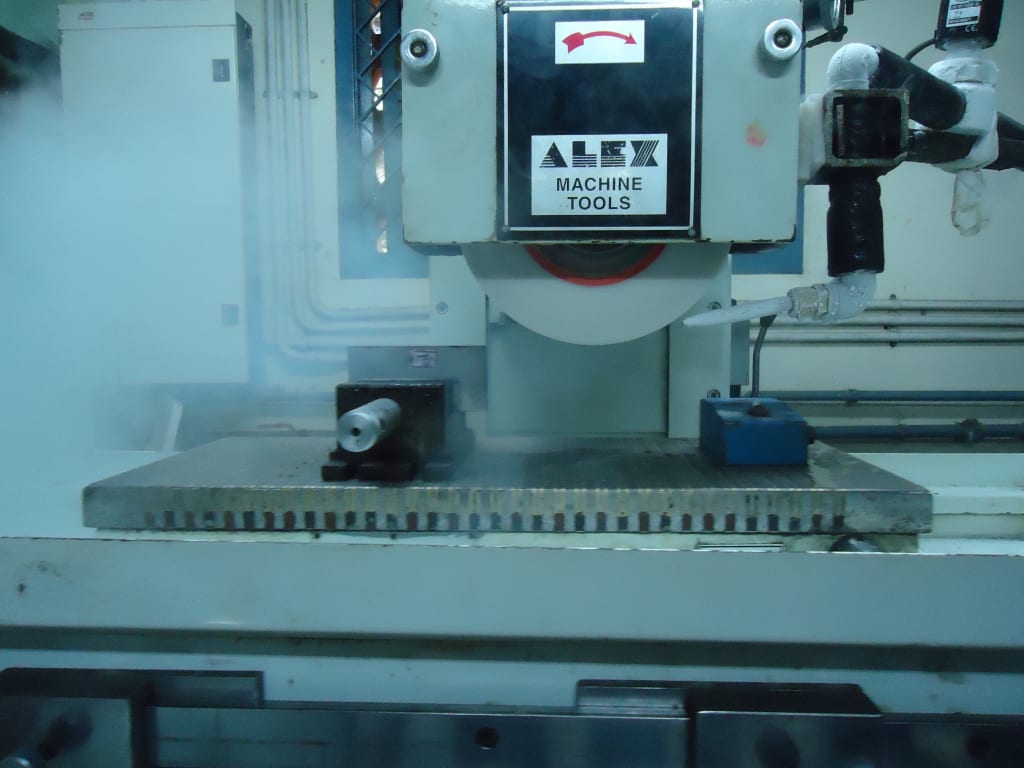
With the ever-increasing demands of the manufacturing industry, it is more important than ever to explore new and efficient ways of production. One such method is cryogenic-assisted grinding, which has been shown to produce optimal results in a variety of applications. In this blog post, we will explore cryogenic assisted grinding, its benefits, and how to best prepare for and execute this type of operation.
Understanding Cryogenic Assisted Grinding Process.
Cryogenic-assisted grinding is a process that uses liquid nitrogen to cool the workpiece and wheel, which reduces thermal stresses and forces that can lead to premature tool wear or breakage. The process also reduces heat-induced warping or distortion of the workpiece.
There are several benefits to using cryogenic-assisted grinding:
1. Increased productivity – When tools are kept cooler, they can last up to three times longer than when using traditional grinding methods. This increased lifespan results in less downtime for tool changes and greater overall efficiency.
2. Improved quality – The consistent temperature provided by liquid nitrogen helps to produce a higher-quality surface finish on the workpiece. Additionally, the risk of imperfections such as cracks is reduced due to the elimination of thermal stresses.
3. Enhanced safety – Because the grinding process generates less heat, there is a lower risk of fire or explosion when using flammable materials such as plastics or aluminum. In addition, cooling the workpiece can prevent injuries from sparks or hot metal shavings.
Different Types of Cryogenic Assisted Grinding.
There are two main types of cryogenic assisted grinding: Wheel Cooling and Workpiece Cooling.
Wheel Cooling – In this method, liquid nitrogen is used to cool the grinding wheel before it comes into contact with the workpiece. This helps to improve cutting performance by reducing frictional heating between the wheel and workpiece, which can cause premature tool wear or breakage. Additionally, wheel cooling can help to minimize distortion of the wheel itself caused by excessive heat buildup during operation.
Workpiece Cooling – Workpiece cooling involves circulating liquid nitrogen around or through the workpiece during grinding operations. This helps to keep the material from getting too hot, which can cause warping or other damage due to thermal stress . Additionally, workpiece cooling can improve surface finishes by preventing overheating and subsequent re-hardening of the material .
Preparing for Cryogenic Assisted Grinding.
In order to properly prepare for cryogenic assisted grinding, it is important to have a clear understanding of the grinding wheel that will be used in the process. The type of grinding wheel, as well as the size, shape, and abrasiveness, will all play a role in determining the optimal results of the grinding operation.
Selecting the Proper Coolant.
An important part of preparing for cryogenic assisted grinding is selecting the proper coolant. There are a variety of different coolants that can be used in this process, and each has its own advantages and disadvantages. It is important to select a coolant that will not cause any excess heat generation during the grinding operation.
Setting the Proper Operating Conditions.
Another critical factor in preparing for cryogenic assisted grinding is setting the proper operating conditions. This includes ensuring that the correct spindle speed and feed rate are used for the specific material being ground. Additionally, it is important to maintain a consistent workpiece temperature throughout the entire grinding operation.
Best Practices During Cryogenic Assisted Grinding.
For best results, it is important to prepare the workpiece prior to cryogenic assisted grinding. This may include cleaning or degreasing the surface of the workpiece, as well as removing any burrs or sharp edges. It is also important to ensure that the workpiece is properly secured before starting the grinding process.
Maximizing Safety and Efficiency.
To maximize safety and efficiency during cryogenic assisted grinding, it is important to follow all recommended safety procedures. This includes wearing appropriate personal protective equipment, such as gloves, goggles, and earplugs. In addition, it is important to keep the area well-ventilated to avoid inhaling too much of the coolant mist.
Installing Appropriate Guards and Shields.
It is also important to install appropriate guards and shields around the grinding wheel and coolant system to protect operator from injuries.
Troubleshooting Common Errors of Cryogenic Assisted Grinding.
One of the most common errors when performing cryogenic assisted grinding is excess heat generation. This can be caused by several factors, including:
-Incorrect coolant concentration
-Improper wheel selection
-Inadequate wheel dressing
-Excessive workpiece speed
To prevent excess heat generation, it is important to carefully select the correct coolant concentration, wheel type, and operate at the proper conditions. If excessive heat is generated, it can cause thermal damage to the workpiece and affect the quality of the grind.
Poor Edge Quality.
Another common error when performing cryogenic assisted grinding is poor edge quality. This can be caused by several factors, including:
-Incorrect wheel selection
-Inadequate wheel dressing
-Excessive workpiece speed
To achieve a good edge quality, it is important to select the correct wheel type and dress it properly. The workpiece should also be fed at a moderate speed to avoid potential damage.
Poor Surface Finish.
A poor surface finish can also be a result of incorrect grinding parameters. To achieve a good surface finish, it is necessary to use the correct wheel type, feed rate, and depth of cut. It is also important to dress the wheel properly and perform regular maintenance on the machine to avoid potential damage.
Conclusion
As we have seen, cryogenic-assisted grinding can offer many benefits over traditional grinding methods. By understanding the process and preparing properly, you can maximize the efficiency and quality of your results. By following best practices during grinding and troubleshooting common errors, you can ensure that your cryogenic-assisted grinding operation is successful.
About the Creator
Keep reading
More stories from Vijayathithan and writers in Education and other communities.
Incredible South Indian Movies That Transformed Our Viewing Experience
South Indian cinema is often overlooked in favour of its more popular Hindi counterpart. However, there are many reasons why South Indian movies should be on your radar. From the high quality of filmmaking to the variety of genres on offer, South Indian cinema has a lot to offer viewers. In this blog post, I'll outline the top South Indian movies that you need to watch. I'll also provide some tips on how to get the most out of your South Indian cinematic experience.
By Vijayathithan 3 years ago in Humans
What causes cavities
When a team of archaeologists recently came across some 15,000-year-old human remains, they made an interesting discovery. The teeth of those ancient humans were riddled with holes. Their cavities were caused by the same thing that still plagues us today: specific tiny microbes that live in our mouths.
By Munesh Yadavabout 17 hours ago in Education
How Business Coaching Helps Founders Scale With Clarity and Control
Business coaching assists founders to scale since hustle and reactivity are substituted with structure, systems and strategic leadership. Strategic coaching provides clarity in the marketing, operations, leadership, and decision-making roles of the business, eliminating the need to use the owner as the bottleneck, instead enabling the business to expand without havoc, burnout, or firefighting.
By Alice Adams5 days ago in Education
Rachel Reviews: The Spiral Archive by Pieter Hendrik
It's difficult for me to know where to start with a review of this book as it was, for me, an entirely unique experience and one that I'll probably never have again. I don't want that to be interpreted as unenjoyable but it has left me scratching my head a little and ruminating on its content, its themes and its characters.
By Rachel Deeming3 days ago in BookClub




Comments
There are no comments for this story
Be the first to respond and start the conversation.