
CRISPR Technology: Revolutionizing Genetic Engineering in Biotechnology
And What is the future to life?

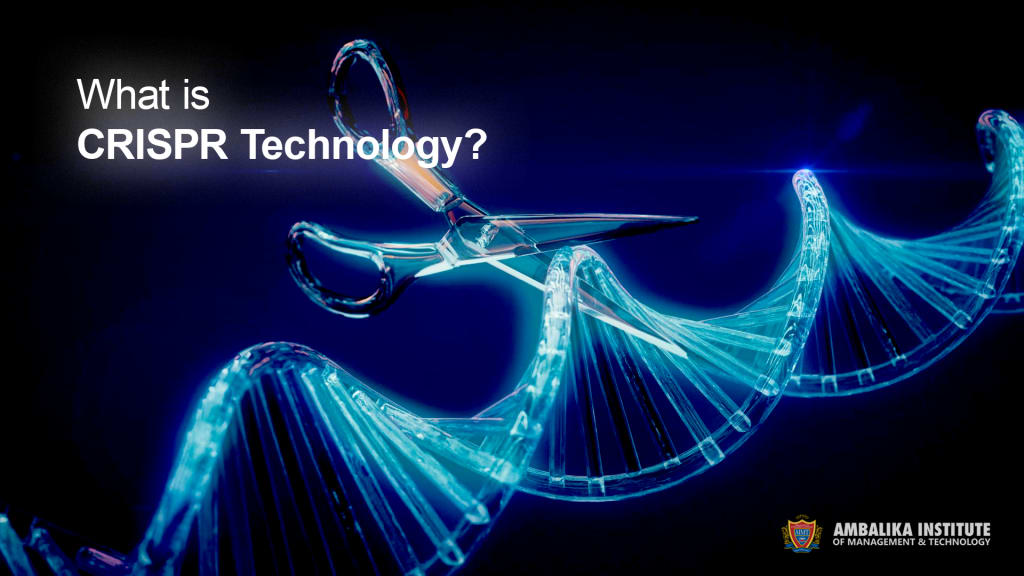
CRISPR stands for Clustered Regularly Interspaced Short Palindromic Repeats. It is a component of bacterial immune systems that can cut DNA, and has been repurposed as a gene editing tool. It acts as a precise pair of molecular scissors that can cut a target DNA sequence, directed by a customizable guide.
Biochemist Jennifer Doudna and Microbiologist Emmanuelle Charpentier co-invented the gene-editing system CRISPR-Cas9, a technology for editing DNA with unprecedented precision and efficiency. CRISPR-Cas9 opens up novel and wide-ranging possibilities across medicine, biology and agriculture.
CRISPR is a technology that research scientists use to selectively modify the DNA of living organisms. CRISPR was adapted for use in the laboratory from naturally occurring genome editing systems found in bacteria. Efficient tools for targeting specific genes for laboratory research, agricultural engineering, biotechnology, and human disease treatment.
The field of biotechnology and genetic engineering has been revolutionized by CRISPR-Cas9, a groundbreaking tool that allows scientists to precisely edit DNA. Originally discovered as part of the immune defense system in bacteria, CRISPR has now been adapted into one of the most powerful gene-editing technologies available today. From medical breakthroughs to agricultural advancements, CRISPR is shaping the future of science and technology.
How CRISPR Works: A Simple Breakdown
CRISPR operates like a highly precise genetic editing tool, allowing researchers to target and modify specific DNA sequences. The process involves two key components:
Guide RNA (gRNA) — A specially designed RNA sequence that directs the system to a specific part of the DNA.
Cas9 Enzyme — A molecular scissor that cuts the DNA at the target location.
Once the DNA is cut, the cell naturally tries to repair it. Scientists can use this repair process to either disable a faulty gene, fix a mutation, or insert a completely new genetic sequence.
Why CRISPR Matters in Biotechnology
CRISPR has opened up groundbreaking possibilities in multiple fields, including medicine, agriculture, and synthetic biology. Its ability to edit DNA with unmatched accuracy and efficiency makes it a valuable tool for research and practical applications.
1. Medical Advancements with CRISPR
- Gene Therapy — CRISPR is being used to correct genetic disorders such as sickle cell anemia, cystic fibrosis, and muscular dystrophy.
- Cancer Treatment — Scientists are using CRISPR to modify immune cells, making them more effective in fighting cancer.
- Infectious Diseases — Researchers are exploring CRISPR to target and eliminate viral DNA, including viruses like HIV and herpes.
2. Agricultural Innovations
- Genetically Modified Crops — CRISPR enables the development of pest-resistant, drought-tolerant, and high-yield crops, reducing dependency on pesticides and improving food security.
- Livestock Engineering — Scientists are using gene editing to enhance disease resistance and improve livestock health.
3. Biotechnology & Research Applications
- Functional Genomics — CRISPR helps researchers understand gene functions by creating targeted knockouts.
- Synthetic Biology — Scientists can design organisms with entirely new traits for industrial and pharmaceutical applications.
Ethical Considerations and Challenges
While CRISPR offers unprecedented possibilities, it also raises important ethical and safety concerns:
- Off-target effects — Accidental mutations can occur, leading to unintended consequences.
- Germline Editing — Editing human embryos could have long-term societal impacts and raises ethical dilemmas.
- Biodiversity Risks — Genetically modified organisms (GMOs) could disrupt ecosystems if not carefully regulated.
Despite these challenges, ongoing research is focused on improving CRISPR’s precision and safety, making it a vital tool for the future of genetic engineering.
The Future of CRISPR and Emerging Technologies
Scientists are developing even more advanced gene-editing tools to increase precision and expand the applications of CRISPR. Some of the latest advancements include:
- Prime Editing — A newer version of CRISPR that allows for even more accurate DNA modifications with fewer errors.
- CRISPR-Cas12 and CRISPR-Cas13 — Variants of CRISPR that enable RNA editing and broader applications in disease treatment.
With continuous innovation, CRISPR is set to play a crucial role in the future of medicine, agriculture, and biotechnology.
Start Your Journey in Biotechnology
If you’re passionate about genetic engineering, biotechnology, and cutting-edge research, now is the perfect time to explore this field. The demand for skilled professionals in biotechnology is growing, and institutions around the world are investing in CRISPR research and applications.
For students and professionals looking to build a career in biotechnology and genetic engineering, AIMT — Best Bio Tech Engineering College offers top-tier programs designed to equip you with the skills needed for this rapidly evolving industry.
About the Creator
Ambalika Institute
Ambalika Institute of Management and Technology (AIMT) was established in 2008 as a private engineering and management college in Mohanlalganj, Lucknow, Uttar Pradesh, India. It is affiliated with AKTU and BTE and is approved by AICTE.
Keep reading
More stories from Ambalika Institute and writers in Education and other communities.
Navigating Your Way to Success: Civil Engineering
Civil engineering is a dynamic and influential field that shapes the world we live in. From designing and constructing infrastructure to ensuring environmental sustainability, civil engineers play a crucial role in building a better future. If you’re aspiring to embark on a successful career in civil engineering, this guide will help you navigate your way to success.
By Ambalika Institute12 months ago in Education
Travel Made Easy: A Practical Guide to Planning a Smooth and Relaxing Vacation Anywhere
Travel has the power to refresh the mind, inspire new ideas, and create unforgettable memories. However, planning a vacation can sometimes feel more stressful than rewarding. From choosing destinations to managing time and expenses, many travelers feel overwhelmed before they even pack their bags. The key to enjoying a peaceful journey lies in thoughtful planning and a calm mindset. This guide explains how to plan a stress-free vacation anywhere while keeping the process simple, organized, and enjoyable.
By Nathalie Kyriakou6 days ago in Education




Comments
There are no comments for this story
Be the first to respond and start the conversation.