
Crankcase Ventillation in Turbo-Charged Engine
Working of Crankcase Ventillation in Turbo Charged Engines
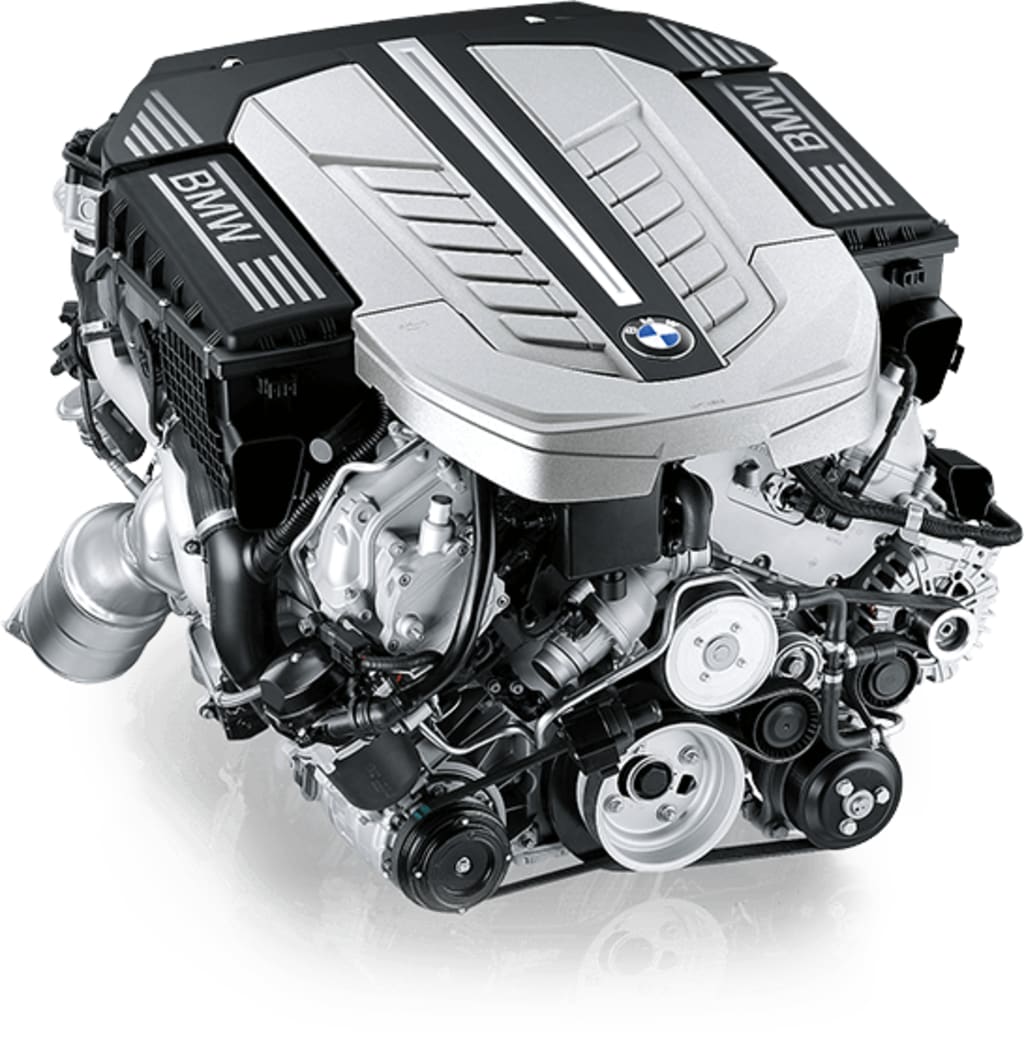
Introduction: As you know the Crankcase Ventillation system works by introducing blow-by gases from the crankcase to the intake where these gases act like fuel and improves efficiency, and performance, and reduces emissions. The working of Crankcase Ventilation system is different in turbo-charged engines. This happens due to turbo-lag(the time that the turbo-charger takes to create pressure during this time there is less pressure in intake). So, there are two modes of operation.
- Naturally Aspirated Operation which occurs when there is less pressure in intake.
- Turbo-charged operation which occurs when there is more pressure in intake due to turbocharging.
Another thing that should be understood is the removal of engine oil from blow-by gases. This is done by using oil separators.
Oil Separator
Oil separators are used to remove oil from blow-by gases. This prevents oil to get into the intake of an engine. If this system is not used it would reduce engine oil which can cause a lot of problems like less lubrication, engine heat-up and wear/tear etc. The gases passes through this oil separator and oil is removed from them. After this, oil is returned again to crankcase and clean air is moved to intake where it is used as fuel which leads to improvement in fuel efficiency and reduction in emissions.
You can understand the working of oil separator from following diagram:
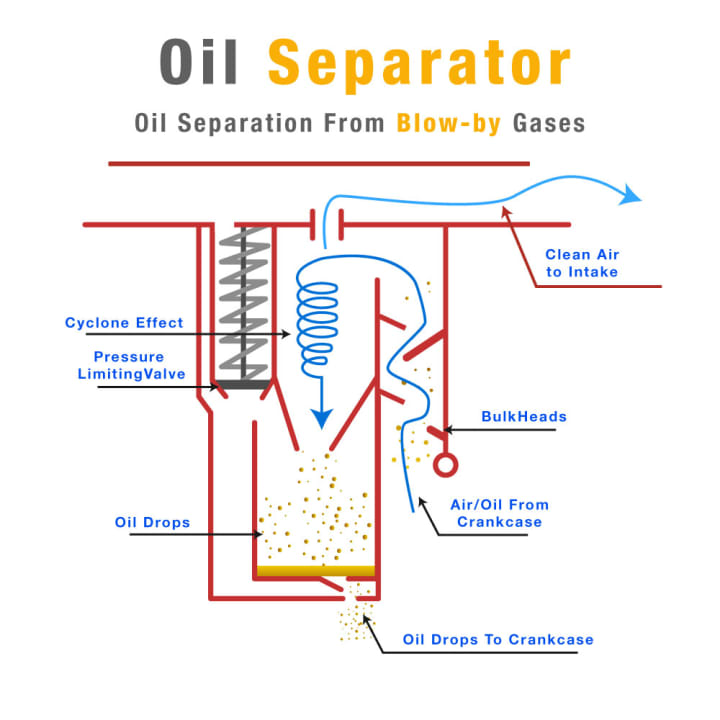
First of all, blow-by gases are entered into oil separator where these collide with bulkheads and this collision causes oil drops or heavy particles in the mixture of blow-by gases to lose momentum and adhere to surface or stick with other particles and when they gain some weight them fall down due to gravity. These gases then enter the cyclone type oil separator where oil is further removed from these gases due to cyclone effect. Pressure limiting valve opens in case of high pressure in the crankcase and this reduces pressure to prevent from further damages.
Cyclone Effect: This effect is normally produce by cyclone separators. These separators use centrifufgal force which separates heavy particles of oil from lightly weighted blow-by gases.
Naturally Aspirated Operation
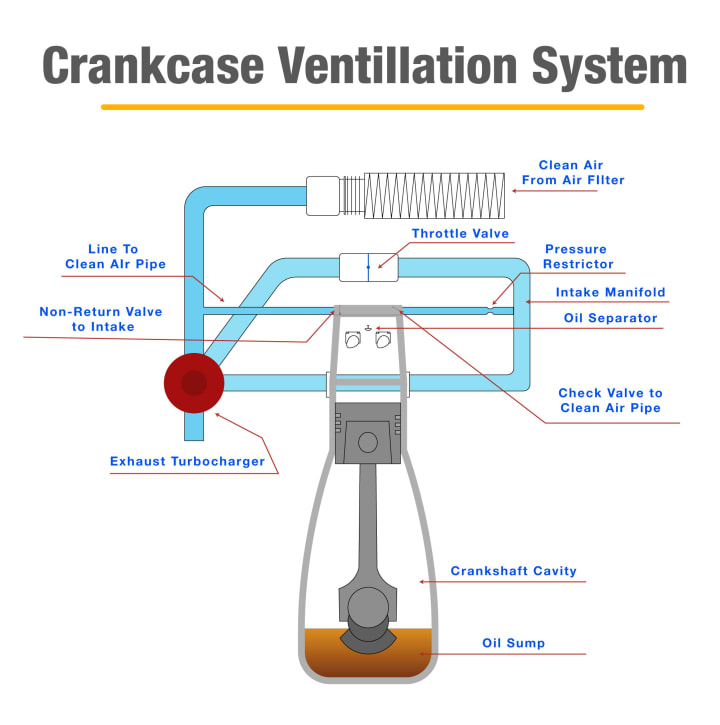
During this operation, throttle valve remains close in order to make vacuum in intake manifold. Blow-by gases are introduced from oil separator where oil is separated from blow-by gases to avoid reduction of engine oil. It then flows to check valve, then to intake manifold and then finally to intake valve.
This mode is activated when there is less pressure by turbo-charger or during turbo-lag time. This mode is deactivated when there is enough pressure in intake created by turbo-charger. A purge line introduces fresh air to crankcase. This purge-line is connected at a point in between air filter and turbocharger to crankcase. Its purpose is to smooth the flow of blow-by gases. For more understanding you can check the following diagram.
Turbo-Charged Operation
After the turbo-lag when there is sufficient pressure in intake throttle valve becomes fully open and check valve becomes fully closed. During this operation, non-return valve becomes open due to vacuum created by turbo-charging as shown in diagram. These gases are separated from oil by oil separator. After passing through oil separator, these gases passes through non-return valve (which allows flow of gases in one direction and restricts the flow of gases in other direction) and then through clean air pipe which is connected to air filter and air passes through the pipe after getting cleaned to intake. In this way blow-by gases are introduced to intake valve. These gases act like fuel and improves fuel efficiency along with reduction in emissions.
Conclusion
Crankcase ventillation system is vital for modern day automobiles. This system was among the ones designed to reduce emissions. This system should be properly checked by experienced technicians. Problems in this system can lead to further engine problems like less fuel efficiency, rough idling and sometimes it can cause leakage in oil pan gasket.
About the Creator
Keep reading
More stories from Samie Ullah and writers in Education and other communities.
Working of Crankcase Ventillation System
Introduction: The Crankcase Ventilation System helps move Blow-by gases to the intake of an engine. This further helps in better fuel efficiency and performance. Crankcase Ventilation System further reduces environmental pollution. In this article, we will discuss the necessity, history, and benefits of the Crankcase Ventilation System.
By Samie Ullah2 years ago in Education
China Online Education Market Analysis Industry Overview, Key Players & Future Outlook
According to IMARC Group's latest research publication, the China online education market size reached USD 14,585.92 Million in 2024. The market is projected to reach USD 105,126.83 Million by 2033, exhibiting a growth rate (CAGR) of 24.54% during 2025-2033.
By Neeraj kumar3 days ago in Education
The Evolution of Cyber Threats: Account Hacking Techniques in 2026 and How to Fortify Your Digital Defenses
The Ever-Changing Landscape of Digital Security As we progress through 2026, the sophistication of account hacking techniques has evolved dramatically, presenting unprecedented challenges to individuals and organizations worldwide. This article examines the cutting-edge methods employed by contemporary threat actors and provides actionable, forward-looking strategies to protect your digital identity. Understanding these threats is no longer optional—it's essential for anyone navigating our interconnected digital ecosystem.
By Alexander Hoffmannabout 10 hours ago in Education


Comments
There are no comments for this story
Be the first to respond and start the conversation.