
Covid-19 part-2
"Life Cycle of Virus and early Detection"


Life Cycle of COVID-19
Lungs are the only human organ that are in contact with the external environment and cause serious human respiratory infections. When we breathe in an infected environment the virus may enter into the lungs through nasal passage way and invaded into the lungs tissues. The S proteins present on the surface of corona virus are responsible for its attachment to the host cell. The S proteins contain receptors called receptors binding domains. These receptors vary from virus to virus. We noticed that the S proteins of the SARS-CoV, MERS-CoV, and SARS-CoV-2 contains high amount of sequences amino acids that have homogeneity with one another. When the S protein binds with the ACE2, the membrane of the host cell break the S proteins and activate the virus within the host cell. The interaction of the S proteins with the ACE2 is a crucial step for cross specie transmission. Virus easily enters into the cytosol of the host cell by membrane fusion. In host cytoplasm its controls the genetic information of the host cell and start multiplying. After replication they transported outside the cell membrane by exocytosis process.
Viral Genome
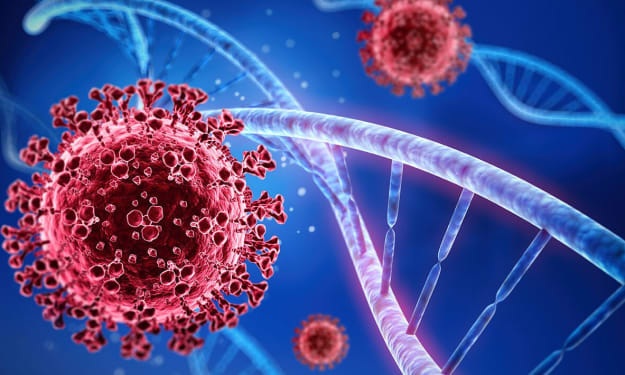
This virus belongs mainly to the family Coronaviridae and the member of the subfamily Coronavirinea. This subfamily is further related to four different Genera Alphacoronavirus, Betacoronavirus, Gammacoronavirus, and Deltacoronavirus. SARS-CoV-2 is a positive stranded RNA virus, a long, enveloped, with a nuceocapsid and has a similar structure to SARS-CoV-1. It contains a diameter ranges from 70 to 135nm. Four major categories of corona virus are most common; Alpha, Beta, Delta and Gamma. First two categories are identifies to infect humans. When viewed under electron microscope we find that it is spherical in shape and its envelope contains a large number of small spikes which are made up of glycoproteins and has a single stranded RNA genome. It has a towering frequency of reorganization of any positive stranded RNA virus and carries the genetic information from multiple sources. It shows that it mutate and alternate itself with alarming rate that may create catastrophe in diagnostic areas.
Transmission mode
This disease can easily be transmitted through fluids. When an infectious person coughs or sneezes then the droplets out of the mouth stays in air and when a healthy person comes in contact with those droplets of coughing then he gets the infection. Also, it is contagious so it can even be transferred by a hand shake or by getting in touch with those surfaces or places where that hand have transferred its germs. All the three types of coronaviruses are considered to come from a common source say bats and transfer to the human species by an intermediate host which is civets plus dromedary camels. The research work to find the intermediate host for SARS Cov-2 is still in progress.
How to find the disease?
Reverse transcription polymerase chain reaction is the most efficient and current molecular based technique. This technique used to detect RNA from the subfamily of Coronavirinea and it clearly shows the result. But as usual it has some disadvantages like; firstly it required some sophisticated equipment with a well-established laboratory. Secondly, it is highly time consuming and we are about to get the result within 3 days. Time management is the main concern in this era we are living. So, in this situation we need a more efficient method that is more reliable and fast to combat this disease. We have to develop new tools that can be operating on site and does not require any special training.
At the start of the outbreak, some organizations develop technical testing kits but they are not as efficient as the need of an hour. These testing kits targets the various parts of the virus genome and gives low accuracy result. It also needs a large number of reagents to perform the testing process which becomes obstruction. For vaccination there are several ongoing clinical trials. Some of them based upon targeting the nucleic acid of the viral genome and other are used to target the spikes proteins on the surface of the viral membrane. Scientists are trying their best to set an emerging clinical vaccination trend that is easily administrated, safe and most efficient.
About the Creator
Fatima Jamil
In a world where you can be anyone, be yourself.
Keep reading
More stories from Fatima Jamil and writers in Education and other communities.
COVID-19 and its Vaccination part-1
Global Pandemic Introduction This article is all about the formulation of vaccine, its application on body of animals and then on human body, the responses to these vaccines, the methods of administration, the exploration of best subsidiaries for stimulating the immunity in body against vaccine. It suggests the signs for developing of vaccine and takes into consideration the current situation caused by Covid-19. It has also considered some other latent factors involving in vaccine formulation in terms of their potentiality. The right set of circumstances along with challenges which are likely to be faced by scientists while formulating the vaccine, are discussed too
By Fatima Jamil3 years ago in Education
What Market Volatility Means for Your Investment Plan and Financial Future
Market volatility is a common but often misunderstood feature of investing. It refers to the unpredictable and sometimes dramatic changes in asset prices over short periods. These fluctuations are driven by factors such as economic data, corporate earnings, geopolitical events, and investor sentiment. For many, volatility can cause anxiety, but with the right knowledge and strategy, it becomes something to navigate, not fear.
By Winston Fenga day ago in Education



Comments
There are no comments for this story
Be the first to respond and start the conversation.