
Could This Planet Be Our New Home? Exploring Humanity’s Potential Second Earth
Discovering the Possibilities of Life Beyond Earth and the Search for Our Next Habitable World
Introduction
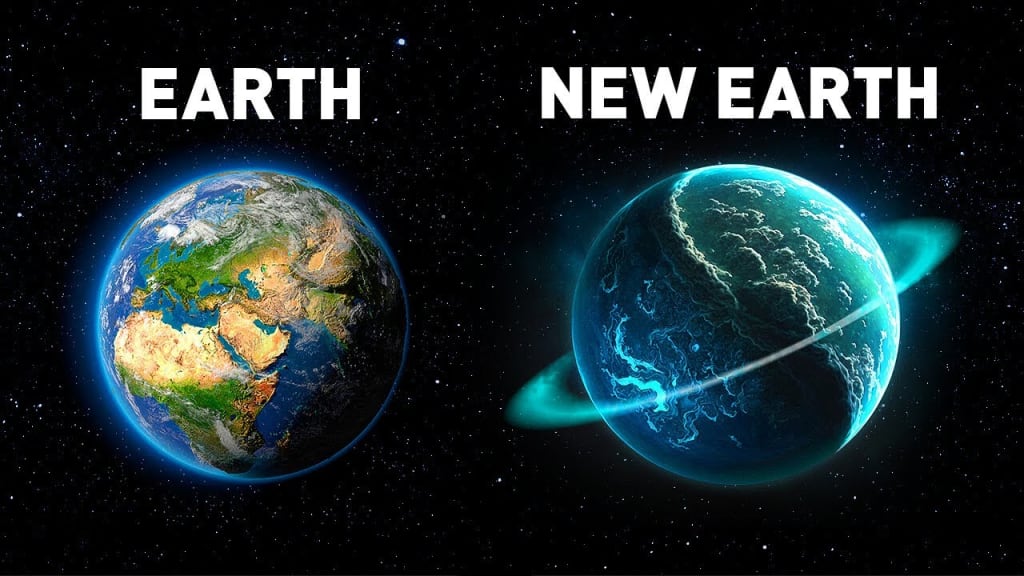
As humanity continues to explore the vastness of space, the search for a new home beyond Earth has become a topic of intense interest and speculation. With our planet facing numerous challenges, from climate change to resource depletion, the idea of finding a habitable planet where humanity could establish a second home has moved from science fiction to serious scientific inquiry. In this article, we explore the concept of finding a new Earth, focusing on the potential planets that could harbor life and become our future home.
1. The Search for Exoplanets: A New Frontier
The quest to find a new Earth began in earnest with the discovery of exoplanets—planets that orbit stars outside our solar system. Since the first confirmed discovery of an exoplanet in the 1990s, scientists have identified thousands of these distant worlds. The primary goal has been to find planets located in the "habitable zone" of their stars, where conditions might be right for liquid water to exist—a key ingredient for life as we know it.
One of the most promising discoveries in this search is Proxima Centauri b, an exoplanet located just 4.24 light-years away from Earth, orbiting our closest neighboring star, Proxima Centauri. This planet is roughly the same size as Earth and lies within its star's habitable zone, making it a prime candidate for further exploration as a potential second home for humanity.
2. What Makes a Planet Habitable?
For a planet to be considered habitable, it must meet several critical criteria. First and foremost, it needs to be within the habitable zone of its star, where temperatures are just right for liquid water to exist. The planet's atmosphere is also crucial, as it must be thick enough to protect against harmful radiation while allowing for the presence of water and breathable air.
Another important factor is the planet's composition. A rocky planet with a stable surface, similar to Earth, is more likely to support life than a gas giant like Jupiter. Additionally, the planet’s magnetic field plays a role in protecting the atmosphere from being stripped away by stellar winds, which could otherwise render the planet uninhabitable.
While several exoplanets meet some of these criteria, no planet has yet been found that perfectly replicates the conditions of Earth. However, the discovery of planets like Kepler-452b, often referred to as "Earth’s cousin," offers hope that there may be other worlds out there capable of supporting life.

3. Challenges of Colonizing a New Planet
Even if we find a planet with Earth-like conditions, the challenges of colonizing it are immense. The first obstacle is the vast distance between Earth and potential habitable planets. For example, Proxima Centauri b is over 4 light-years away, which, with current technology, would take thousands of years to reach.
Assuming we overcome the challenge of interstellar travel, we would need to establish a sustainable colony on the new planet. This would involve transporting not just people, but also the necessary supplies, technology, and infrastructure to support human life. The new colony would need to be self-sufficient, capable of producing food, generating energy, and maintaining a breathable atmosphere.
Additionally, the unknown factors about the planet itself pose risks. The presence of harmful microorganisms, extreme weather patterns, or unforeseen environmental challenges could make life difficult or even impossible. Human adaptability, while remarkable, would be tested to its limits in such an unfamiliar and potentially hostile environment.
4. The Ethics of Colonizing Another Planet
The prospect of colonizing another planet also raises significant ethical questions. Should we attempt to terraform a planet, altering its environment to make it more Earth-like, even if it means disrupting any potential native ecosystems? What are the implications of expanding human presence beyond Earth, and how do we ensure that our actions do not harm other life forms or create irreversible damage?
These questions require careful consideration as we move closer to the possibility of becoming a multi-planetary species. The decisions we make could have far-reaching consequences, not just for humanity, but for any other life forms that may exist on these distant worlds.

5. The Future of Space Exploration
Despite the challenges, the search for a new home continues to drive scientific inquiry and exploration. Organizations like NASA, SpaceX, and various international space agencies are investing in missions to explore Mars, the most feasible candidate for colonization within our solar system, and to search for habitable exoplanets.
Elon Musk's vision of making humanity a multi-planetary species is one of the driving forces behind SpaceX's Mars missions. While Mars presents its own set of challenges, it represents a stepping stone toward the broader goal of interstellar exploration and, ultimately, finding a new Earth.
Conclusion
The idea of finding a new home beyond Earth is no longer just a dream; it is a growing field of scientific research with profound implications for the future of humanity. While we are still far from achieving this goal, the discovery of potentially habitable exoplanets brings us one step closer to answering one of the most profound questions: Are we alone in the universe, or could another Earth be waiting for us somewhere out there?
What do you think about the possibility of finding and colonizing a new Earth? Do you believe humanity should focus on preserving our current planet or explore the stars for a new home? Share your thoughts in the comments below, and watch the video to learn more about the planets that could potentially become our future home. Let's explore the possibilities together!
About the Creator
Keep reading
More stories from ROSEL ETUWE and writers in Education and other communities.
Elon Musk Just Revealed The Terrifying Truth Behind Antarctica
### Elon Musk's Revelation: The Alarming Secrets of Antarctica Introduction Antarctica, the vast, frozen continent at the bottom of the world, is a land of extreme conditions, isolation, and mystery. For centuries, it has captured the imagination of explorers, scientists, and adventurers. Yet, despite its forbidding landscape and harsh climate, Antarctica has remained one of the least understood places on Earth. Recently, Elon Musk, the billionaire entrepreneur known for pushing the boundaries of technology and exploration, has brought renewed attention to this enigmatic continent with revelations that could change how we view not only Antarctica but also the future of humanity.
By ROSEL ETUWE2 years ago in Education
The Meaning Behind the Rules: What a Law Explains in Society
A law explains how people should behave within a society and what consequences may follow when they ignore those rules. Governments create laws to guide actions, protect rights, and maintain order. Because communities include people with different interests and values, clear rules help prevent conflicts and confusion. Therefore, laws serve as written standards that explain what society expects from its members.
By Juan Monteverdea day ago in Education
Silken Chains
Silhouettes of the female form were given flesh and bone. Silken skin glistened under the spotlight. Dry ice rose around our Icons as they danced atop their podiums in the Square. Heralded for their beauty, their movements were slight, powerful, and sensual.
By Paul Stewart4 days ago in Fiction


Comments
There are no comments for this story
Be the first to respond and start the conversation.