
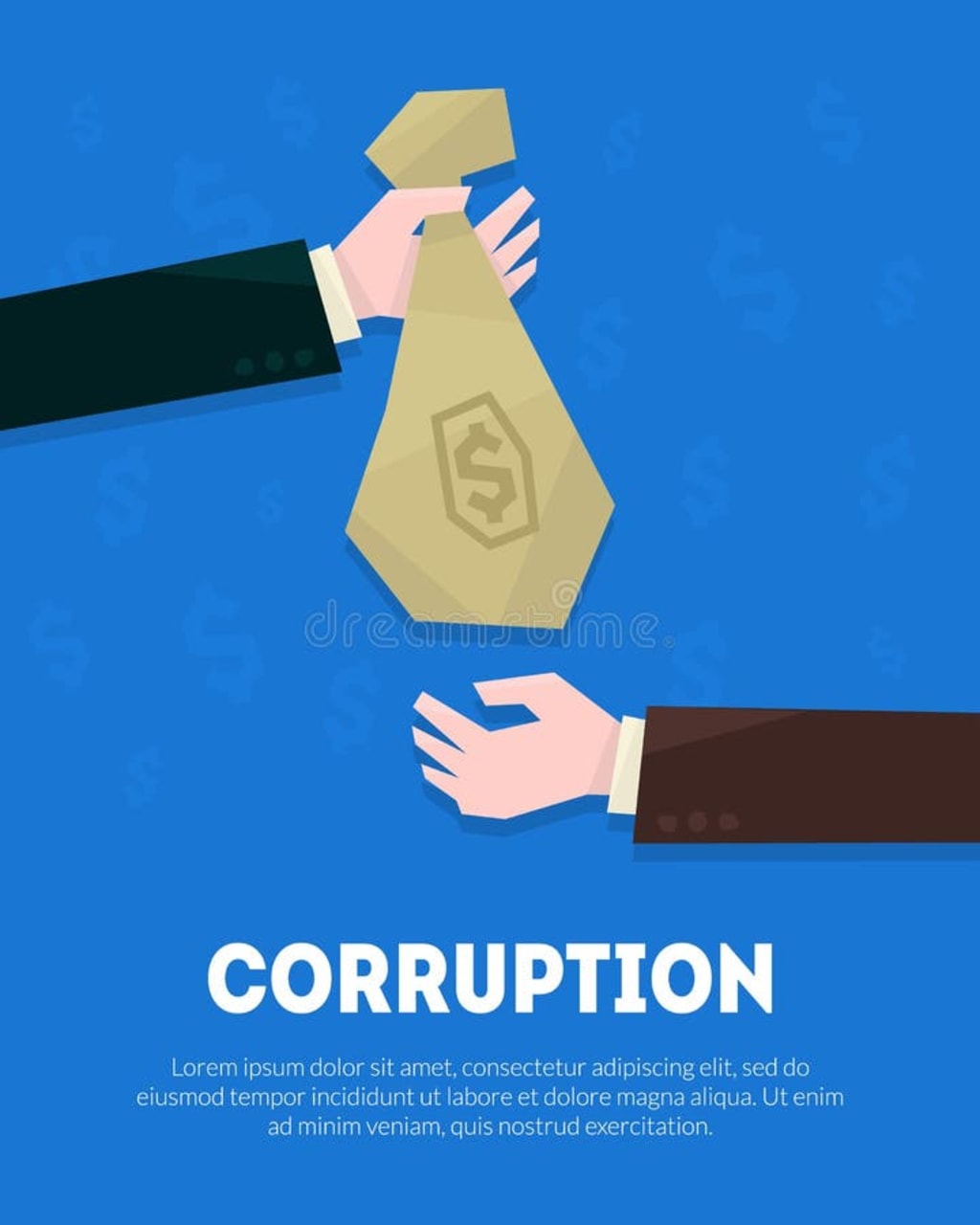
Start writing...Corruption is a type of dishonest or unethical conduct by a person in power or position of authority, in which they take advantage of their position for personal or financial gain. It can occur in many different settings, including in government, businesses, organizations, and even sports. Some common forms of corruption include bribery, embezzlement, nepotism, fraud, and money laundering.
Corruption can have serious negative consequences for individuals and society as a whole. It can undermine democratic institutions, weaken public trust, and hinder economic development. Corruption can also foster inequality, prevent social mobility, and exacerbate poverty.
To fight corruption, it is important to have laws and mechanisms in place that promote transparency, accountability, and discourage unethical behavior. This includes having independent watchdog organizations, enforcing anti-corruption laws, and promoting ethical standards within organizations and society as a whole.Removing corruption is a complex and challenging task that requires both short-term and long-term efforts. Here are some ways to address corruption:
1. Promote transparency and accountability: Transparency and accountability are critical elements in the fight against corruption. Governments and organizations should ensure transparency in their activities, information, and decision-making processes. Additionally, they should be accountable for their actions and be willing to provide explanations and justifications for their decisions.
2. Strengthen anti-corruption laws and regulations: Laws and regulations should be in place to prevent and punish corrupt behavior. Governments should enforce these laws and regulations, and individuals found guilty of corruption should face consequences, including fines and imprisonment.
3. Educate the public: Educating the public on the negative effects of corruption can raise awareness and promote a culture of intolerance towards corruption. This can be done through public campaigns, educational programs, and targeted messaging.
4. Empower independent institutions: Independent institutions such as the judiciary, the media, and anti-corruption agencies should be empowered to investigate and prosecute corruption cases without fear of retaliation.
5. Foster international cooperation: Corruption is often transnational, and it is therefore important for countries to work together to combat it. International cooperation can include exchanging information and best practices, providing technical assistance, and jointly investigating and prosecuting corrupt individuals and organizations.
Removing corruption is a long-term process that requires sustained efforts and commitment from all stakeholders. It is crucial to build a strong culture of integrity and accountability to prevent and eradicate corruption.There are many reasons why corruption can go on increasing. Here are some of the common factors that contribute to corruption:
1. Lack of transparency: Corruption thrives in situations where there is a lack of transparency in decision-making processes. When decisions are made behind closed doors, it becomes easier for individuals to engage in corrupt behavior without being held accountable.
2. Weak institutions: If institutions such as the judiciary, law enforcement agencies, and anti-corruption bodies are weak, they may not be able to effectively prevent or punish corrupt behavior.
3. Greed: Corruption is often driven by the desire for personal gain. In some cases, individuals are willing to engage in corrupt activities such as bribery, embezzlement, and nepotism in order to accumulate wealth or gain an unfair advantage.
4. Political patronage: In some cases, corrupt behavior is protected by powerful political figures. This can make it difficult to prosecute corrupt individuals and hold them accountable for their actions.
5. Lack of public awareness: If the general public is not aware of the negative effects of corruption, they may not be motivated to take action against it. Additionally, if the media is not free to report on corruption cases, it can become easier for corrupt individuals to continue their actions without public scrutiny.
Reducing corruption requires a sustained effort that targets the root causes of corruption. This includes strengthening institutions, promoting transparency and accountability, educating the public, and empowering anti-corruption agencies to investigate and prosecute corrupt individuals. Only through sustained efforts, can we reduce corruption and build a more equitable and just society.
About the Creator
Keep reading
More stories from Sakshi Verma and writers in Education and other communities.
Importance of education in society
Start writing...Education is vital for a healthy and thriving society. Here are some importance of education in society: 1. Economic development: Education is closely linked with economic growth and development. Educated individuals have higher earning potential, are more likely to be employed, and can contribute to the economy through their skills and knowledge.
By Sakshi Verma3 years ago in Education
Before the Bell: Daily Pre-Market Steps That Drive Consistent Trading Wins
In daily trading, the difference between consistency and chaos often comes down to what happens before the session starts. The most reliable traders don’t wait for the bell to decide what to do—they use the early hours to map out a plan, filter distractions, and establish a tactical approach to the day.
By Agast Mishra7 days ago in Education
Image-to-text technology, also known as Optical Character
Image-to-text technology, also known as Optical Character Recognition (OCR), has transformed the way we interact with visual information. It allows machines to extract text from images, enabling various applications across multiple industries. From digitizing printed documents to reading text from scanned images, OCR plays a vital role in making printed content accessible, editable, and searchable. The need for such technology has grown exponentially with the increasing reliance on digital data and the rapid shift from physical to digital content in nearly all sectors of life. As the digital world continues to expand, image-to-text technology has paved the way for more seamless workflows, enabling businesses and individuals alike to save time, effort, and resources.
By Alexander Jackson4 days ago in Education
Getting Serious About Comedy (Part I)
If I were asked to remark on my life and the childhood that paved some road leading me to this point, I would have to say something about all the funny people who surrounded me for the last 26,872 days (and counting). Somewhere along that road, I became a big fan of laughter and the comedy that spawns it – and, I mean not only my own laughter, but the laughter of others, some of which I have actually been responsible for inducing.
By John Oliver Smith7 days ago in Humor




Comments
There are no comments for this story
Be the first to respond and start the conversation.