
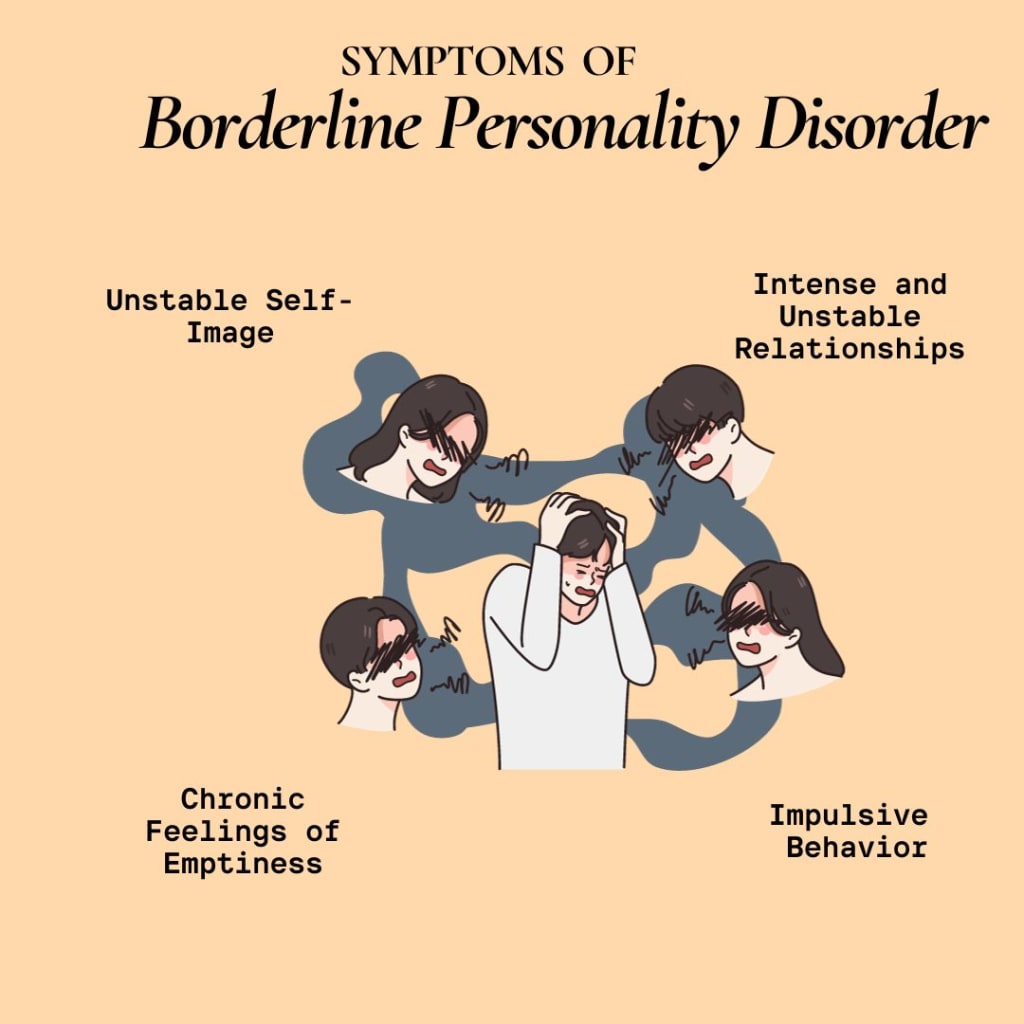
Borderline Personality Disorder or Emotionally Unstable Disorder is a mental Disorder that severely impacts a person’s ability to manage their emotions. People suffering from BPD have an unhealthy way of seeing themselves, have intense relationships as well as impulsive behavior.
BPD patients have a strong fear of abandonment as if their loved and closed ones will leave them. They also suffer from frequent mood swings which may lead to impulsivity and self destructive behavior.
What are the signs and symptoms of borderline personality disorder?
Symptoms of borderline personality disorder usually appear in early adulthood when one’s personality development is complete. As a result most of the cases of BPD are diagnosed after the age of 18.
A stressful event or troubling experience may trigger the symptoms of BPD. Symptoms gradually decrease and may even go away as a person ages.
A BPD patient can have any combination of the symptoms below-
Fear of abandonment: Fear of abandonment is very common in people suffering from BPD. They tend to have an intense fear of people leaving them. Therefore they might get clingy or even push people away before getting too close.
Unstable relationships: People with BPD struggle to have a healthy relationship due to their disrupted view of others. BPD patients can go from loving a person extremely to hating them in just five minutes and vice versa. Yes, you heard that right. They tend to change their view of other people dramatically. Their relationship with their family, friends or partner are often chaotic and unstable.
Unstable sense of self or self image: Like having a distorted image of other people, people with BPD also have a distorted self image. They tend to have a negative perception of themselves which most of the time is different from reality as their mind affects their thoughts in unpredictable ways.
Mood swings: BPD people tend to have frequent mood swings. They may experience sudden changes of their emotions towards others, themselves and the world around them. Their irrational intense emotions like anger, fear, hatred, love, anxiety, sadness change frequently and suddenly. These changes in mood can stay from a few hours to a few days.
Impulsive and dangerous behavior: Impulsive behavior like substance uses, reckless driving, self harm, unsafe sexual behavior etc are common in people with BPD.
Repeated self harm or suicidal behavior: People with BPD tend to have suicidal thoughts and they often physically hurt themselves or threaten to do so. They are often triggered by a traumatic event, abandonment or rejection. They tend to attempt for suicide and approximately 10% of the patients die from suicide.
Persistent feeling of emptiness: BPD patients often complain about feeling bored, sad, unfulfilled or empty. Feeling of worthlessness is very strong in them.
Anger management issues: People with BPD have a hard time controlling their anger. They may express their anger through bitterness or impulsive behavior. These episodes are often followed by shame and guilt.
Not every person experiences each one of these symptoms. The frequency , severity and combination of symptoms are unique to every person.
What causes borderline personality disorder?
Mental health professionals say that Borderline Personality Disorder can result from a combination of factors.
Childhood abuse or trauma: Up to 70% of people suffering from BPD have a history of childhood trauma in their past. Sexual, mental or physical abuse, separation of parents, poor maternal attachment, growing up with parents having serious mental health issues, being neglected by one or both parents - all these reasons increase the risk of having BPD in future.
Genetics: Studies show that genetics play a huge role in having this disorder. If someone in your family has or had BPD, then you are more likely to experience it.
Changes in the brain: We humans are chemical beings. We work in accordance with proper secretion of certain chemicals like serotonin, dopamin etc in the brain. Changes in these chemical secretions can cause disorders like BPD.
The factors mentioned above increase the risk of BPD.
How is Borderline Personality Disorder cured?
Well, the answer is BPD can not be cured but with effective treatment and dedication it can be managed. Medications and psychotherapy can help people minimize the symptoms and lead a functioning life.
It is important to remember that Borderline Personality Disorder is a lifelong mental health condition. It is necessary to see a healthcare professional so that he can monitor symptoms and treatments.
About the Creator
Keep reading
More stories from Abida Rafa and writers in Education and other communities.
What Vloggers Must Know!
YouTube has always evolved alongside its creator community, and with the rapid growth of vlogging content, the platform has recently updated its policies to better define quality, originality, and monetization standards. These updates are especially important for vlog channel owners, as vlogs rely heavily on personal storytelling, daily life content, and real-world experiences. Understanding the new policy is essential for staying compliant, growing safely, and maintaining monetization eligibility.
By Bilal Mohammadi2 days ago in Education



Comments
There are no comments for this story
Be the first to respond and start the conversation.